

Hush is a VALORANT Duelist who pulls opponents and lifts them into the air. But the first question when learning Hush is less how spectacular the abilities look than who can take the fight after the enemy is disrupted. The same ability has different value depending on whether a teammate can swing when the flash pops or shoot an opponent immediately after the pull.
Having a movement ability may make Hush look capable of handling every entry alone. Yet Flow has a delay between creating its anchor and moving, and the main disruption abilities affect teammates too. This kit looks best suited to planning the entry order and firing positions together, rather than simply sending Hush ahead.
Hush's abilities connect through changing enemy positioning and vision
Hush is a Duelist from China who joined in patch 13.09. If the ability names are unfamiliar, start by identifying which part of a fight each one changes.
| Default key | Ability | Core function | First consideration |
|---|---|---|---|
| E | Displacement | Pulls players in the area toward its center | Can you shoot the displaced opponent? |
| Q | Flashbulb | Blinds players looking at the detonation | Does it overlap with your teammates' entry direction? |
| C | Flow | Creates an anchor and dashes toward it after a short delay | Which angles expose you after arrival? |
| X | Suspension | Lifts players caught in the explosion into the air | Are follow-up shots and allied positions ready? |
| Passive | Telekinesis | Interacts with weapons and switches from farther away and retrieves the Spike while attacking | Is there a route to take after the pickup? |
These are default bindings and may differ with your settings. Displacement and Flashbulb are thrown with primary fire, prepared with alternate fire, and redirected toward the crosshair on reactivation. Suspension is sent forward, guided toward the crosshair, and detonated by reactivating or firing.
The key distinction is that these abilities focus on breaking an opponent's held position and line of sight rather than directly reducing health. Checking whether they hit is therefore only half the assessment. Also consider what your team gains during the brief disadvantage they create.
Check composition and entry order before sending Hush in alone
Assigning first entry requires more than looking at movement distance. You need enemy information, smokes that block multiple sightlines, and teammates who can connect the fight after entry. Hush having a flash and movement does not automatically provide that preparation.
Flow in particular has a gap between anchor creation and the dash. Expecting it to instantly remove danger after stepping into an enemy-held passage can leave you taking a bad fight before movement starts or just after arrival. That is why both the starting position and destination matter more than distance alone.
Another entry agent can draw attention first while Hush supports with a flash and then joins. This adds a fight from another direction against enemies focused on the first teammate. If Hush goes first instead, coordinate allied scouting, smokes, and follow-up timing more clearly.
This does not mean Hush cannot enter first or that double Duelist is mandatory. The role depends on the map, defensive setup, and allied support. More important than the agent's name is how the team covers the openings during ability use and after movement ends.
Flashbulb depends more on the team's swing than on a curved trajectory
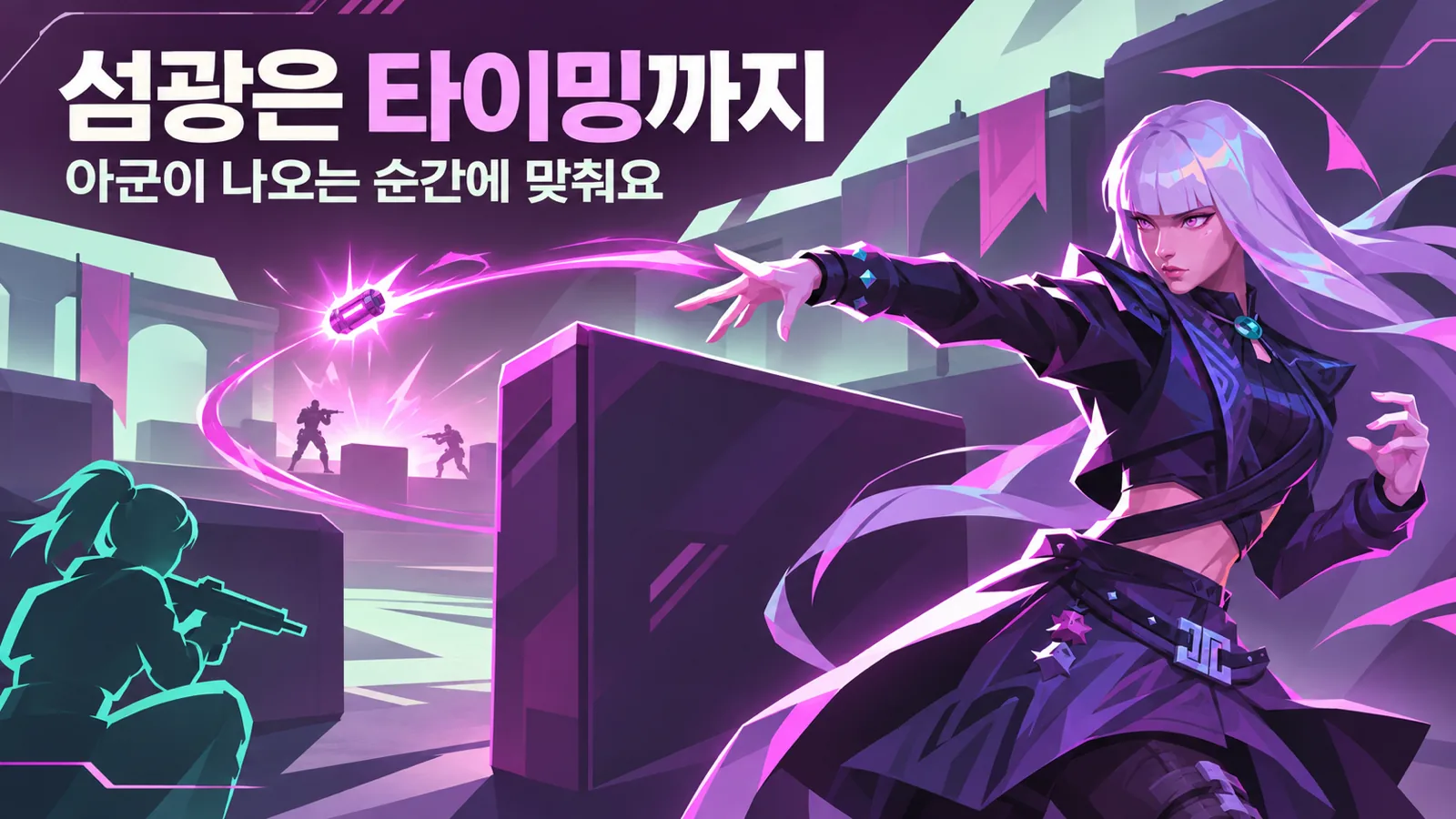
Flashbulb can change its trajectory toward the crosshair in flight. That allows you to send it into the enemy's view while potentially separating it from allied vision. Bending the trajectory does not automatically protect teammates, however: it blinds every player looking at the detonation.
When teammates are moving through a passage onto a site, consider not only where to throw it but where they will be looking when it pops. Too early and opponents may recover before the swing; too late and the entering teammate may be exposed to gunfire first. Repeatedly practicing the same throw direction alone will not teach that distinction.
In practice, follow the projectile path with the sequence of re-equipping your weapon and swinging. Actual fights require both a useful curve and readiness to shoot after the flash. With teammates, even a brief agreement on direction and swing timing provides useful information for decisions.
The same principle applies alone. Separate the corner you will swing from the direction where the flash is visible, and position yourself to peek when the opponent turns. No single trajectory produces identical results at every range and on every terrain, so test the places where you often fight one at a time.
For Displacement, decide the follow-up firing line first
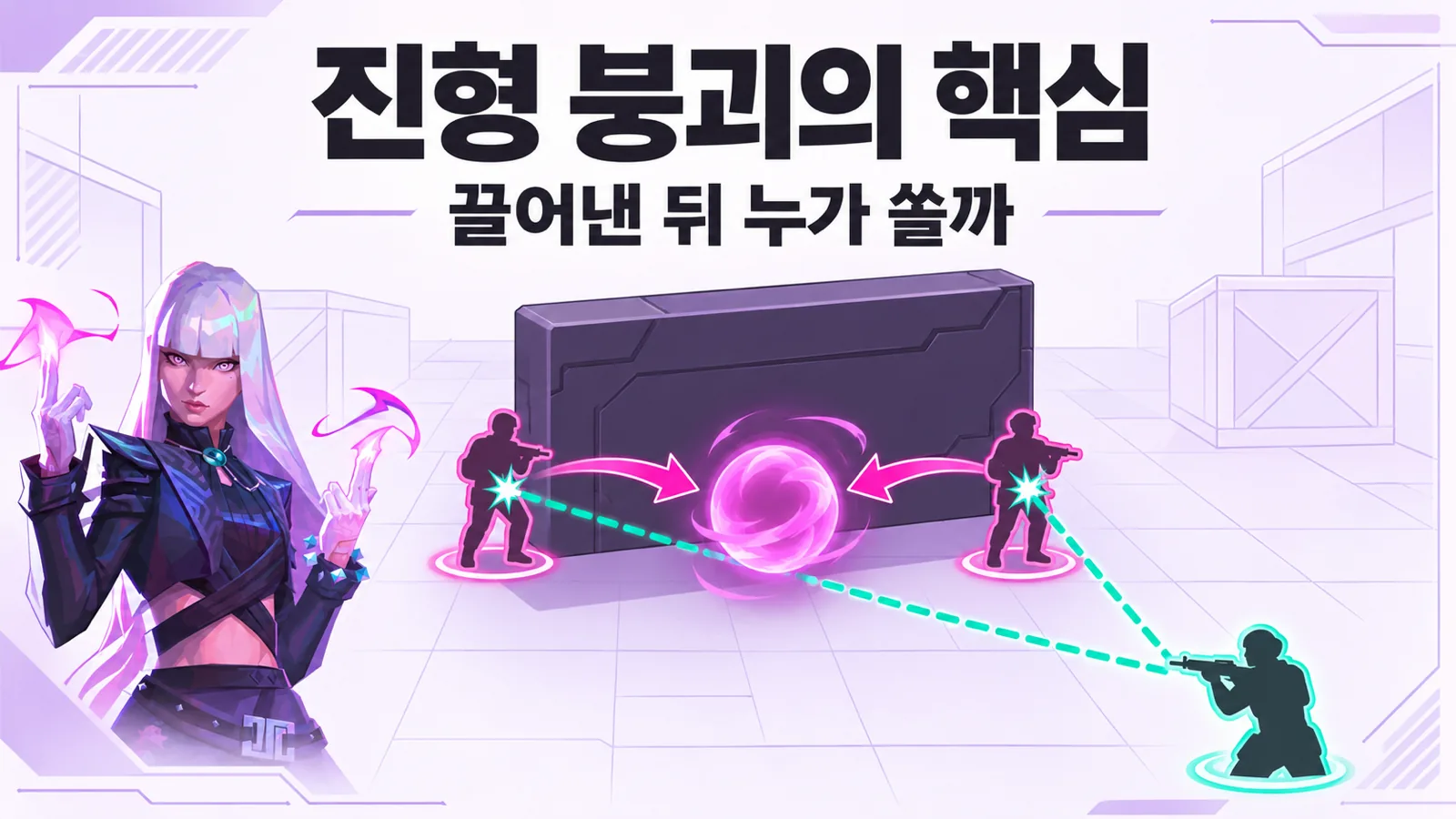
Displacement explodes on contact with a surface or after a period of time, pulling players toward its center. Collisions with a surface or another player cause a concuss, and the ability resets every two kills. Treat the pull and the collision-based concuss as separate conditions. Assuming everyone in range is always concussed can lead to bad follow-up decisions.
Its tactical value is disrupting a corner an opponent holds comfortably. If someone beside a box can be moved into your teammate's view, you can create a fight without challenging the same angle head-on. If the destination is behind different cover, the ability can connect without giving you anyone to shoot immediately.
Before throwing, consider the enemy's current position, the direction of the pull, and the teammate watching that destination together. Waiting until the team is ready to move can be better than using it merely because an enemy is present, so the moment of disruption is not wasted.
Be especially careful when teammates are already fighting up close. Displacement does not pull enemies exclusively. Moving allies or causing collisions can disrupt the aim and movement of the very fight you wanted to help. Even with a reset available, whether using it now helps the team matters more than the prospect of another use later.
With Flow, picture the gunfight at your destination
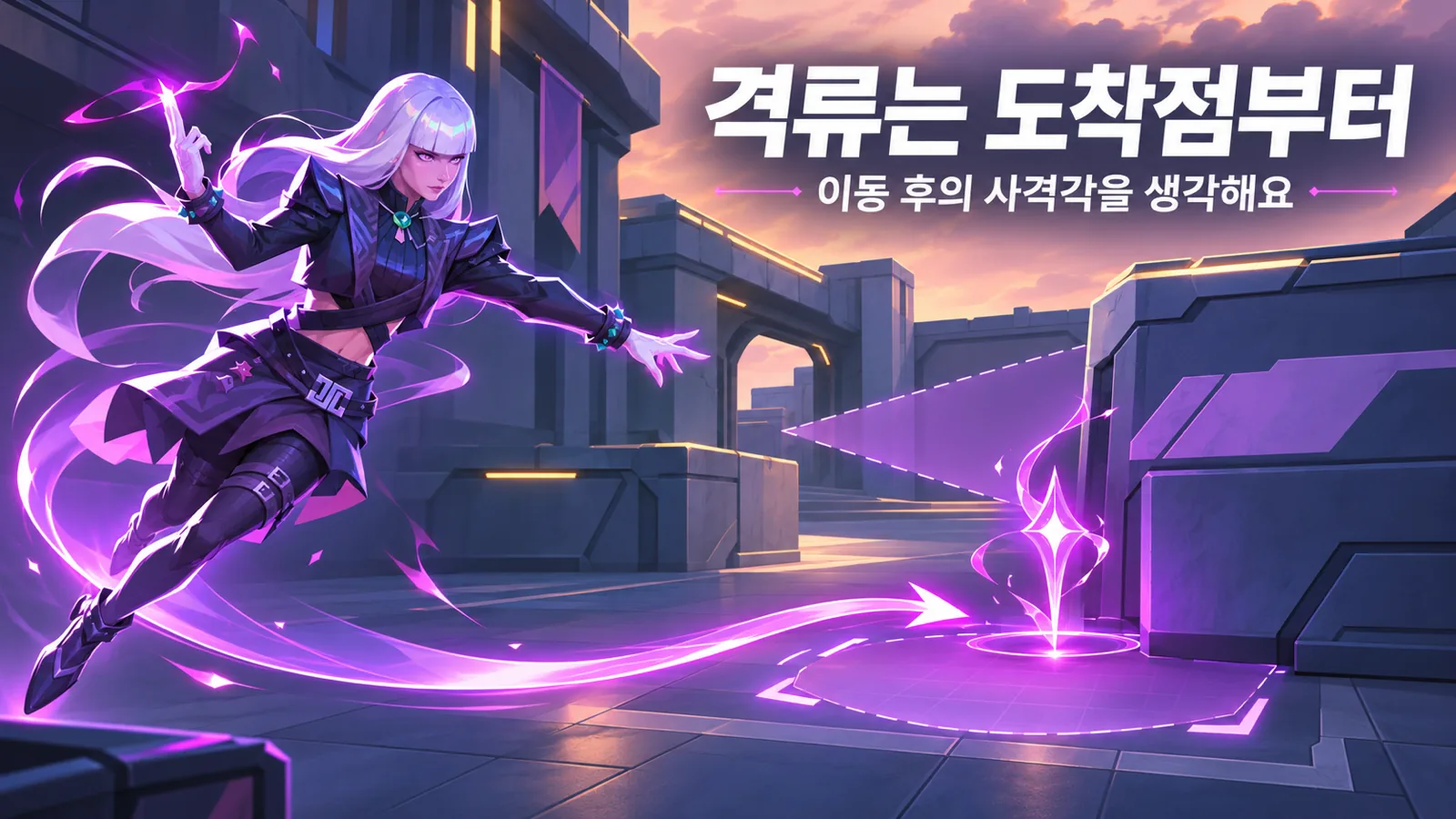
Flow creates an anchor immediately and dashes toward it after a short delay. Using it in the air briefly suspends Hush in place. Treat it as a repositioning tool with time between departure and arrival, rather than simply a button that moves you forward.
A destination visible to several opponents at once can be hard to survive even if the movement succeeds. Arriving beside cover and checking one direction first makes the next fight easier to manage. Equal movement distance can produce very different outcomes. Think about the first corner to check and where you can shelter afterward.
Combining it with a flash does not require pressing every ability as quickly as possible. The sequence matters when your movement ends as the opponent reacts to the flash. Joining from another position while a teammate already draws attention follows the same principle.
Keep the learning sequence simple. First practice reaching your intended position, then choose where to aim after arrival, and finally add the flash. If a full combo fails, it can be difficult to tell whether the destination or flash timing caused it. Prioritize one route through a familiar entrance that enables a next action over an unusual long-distance move.
For Suspension, check follow-up fights and teammates rather than hit count
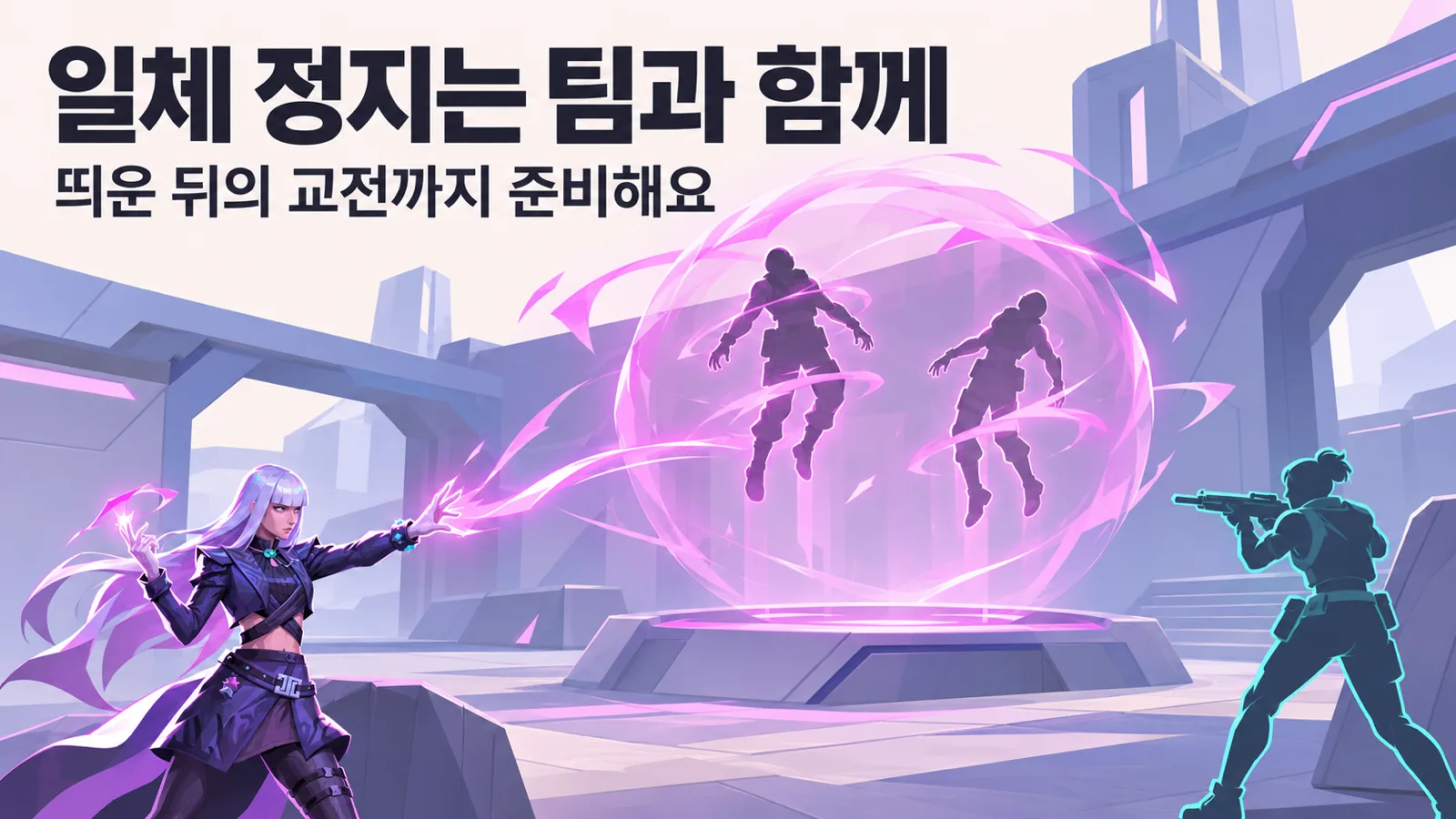
Hush's ultimate, Suspension, lifts players in its area into the air. The official introduction lists an eight-point ultimate cost. Thinking only about how many players you can lift may leave the team unprepared to use the resulting opportunity.
On a retake, for example, its follow-up value depends on whether teammates are still rotating through a passage or already in position to shoot. If Hush creates an effect while the team is far away, sharing the opportunity is difficult. Even targeting one opponent can be worthwhile if it breaks a key firing line and helps the team reach the defuse.
A hit does not guarantee a safe defuse. Consider enemies outside the area, other entrances, and time remaining. Above all, the ultimate also affects all players, so check whether a teammate who entered first is inside it. Positioning that lets the team gain together matters more than a dramatic multi-player lift.
Connecting Telekinesis to round decisions adds options
Telekinesis retrieves weapons and interacts with switches from farther away. While attacking, it can also recover a dropped Spike. It is less flashy than the combat abilities, but reducing movement needed for pickups gives it strategic value.
If the Spike falls in a dangerous position, being able to retrieve it may open a rotation to another site. A remote pickup is not the same as a safe position, though. Check exposed sightlines, time remaining, and your escape route after recovery. Do not extend the description into an ability to ignore every wall or move an already planted Spike.
When practicing Hush, adjust how you judge success. Alongside the number of players hit, ask whether the ability let a teammate cross a corner, enabled a trade, or recovered the Spike for the next play. Bringing out Hush's potential depends less on pressing many buttons quickly than on turning the opening you create into actual combat and round advantages.
