

VALORANT's new agent Hush is a Duelist with movement, a flash, a pull, and an ultimate that lifts players into the air. That kit might look capable of doing several jobs alone, but the real question is different: Can you turn the moment an opponent is displaced into an actual shooting opportunity? Understanding Hush means looking beyond a list of abilities.
If you want an agent who goes in first and opens fights, avoid assuming that a movement ability makes familiar entry patterns work unchanged. Hush asks you to consider your aim, ability preparation, and destination together. Disrupting opponents is appealing, but the reason to pick Hush becomes clearer when you also decide who will finish the fight that follows.
Who is Hush, and when does the agent arrive?
Hush is a new Duelist from Guangdong, China. The telekinetic theme carries through into remote interactions, projectile control, and displacement. It is more than a visual concept: it appears in the ability to redirect a projectile after throwing it or disrupt the position an opponent is holding.
The official announcement places Hush's arrival in Season 26, Act VI. International outlets report an October 27 release, but that does not establish the exact time Hush becomes available on Korean servers. Check regional announcements and the game client for local rollout and unlock availability. The reveal, deployment to live servers, and unlocking an agent on your account are separate steps.
This guide does not fill in unconfirmed details such as ability prices, exact ranges, or effect durations. The tactical advice is an interpretation of the publicly described mechanics, not a hands-on report. At this stage, identifying situations that could create an advantage is more useful than calculating strength from unverified numbers.
Hush's kit is about connecting five abilities
Hush has a passive for retrieving objects at a distance and four active abilities. This guide uses the English ability names alongside their default keys to avoid confusion between translated names in different sources. Your keybinds may differ.
| Default key | Ability | How it works |
|---|---|---|
| Passive | Telekinesis | Pick up weapons and the Spike, and interact with switches, from farther away than usual |
| C | Flow | Create an anchor and move toward it after a short delay; briefly hover when used in the air |
| Q | Flashbulb | Reactivate a thrown or prepared flash to send it toward your crosshair and disrupt vision |
| E | Displacement | Pull players in the area toward its center; collisions with terrain or other players apply a concuss |
| X | Suspension | Steer an orb sent forward, then detonate it to lift players in its area |
The important part is how these tools work together. The passive could reduce risky pickup routes, while Q and E disrupt opponents holding an angle. C lets Hush reposition during that opening, and the ultimate can substantially change the shape of a fight.
Having several tools on one agent does not mean every job can be done at once. Spending utility before you know where opponents are can leave you vulnerable to an unchecked angle. Being able to move an enemy is different from automatically learning where that enemy is.
Before pulling an enemy, decide where you want them to go
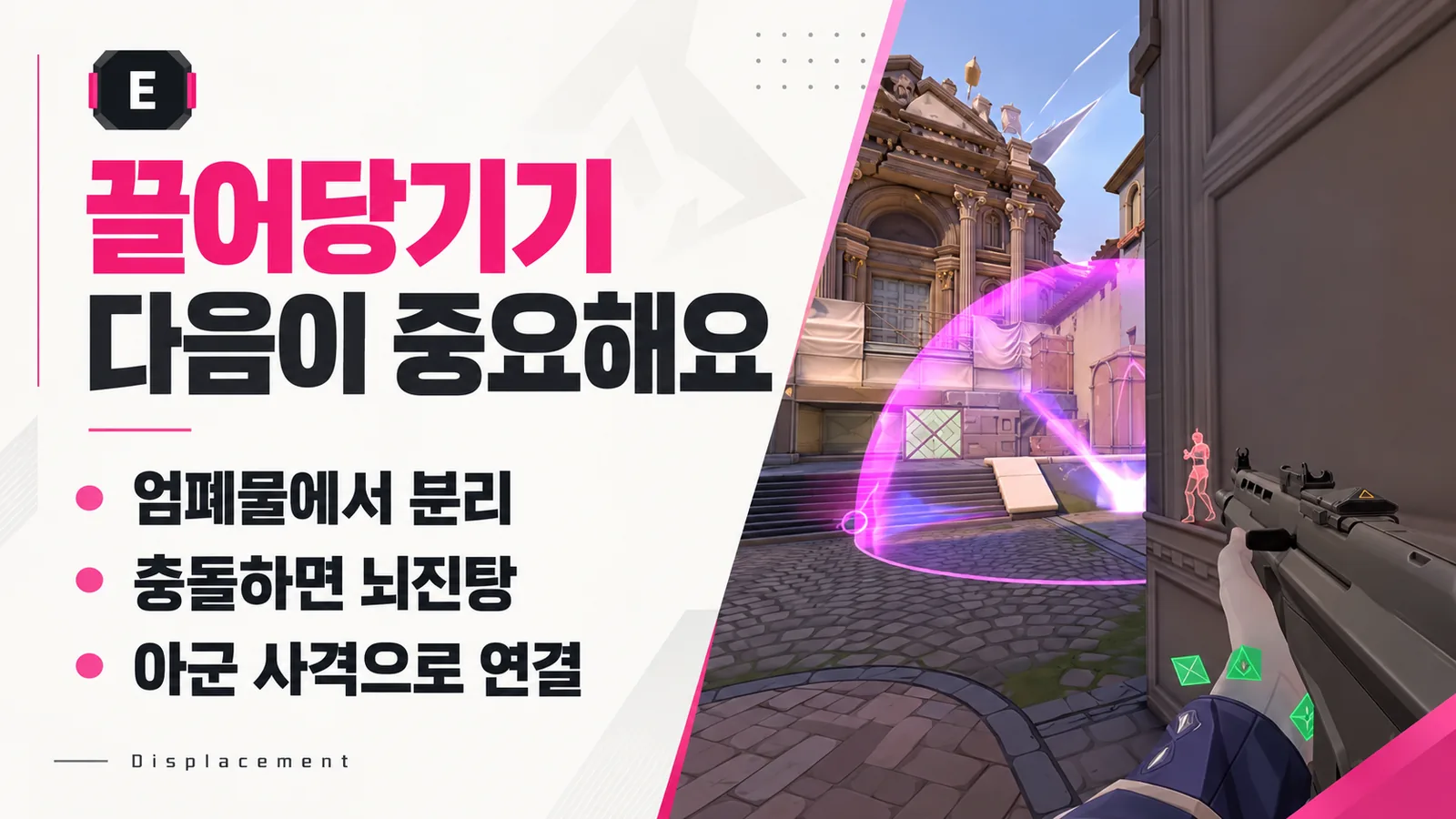
Displacement best captures Hush's identity. It pulls players toward a center point and concusses them if they collide with terrain or another player. The published description also says it becomes available again after every two kills. Do not treat it as an ability that simply refreshes on a timer.
The key distinction is that the pull itself and the additional collision effect have different conditions. Pulling someone in an open area is different from pulling someone beside a wall or box. First consider where the center should be to draw an opponent out of cover, and whether your team has a line of fire on the destination.
Imagine a defender guarding an entrance from behind a box. If the attackers only use the ability nearby, that defender may simply prepare to fight from the new position. If a teammate is already aiming beside the box when the defender is pulled out, however, the displacement immediately creates a shooting opportunity. Hitting the same enemy can produce different results depending on your team's preparation.
Conversely, pulling an opponent behind a wall your teammates cannot shoot through may land the effect without producing a kill. Judge Hush's E by both whether it connected and which side gained a better position. A kill-based refresh also rewards turning the first opening into a concrete combat result.
Time the guided flash with your teammates' swing
Flashbulb can be thrown with primary fire or prepared with alternate fire, then reactivated to send it toward your crosshair. Choosing when and where to direct the prepared projectile calls for different decisions from a familiar fixed-trajectory flash. Greater control also means paying attention to where opponents can see it.
A flash matters because your teammates can fight when the enemy sees it, not because it produces a dramatic burst of light. Trigger it too early and vision may recover before the entry; too late and the first teammate fights without help. Practicing how to send it around a corner and practicing movement timed to its effect are separate tasks.
If a teammate is already ahead of you, reconsider the flash's direction. An angle that exposes enemies to the flash may expose your teammates as well. Short calls such as 'flashing right' or 'swing on the flash' help align direction and action. Sharing a timing cue matters more than giving a complicated explanation.
When combining Q and E, divide the jobs instead of automatically using them back to back. While the flash blocks vision and the pull disrupts positioning, decide who will have a gun ready to capitalize. Even well-controlled utility can give opponents time to recover if the follow-up shots arrive late.
Movement is about what happens after arrival, not maximum distance
Flow creates an anchor and, after a short delay, rapidly moves Hush toward it. Using it in the air allows a brief hover before movement. It is therefore different from an instant, unprepared teleport to wherever you want. Consider both the position where you activate it and the place where you will arrive.
The most useful question is how many angles can threaten Hush after landing. Escaping the first opponent's crosshair does not make an entry good if the destination exposes you to two other defenders at once. Covering more distance does not, by itself, make you safe.
For example, if Hush moves deep into a site while teammates remain at the entrance, they may struggle to trade the kill if Hush falls. The move might redirect enemy attention, but its value for securing space as a team could be limited. That is why the destination needs to be somewhere teammates can support.
Start by learning short, controlled routes rather than elaborate long-distance moves. Give each attempt a purpose: arrive near cover, take a fight alongside a teammate, or choose which angle to clear immediately afterward. Judge movement by how reliably it leads into your next action, rather than by how impressive the trajectory looks.
Use the ultimate and telekinetic passive for the round's objective
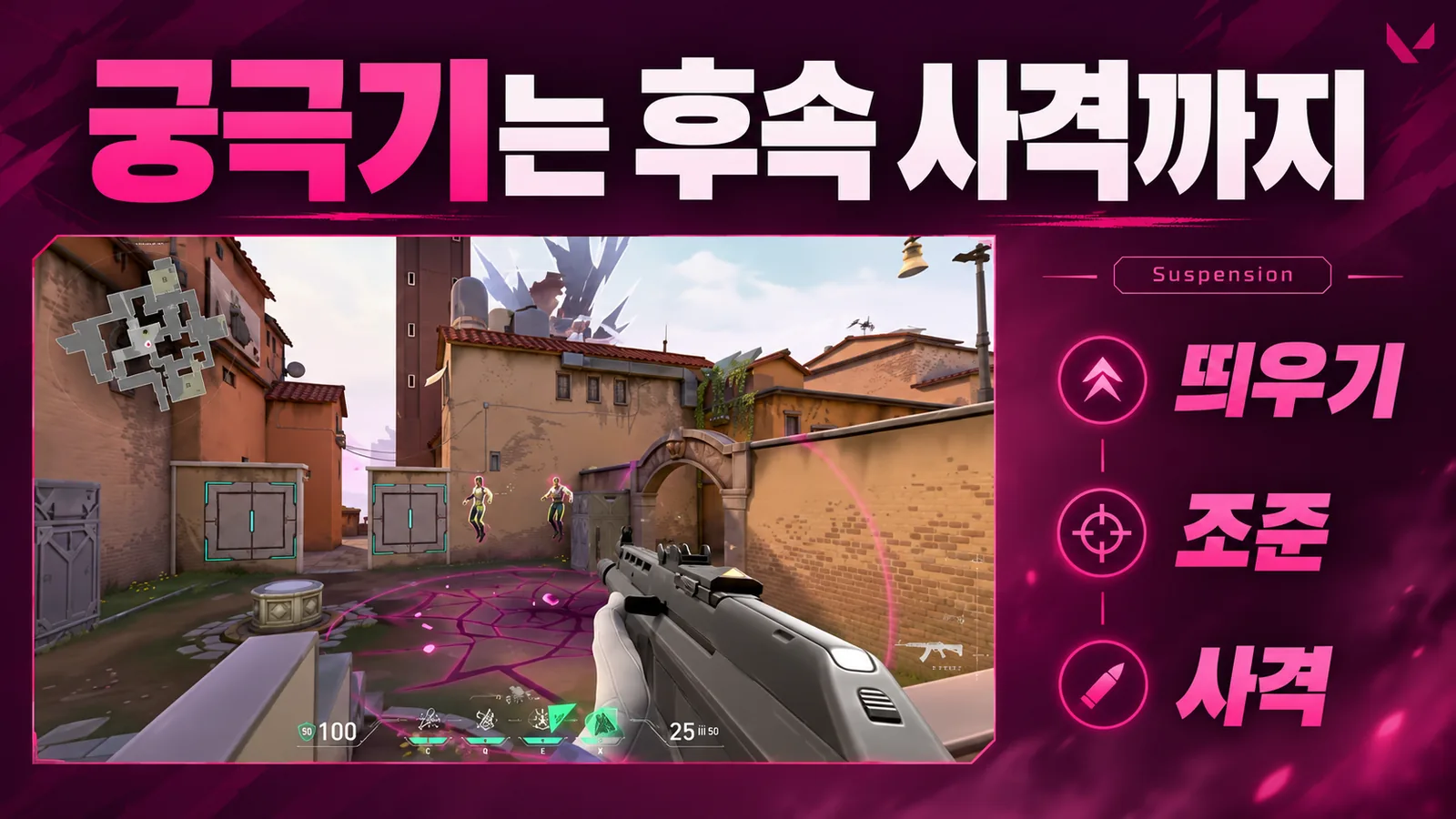
Suspension sends an orb forward that you guide with your crosshair, then detonate by reactivating the ability or firing again. Lifting players caught in the area could disrupt fights in confined spaces. Treating that control effect as an attack that automatically kills enemies, however, leads to the wrong expectations.
What matters is having a line of fire on the lifted opponents. If cover still hides them or teammates are too far away, you may not secure a kill before the control effect ends. On a retake, prepare the orb user and the entering players together, and decide where everyone will look when it activates.
The published English description refers to 'all players.' E also pulls nearby players, so account for teammates rather than assuming only enemies are affected. In particular, check the live ability descriptions for the ultimate's exact action restrictions and how it affects allies.
Telekinesis is less spectacular but directly relevant to round management. Retrieving a distant weapon or dropped Spike and operating switches can reduce the movement normally needed to reach those objects. When an opponent is watching a dropped gun, that difference can open up another option.
Do not interpret increased pickup range as unrestricted retrieval through walls. Check the interaction indicator and whether the action is available, then plan where to move afterward. If you collect a weapon and immediately take another dangerous route, you may lose the advantage of having avoided the original pickup path.
Choose Hush for the quality of the follow-up, not the number of solo jobs
Hush may appeal to players who enjoy preparing utility and predicting where opponents will move. The kit offers room to use terrain knowledge and awareness of teammates alongside reactive aim. If you prefer opening fights quickly with little setup, however, learning the movement wind-up and projectile controls may take time.
The same principles provide a starting point for counterplay: avoid standing too close together, do not automatically repeat the same peek after being pulled, and do not tunnel on a moving Hush while losing track of the teammates following behind. These are not guaranteed ways to avoid every ability. They are ways to reduce the favorable fighting conditions Hush is trying to create.
Hush's potential comes from combining tools that disrupt opponents with tools that move through the resulting opening. Turning that potential into practical strength has a clear test: Are our team's guns ready where the ability ends? If you can answer that when learning Hush or building a composition, it becomes much clearer which ability to practice first and which teammate to coordinate with.
Release reference: Official VALORANT game updates. This article discusses publicly revealed mechanics before release. Korean text embedded in the original images is unchanged.