

Hush’s strength in VALORANT is disrupting positions where opponents would otherwise fight comfortably. Her kit combines a pull, a redirectable flash, and an ability that lifts players into the air. A spectacular kit does not make her universally strong, however. What matters is whether your team can turn the moment an enemy is displaced into gunfire and an entry.
Hush is a Chinese Duelist introduced in patch 13.09. She can initiate fights directly, but her utility needs to be planned around teammates’ movements. When learning her, first understand the conditions under which each ability works before attempting elaborate sequences.
Hush disrupts positions and sightlines
Hush has a basic passive effect, Telekinesis, and four active skills. It's hard to understand the role just by looking at the name, so it's easier to understand if you first divide it into functions.
| Skill | Core Features | What to check first |
|---|---|---|
| Telekinesis | Retrieve weapons and, on attack, the Spike, or interact with switches from farther away | Location where item can be retrieved |
| Displacement | pulls to center and causes concussion on impact | Walls and players around target |
| Flashbulb | A flash whose trajectory can be redirected | Explosion point and friendly line of sight |
| Flow | Dash toward a created anchor after a delay | Start location and take cover upon arrival |
| Suspension | Guide an ability forward, then detonate it to lift players | Position of enemies and allies, follow-up attack |
To use this composition offensively, you need to think not only about where the enemy is, but also about where you will fight next. Even if you create an opening with a skill, it is difficult to take advantage if you are attacked from multiple directions at the location you arrive at. Conversely, if you open the fight in a way that your teammates can see, you can help your team even if Hush doesn't get the last kill.
Displacement depends on pull direction and collisions
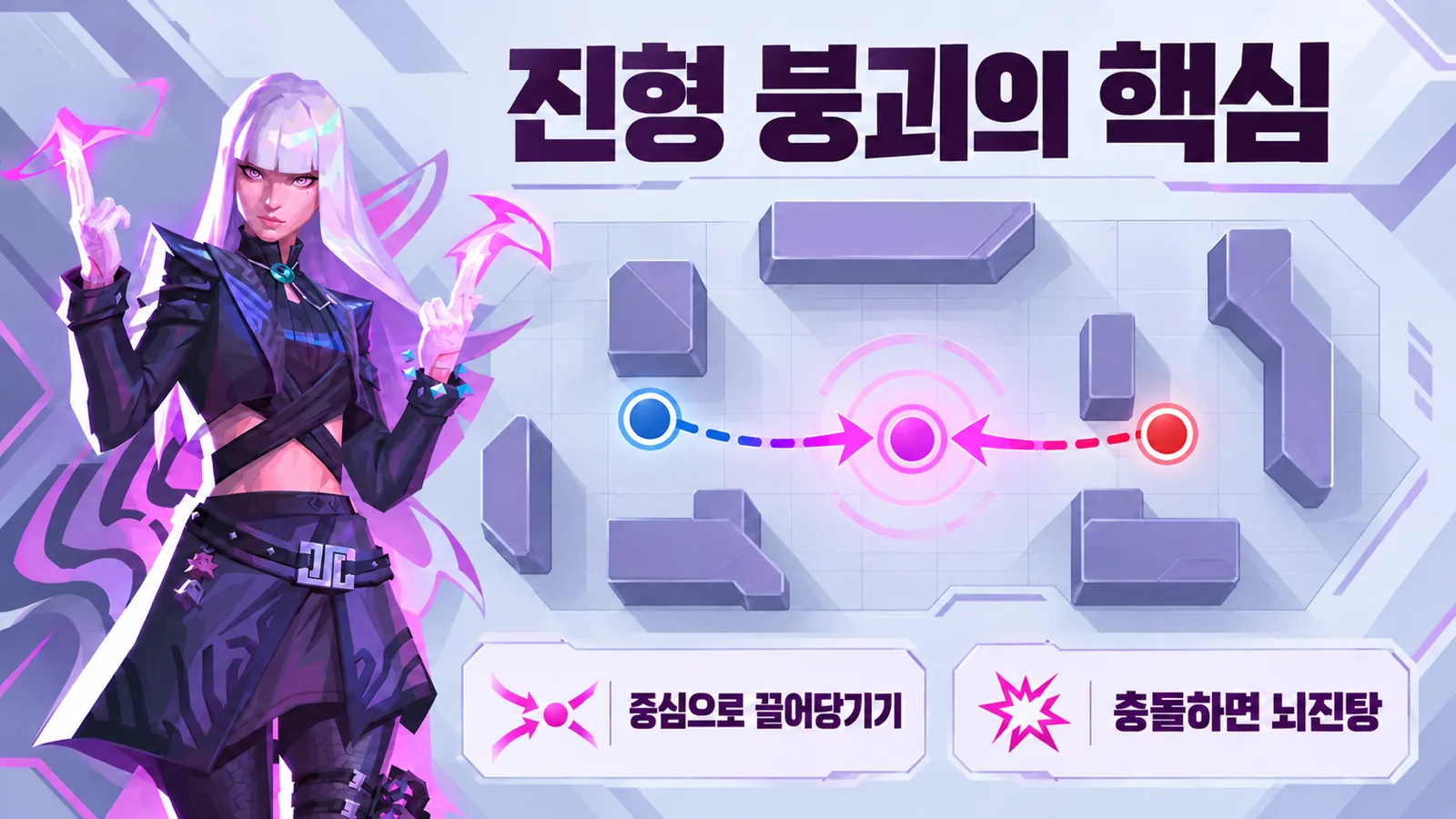
Displacement can be thrown and reused to guide it toward the aiming point. When it touches a surface or after a certain period of time, it explodes and pulls the player to the center, causing a concussion if the pulled player collides with the surface or another player. Also, it resets every 2 kills.
Here, pulls and concussions must be understood separately. If you think that a concussion is guaranteed just because you enter the range, it is easy to decide the next action incorrectly. This means that you cannot conclude that it is an advantageous engagement just by looking at the fact that the enemy has moved.
For example, let's consider an enemy looking at the entrance through the edge of a box. What Hush can aim for is a situation that disturbs the enemy's guarded shooting position. However, which side you will actually be exposed to depends on the center of the explosion, the location of the enemy, and surrounding structures. Rather than simply throwing it close to the enemy, it is more meaningful to think about where your allies will see it when the enemy moves.
The same applies when aiming for a concussion. You need to check whether there are objects around you that will collide and how the path you will be dragged along will be created. Because of these conditions, it seems difficult to treat Displacement with the same sensitivity when used in a wide, empty space and when used in a place with many walls or other cover. The interpretation is that the ability to read the terrain can affect skill utilization.
The two-kill reset is an earned opportunity, rather than a guaranteed extra use. Your first Displacement should help create favorable fights that lead to kills. Decide what the opening cast should achieve instead of spending it carelessly because a reset is possible.
Coordinate Flashbulb and Flow with the entry
Flashbulb can also be thrown and guided towards the aiming point. It explodes upon contact with a surface or over time, blinding players who look at it. Being able to control the direction expands the room for use, but as the operation becomes more complex, the things you have to worry about also increase.
The flash should be set off in a location that is easily visible to the enemy and places less pressure on allies. If you send a flash of light in front of your teammate after she or she has already gone around the corner, the intention and result of assisting the attack may differ. This is why who is looking in which direction at the moment of explosion is more important than the complex trajectory itself.
Flow is a skill that creates an anchor and then rushes towards it after a while. When used in the air, there is a process of hovering in place for a while. Therefore, rather than assuming that it is a means of escape that immediately becomes safe when pressed at the moment of danger, it is better to understand it in terms of planning the movement, including preparation time and arrival location.
For example, if you want to shake the view in one direction with a flash of light and then use Flow to take a different position, you must also check the newly opened shooting line at the arrival point. Even if the enemy in front is delayed in responding, you can still be exposed to the enemy next to you. If you move alone to a distance where your team members cannot follow you, even if the movement itself is successful, subsequent engagements may be at a disadvantage.
When practicing for the first time, I recommend learning the two skills separately rather than connecting them all at once. Flash checks first to see if it explodes in the intended location, and Flow checks first to see if there is a place to hide after arriving. If you can predict each result, it will be easy to know what went wrong even with continuous use.
Telekinesis helps retrieve the Spike and weapons
The passive Telekinesis allows you to access weapons and switches from a greater distance. If you are an attacking team, you can also use it for spike retrieval. Although it is less noticeable than the flashy engagement skill, it is noteworthy in that it reduces the burden of having to move to pick up items.
It's easy to understand if you think of a situation where Spike is in a dangerous position. The attacking team may need to retrieve the spikes separately from dealing with the enemy. If the approach distance required for retrieval varies, the location to which you move and where to ask your colleagues to look may also vary.
Of course, the explanation that it can be interacted with from a distance does not mean that it can be safely retrieved from anywhere. You need to determine separately whether the location is actually interactable and whether the other person can see you while retrieving it. Even if you succeed in getting a weapon, it will be difficult to protect your advantage if you remain in an exposed position.
This ability is also why it is difficult to evaluate Hush's contribution based on kills alone. If you have the option to retrieve the spike and move to another installation point, you have created the conditions to continue the round even if you did not defeat it yourself. When understanding Hush, you need to look at these small changes in options as well.
Suspension needs follow-up fire
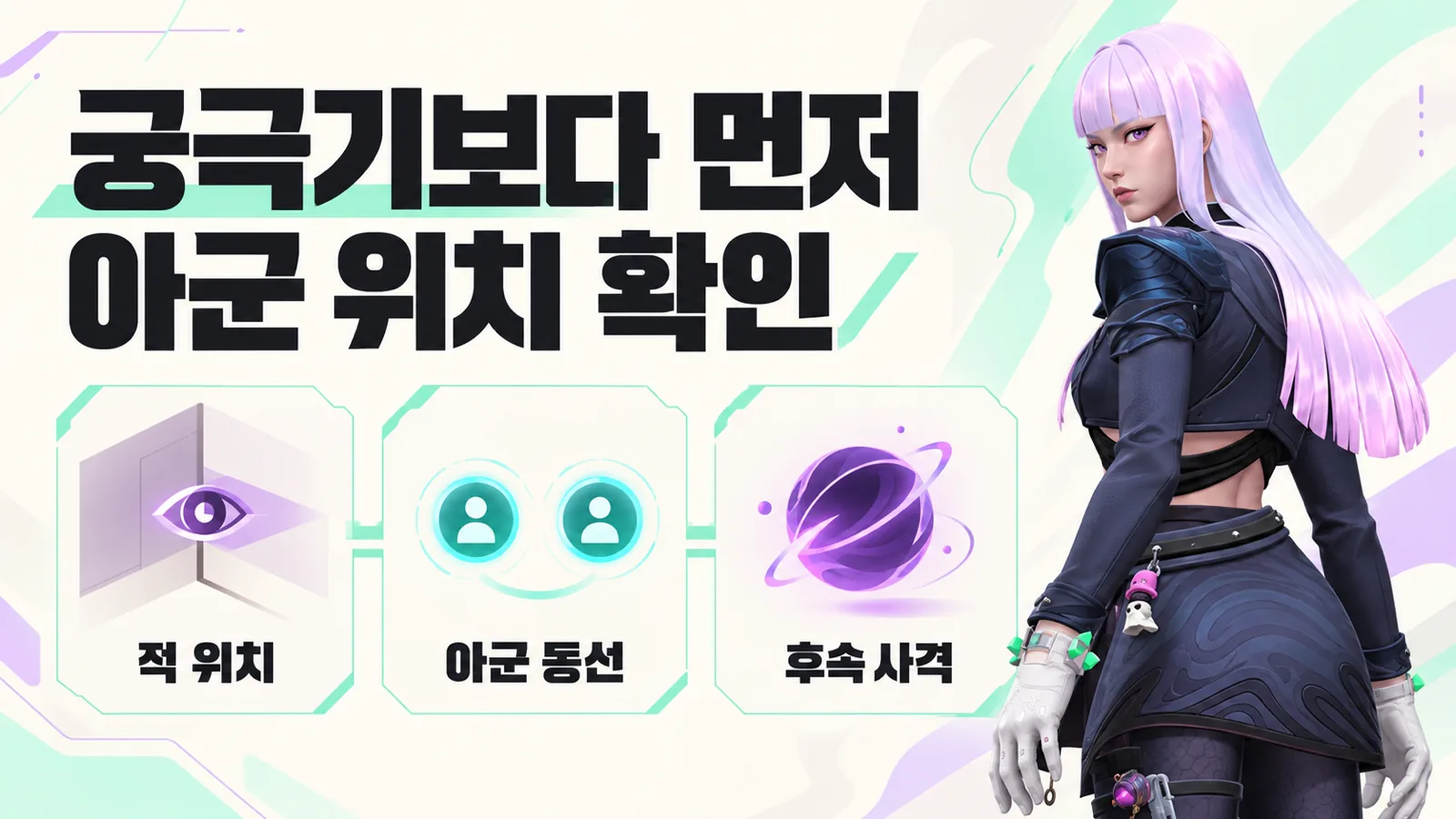
The ultimate technique, Suspension, is to send it forward, move it to the aiming point, and use it again or fire it to explode it. The explosion lifts the player into the air. The ultimate point requirement indicated in the official introduction is 8.
What is worth noting is that the target descriptions for Displacement and Suspension are not limited to enemies. Flashbulb also targets all players looking at it. If used without looking at the location of allies, it can affect the team's movements, so Hush appears to be an agent in whom brief communication before using the skill is especially important.
The scene where you hit multiple people with your ultimate is definitely powerful. However, if the lifted enemy cannot be seen by the ally, or if the ally is fighting an enemy in a different direction, it may not lead to the desired benefit. On the other hand, even if the number of hits is small, it will be worth it if you get a chance to deal with the opponents who were blocking your way to the installation point.
So, before using it, it is a good idea to check the location where enemies are gathered, the path that allies will pass through, and the person who will shoot according to the effect. In a re-entry situation, the results may be different if you use it first before your allies arrive, or if you use it the moment you are ready to attack together. This judgment is not a conclusion based on the actual win rate, but a usage standard derived from the skill structure.
Facing Hush: manage spacing without abandoning trades
The response that can be considered based on Hush's operating principle is location and spacing management. If multiple people overlap in a small area, a single area effect can affect multiple people, and you must also be aware of the collision condition of Displacement. But that doesn't mean we should spread out so much that we can't help each other. The goal is to maintain distance so that you can respond together when your colleagues are attacked, but reduce situations where everyone is crowded behind the same small cover.
When dealing with flashes and displacements, it is better not to judge that it is over just by looking at the direction from which they first fly. This is because Hush can redirect the trajectory. When deciding whether to move behind cover or look away, you need to keep an eye on the projectile's movement.
Flow also has a preparation process, so it is worth looking at the situations in which Hush is exposed before and after the move. However, we cannot assume that this is a loophole that can be unconditionally caught. This is because response conditions change when Hush's flash or support from other team members overlaps. Rather than taking the approach of choosing one specific agent to solve the problem, a more realistic response standard is to distinguish whether Hush moves alone or is supported by a team.
Choose Hush if you enjoy planning the fight after utility
Hush may appeal to players who want to change enemy positions and sightlines before taking a duel. Consider whether you enjoy watching teammates’ movement as much as aiming. Projectile guidance, movement preparation, and follow-up fire all matter; knowing what one button does is only the beginning.
It is too early to confirm the top tier or predict a nerf based on impressions from just a few scenes. The potential of skill composition and repeated performance at various skill levels are two different issues. To see performance, you need to check not only the success scenes, but also whether the team went in together after using the skill, whether it caused any inconvenience to allies, and how much damage was incurred when it failed.
If you practice Hush, there is no need to set your first goal as a spectacular defeat streak. You can start by looking at whether you can intentionally create a scene where you shake up one opponent's position and take advantage of the gap with your colleagues. When you can make that connection over and over again, Hush's various skills will lead to real round power.
