

Getting an opening kill on Lotus but losing the round, or running into defenders every time you rotate? Start by reviewing which space your team controls and what information you have shown the opponent.
Lotus decisions connect team positions and information to the next action. On Jett, entry timing matters as much as entry speed: can teammates follow, and can you make space before reinforcements arrive?
Lotus Decision Framework: Hit or Rotate?
| Confirmed Situation | Action to Consider | Additional Check |
|---|---|---|
| Team grouped on one side, no information elsewhere | Look for an immediate entry window on the current side | Entry utility and follow-up readiness |
| A teammate already controls opposite-side space | Rotate through the secured route | Route safety and remaining time |
| Defenders and utility concentrated at one site | Consider changing the target | Other-site coverage and possible pushes |
| Post-plant numbers advantage | Use cover and crossfires to play the clock | Plant position and defuse access |
| A teammate already covers one route | Support contact or watch a different threat | Confirm that coverage remains in place |
| Two players need to pressure one opponent | Coordinate timing and separate swing paths | Avoid overlapping or blocking each other |
This is a decision order, not an answer sheet. HP, weapons, utility, and time can change the best choice from the same positions.
Start the Attack by Checking Teammate Positions

If All Five Are Grouped, Consider What the Return Route Leaves Unknown
A stalled hit does not automatically justify running to another site. When everyone is grouped on one side, the other side may contain a defender who pushed into the route.
Rotating then requires time to reclear abandoned space. If footsteps revealed your initial hit, waiting can also bring more defenders. When entry conditions are ready, increasing tempo before reinforcements arrive is an option.
A separate teammate controlling another area creates more options: their information can identify a safer route or a weaker defense.
Before committing to a rush, check the minimap:
-
Where is the team grouped?
-
Is anyone checking the opposite side?
-
Can teammates follow immediately when you enter?
Stay in Position to Trade Contact
A teammate may peek before the plan is ready. Once contact starts, getting into a supporting position can be more useful than stopping to explain the original plan.
A trade quickly answers the opponent who kills your teammate. Prepare while the teammate is still alive; arriving after the enemy reaches cover may be too late. Check not only where your teammate stands but whether you can see the same enemy if they fight now.
A-Site Hits: Connect Door Pressure with the Entry
Opening the rotating door toward A Tree can split defender attention. More possible threats make holding one angle less comfortable.
The door alone does not take site. A delayed follow-up gives defenders time to reposition or receive help. Connect the interaction to the actual hit.
On Jett, think about creating usable space: smoke one sightline and pressure another, or open a second angle as teammates make contact so defenders cannot focus in one direction.
Avoid repeating only the same route. Repeated Tree entries can draw stronger coverage. Adjust using what you showed earlier and how defenders responded.
Rotate Based on Enemy Movement and Utility
A rotation changes the attack target. Have evidence for why the other site has become a better option rather than only feeling stalled.
More defenders or several stall abilities on one side can suggest reduced pressure elsewhere. Running blindly toward a waiting strong ultimate can instead make the next fight harder.
Door pressure can also suggest a continued hit before a rotation. If defenders react, it may move coverage. Do not assume the fake works; keep checking the route for a defender holding the transition.
Update the plan with fresh information. If a teammate dies to a push during the rotation, the enemy has learned something too. Reassess likely defensive movement instead of following the plan unchanged.
Post-Plant: Use Sound and the Numbers Advantage
Your Footsteps Also Give Information
A noisy rotation from another site can reveal attackers moving. Walking a segment can delay that information.
Walking the whole way is not always correct. Immediate support may require speed. Separate the stretch where silence helps from the stretch where arrival timing matters more.
Treat enemy audio as a last-known clue. Someone heard on one route can move afterward. Share the sound without declaring every other route safe.
Make the Opponent Move When You Are Ahead
With a planted Spike and more players, reduce unnecessary solo peeks. They can give the defender the isolated duels needed to recover.
Maintain supporting positions and use the fact that the opponent must reach the Spike. The objective is not passive hiding; it is being able to respond together to the defuse.
Defense: Divide Coverage Instead of Watching Everything
If B Is Covered, You Can Focus on Supporting C
When a teammate is actively watching B, reopening a door to check the same route may be redundant. Help the C fight or watch an uncovered threat. Reassign coverage if that teammate moves or takes contact.
When B coverage is maintained, you can concentrate on C support or another uncovered threat. Reassign the job if the B player moves or fights.
Not seeing enemies on A or C gives a reason to suspect B, not certainty. They may be delayed or in uncleared space. Do not call an inference as a confirmed location.
After a Surprise Contact, Leave Useful Information
Unexpected enemies can still appear despite divided roles. Give teammates actionable information rather than a long account of why you were surprised.
Use brief calls such as ‘One right,’ ‘Hit,’ or ‘I’ll swing first.’ Do not invent a damage number if you do not know it. Good information can enable the trade even if you die.
Practice the order enemy location → confirmed count → confirmed damage. It is a communication example, not a required script; prioritize new information over a long repeat of what the team already knows.
Double Swings: Match Timing and Separate Paths
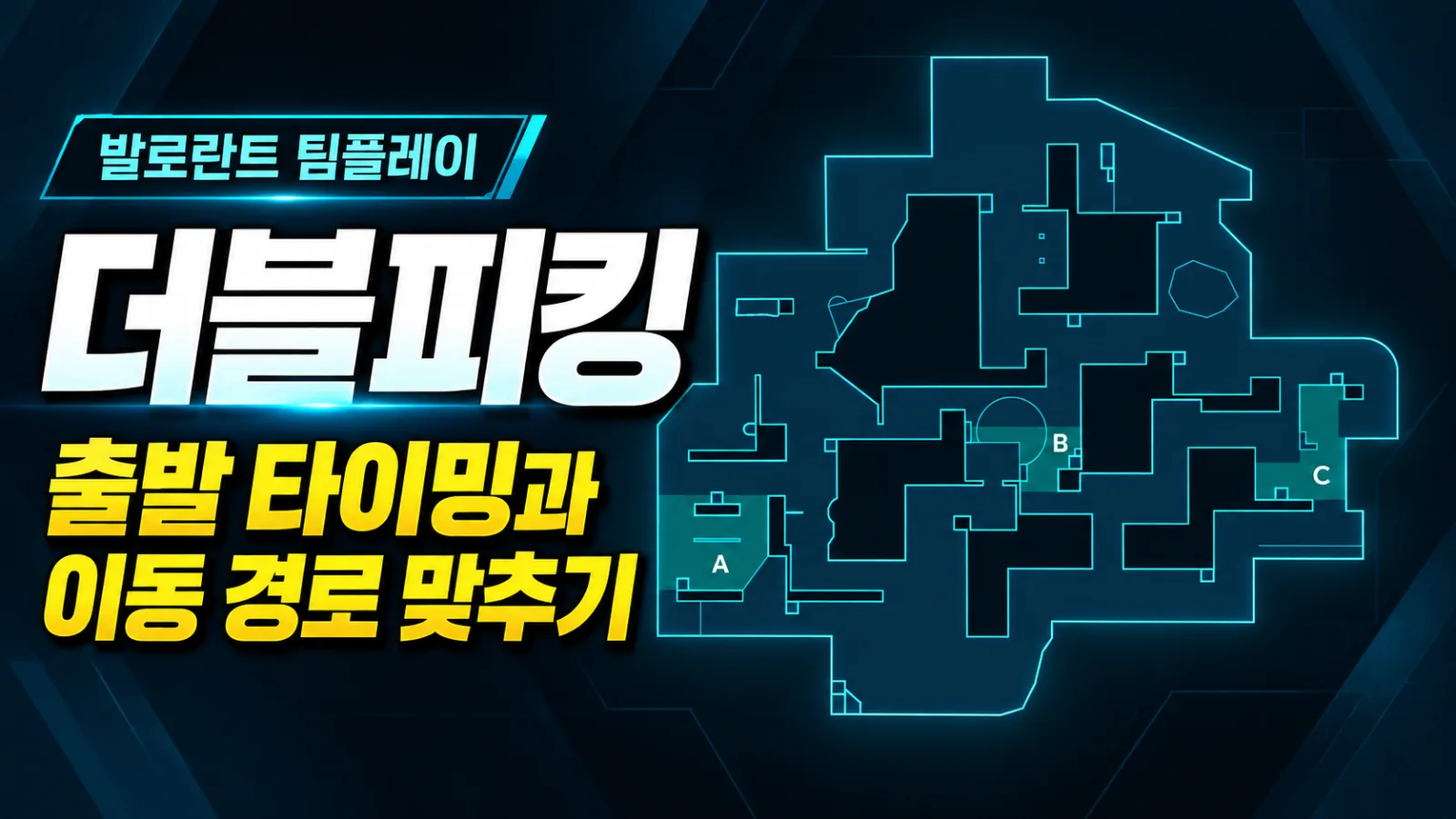
A double swing puts two threats onto one opponent together. Exiting the same doorway simultaneously can still block one player or feed sequential duels if both follow one path.
One player can swing wide while the other holds a different firing lane, forcing the opponent to answer two targets. The wider lateral exposure is a wide swing.
An agent with a ready escape, such as Jett’s Tailwind, may take the wider first contact. Confirm both the escape and the teammate’s usable shot before relying on it.
Keep the timing call short:
‘I’ll swing wide. Swing with me.’
This is an example of role and timing, intended to avoid the second player waiting until the first dies. The opponent should have to process overlapping threats.
If rotations keep dragging you around, a coordinated push can contest the route. Separate the wide swing from the supporting shot, and check the space your push abandons and the positions of remaining teammates first.
FAQ
Must Jett Enter First Every Round?
Creating usable space matters; entering alone without preparation does not complete that job. Match utility, follow-up distance, and defender positions to the timing.
Should I Rotate Immediately When a Lotus Hit Stalls?
Check other-side information and the route first. Abandoned space may contain a push. Use time and controlled areas to decide.
Should I Never Peek with a Numbers Advantage?
Reduce unnecessary isolated fights. A supported peek to stop a defuse or finish a teammate’s contact may still be needed. Check its purpose and support.
Three Habits for the Next Game
Start with three repeatable checks:
-
Check the minimap before attacking. Use team grouping and opposite-side information to choose the hit or rotation.
-
State one sentence before contact. Identify who goes first and which angle you will fight together.
-
Review one decision after the round. Check route clearing, isolation from teammates, and unnecessary peeks while ahead.
When the next Lotus action is unclear, ask which space your team controls, what you showed the enemy, and who can fight with you now. Those questions give rushes, rotations, and duels an explainable purpose.
Regional and version notes
This is a Lotus tactical guide, not a claim about the current competitive map rotation. Callouts such as A Tree refer to the relevant map area; check the current layout and agree on route names with teammates. Jett escape readiness and trade spacing remain conditional. Some illustrations are retained from the Korean edition and may include Korean labels. Use the English article text for instructions.
Localization sources checked October 22, 2026 (Korea time):