
Improving in ranked means practicing both aim and the fights you choose. Fast reactions help, but planning your crosshair placement, stopping point, and teammate timing changes the duel before the enemy appears. When learning from a highlight, focus on the reason behind the play—something you can apply next round—not only whether you can reproduce the clip.
Separate Missed Shots from Bad Fight Selection
Dying first does not identify the cause. Missing an available shot and exposing yourself to two angles require different fixes: one needs shooting practice, the other needs a better route and clearing order. Calling both ‘bad aim’ can leave the same mistake intact despite more practice.
Imagine a doorway exposing a close left corner and a deep right angle at once. Use cover to block one sightline, or utility to limit one threat, before checking the other. You are reducing what you must react to, not only trying to react faster.
Aim still matters. The goal is to create situations where your practiced mechanics can work. In review, separate ‘Could I hit the shot?’ from ‘Should I take this fight?’ to find a specific improvement.
Give Each Peek a Purpose
A peek exposes you from cover to gain information or take a duel. Shoulder peeks and wide swings carry different risks, not just different movement distances. Decide whether you want information, a baited shot, or a kill before treating any one peek as universal.
A narrow choke limits where enemies can appear, making pre-aiming easier. Do not wait until seeing the opponent to decide where to stop. Set the expected crosshair position and stopping point first, then connect movement to shooting. Accurate rifle fire depends on slowing to a stop.
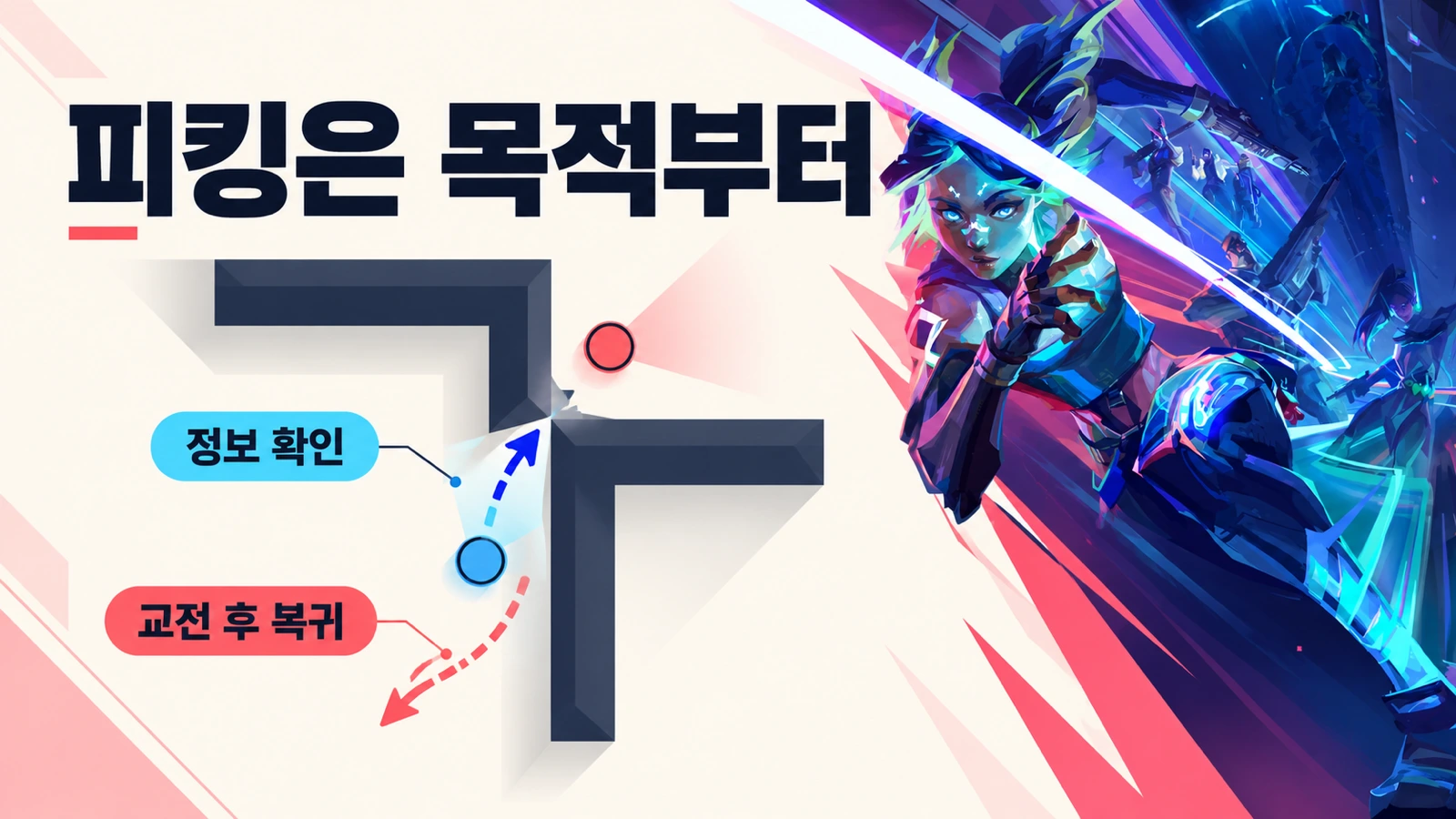
Pre-aiming a likely position does not mean dumping the magazine without checking it. If the angle is empty, clear the next one. Freezing because the first guess was wrong—or continuing into a wide-open area—throws away the benefit of preparation.
Wide swings need context too. They can force an adjustment from someone holding close to a corner. They become risky if the opponent expects the swing or another enemy’s sightline opens. Repeating the same distance gives opponents a predictable target.
Against an Operator, Plan Beyond the Missed Shot
Crossing an Operator-held lane without preparation is dangerous. Consider a brief exposure to bait a shot, or use smoke and flashes to disrupt the hold. A missed first shot does not automatically make the lane safe.
A second opponent may hold the same lane, or the shooter may have retreated behind cover. After hearing the shot, reassess teammate support and whether usable space actually opened. Baiting a shot and taking control are different achievements.
Your return position after a shoulder peek matters. A penetrable wall can still expose you to follow-up wallbangs. Check whether the cover stops bullets and whether you moved far enough from the exposed position, not only whether your model disappeared.
Do not conclude that holding still is always wrong. Network conditions can create peeker’s advantage, but a defender with a prepared angle has advantages too. Choose between holding and peeking using information, utility, sightlines, and teammate positions.
Choose Your Entry Job and First Clear Before Contact
On a fast hit, hesitation can stretch the whole team apart. A flash expires while the first player stops; a late follower misses the opening the entry created. Use buy time to choose your first action rather than design an elaborate playbook.
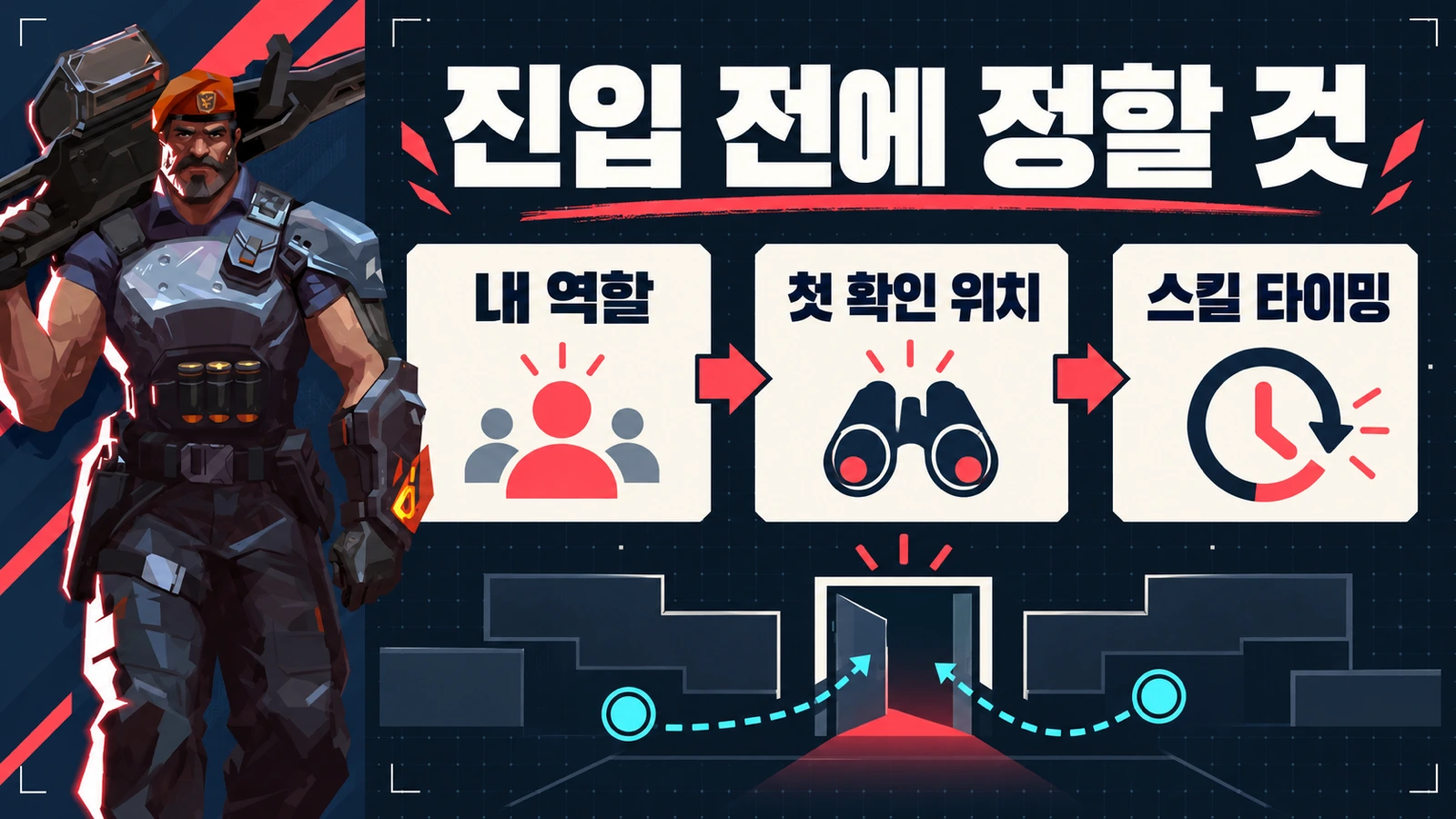
‘I’ll flash us out and clear close right; you clear the other side’ is enough to start. Connect utility, entry order, and who trades first contact. A short call, chat message, or ping helps teammates share that expectation.
Do not judge the entry only by kills. Drawing attention and forcing defenders back can create usable space. Going so far ahead that nobody can support you is different: the team must actually be able to use the opening.
Keep the plan adaptable. If several stall abilities block the entrance, you need not force the original rush. Wait out utility or change routes. Planning helps you recognize what changed and choose a response.
Standing Behind a Teammate Does Not Guarantee a Trade
A trade means quickly killing the opponent who killed your teammate. A wall or excessive distance can prevent it even when moving together. Excessively tight spacing can instead expose both players to the same fire or block movement.
Picture where the entry will stop and what you can see from your own position. Watching only the same right-hand angle can leave another corner uncleared. Distinguish checked space from remaining danger so following has a clear job.
Time utility to support the teammate with their weapon out. Pulling out an ability only after contact may leave you unable to shoot during the trade window. Sometimes immediate gun support beats a late, complicated combo.
Aggressive Plays Need a Stopping Rule
A new peek distance or fast space take can surprise a predictable defender. Surprise alone does not make it good. Ask whether information supports the timing, how much uncleared danger remains, and whether the team can use the play.
Several enemies showing on the other side of the map can justify taking some apparently open space, but it does not locate everyone. Move cover to cover and update information instead of making one deep blind run. The evidence behind aggression matters more than its size.
Once ahead in numbers, preserve the advantage. Chasing another kill can reopen the isolated duel the opponent needs. Regrouping, building shared sightlines, and communicating before the next hit are active ways to use a lead.
If time is short and you must retake, waiting may not solve the round. The same risky duel can become necessary because of the objective and clock. Rules like ‘always push at this rank’ or ‘learn this peek to climb’ miss that context.
Leave Each Review with One Action to Change
Do not overhaul every habit at once. In the Range, check stopping before firing. In Deathmatch, prepare the crosshair before rounding corners. Measure whether you repeat the intended action, not only kills.
Review the lead-up to contact as well as the death. Which angle did you expect, how many sightlines exposed you, and could a teammate help? A sound decision can end in a missed shot, and a poorly prepared peek can win by luck. Review both choice and outcome so successful mistakes do not become habits.
Take one question into your next ranked game: can I explain my reason before taking the fight? Whether you peek for information, space to trade with a teammate, or fall back to protect a lead, a clear purpose makes practice more specific. Better peeking and decision-making means turning that purpose into movement.
Regional and version notes
This guide uses US English terminology. The drills and tactical examples are practice frameworks, not a guarantee of rank improvement. Mouse-and-keyboard inputs refer to PC and may differ from console controls. Some illustrations are retained from the Korean edition and may include Korean labels. Use the English article text for instructions.
Localization sources checked October 22, 2026 (Korea time):