

‘I saw them first. Why did I die first?’
If that happens repeatedly, inspect the movement just before firing. Starting with the crosshair at someone’s feet or shooting while still strafing can change the outcome of the same duel.
You do not need to begin with faster flicks. Start with head-level crosshair placement and stopping before firing.
This routine separates those skills in the Range, then connects them to left-right movement. It is especially useful for learning a controlled rifle first shot.
Before Blaming Aim, Check Placement and Shot Timing
Moving the crosshair onto the enemy is not the entire setup. Check where it was before contact and whether you were still moving when the shot fired.
| Skill | Repeated Mistake | Practice Goal |
|---|---|---|
| Head-level placement | Looking down, then making a large upward correction | Pre-aim the height where the head will appear |
| Stopping | Firing while holding a movement key | Learn the stop-then-shoot sequence |
| Tracking while moving | Strafing moves the crosshair off the target | Keep following the head during your movement |
Trying everything quickly makes the mistake harder to identify. Start with stationary placement, then add movement and shooting one piece at a time.
Why Prepare the Crosshair at Head Height?
Pre-aiming the expected head level reduces the vertical correction needed after an enemy appears.
On a level corridor, approach with the crosshair where a head would emerge rather than at the floor. You are reducing the work required at contact.
But head height is not one fixed point on your screen. Stairs, elevated platforms, and crouching change it. Apply the Range’s height-control practice to the actual terrain.
Slowly Move Between Two Bot Heads
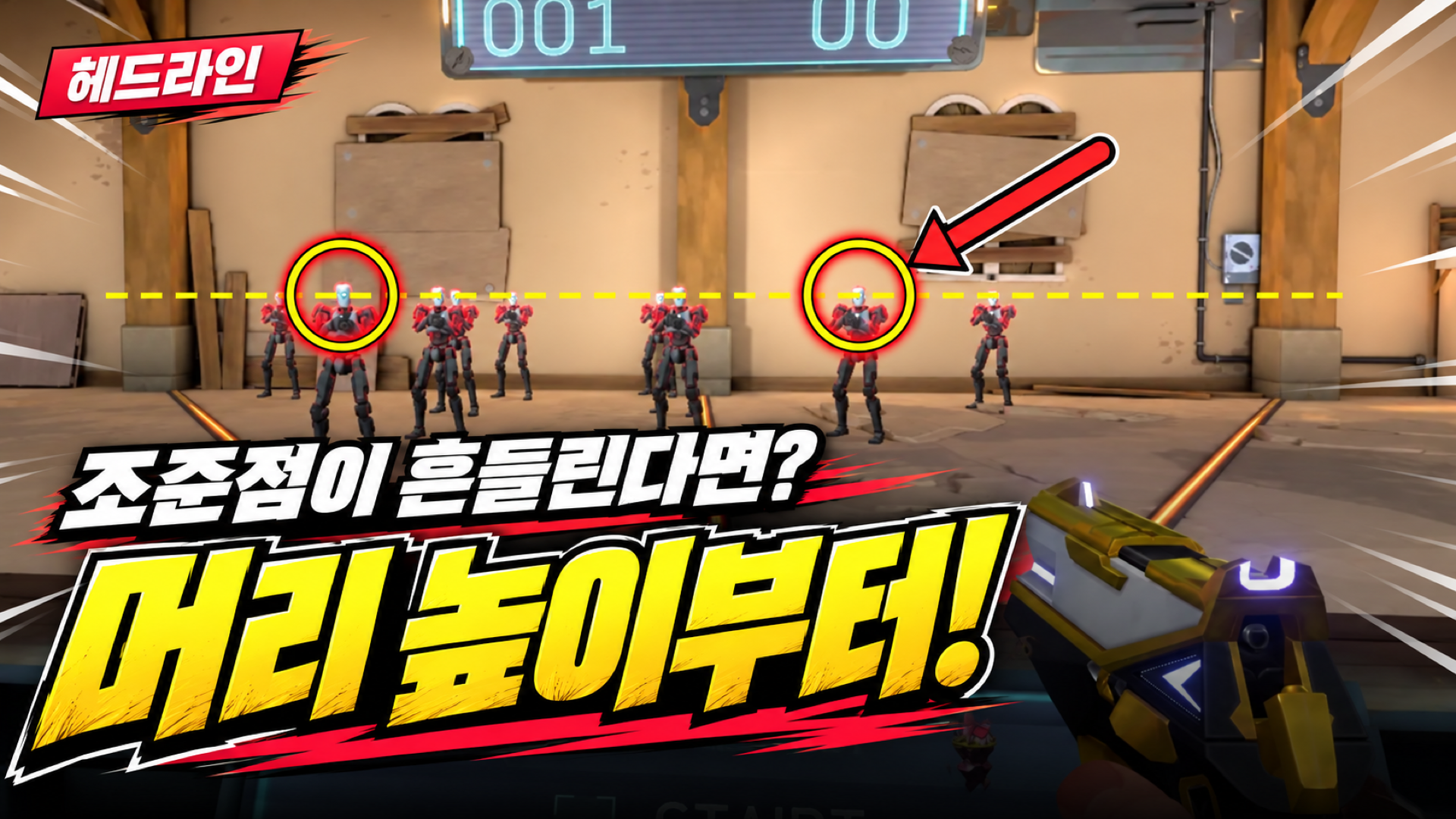
Choose two separated bots and a repeatable standing position using a floor line. Slowly move the crosshair between their heads.
- Start at the center of one bot’s head.
- Move slowly toward the other head.
- Watch for unnecessary vertical movement along the path.
- Return to the first target and repeat.
- Increase speed gradually once height stays controlled.
Maintain height along the movement path, not only at the endpoint. If you overshoot and correct back, slow down temporarily.
You can begin without shooting. Watching the crosshair alone makes movement errors easier to see.
Start with a Clear Move–Stop–Shoot Sequence
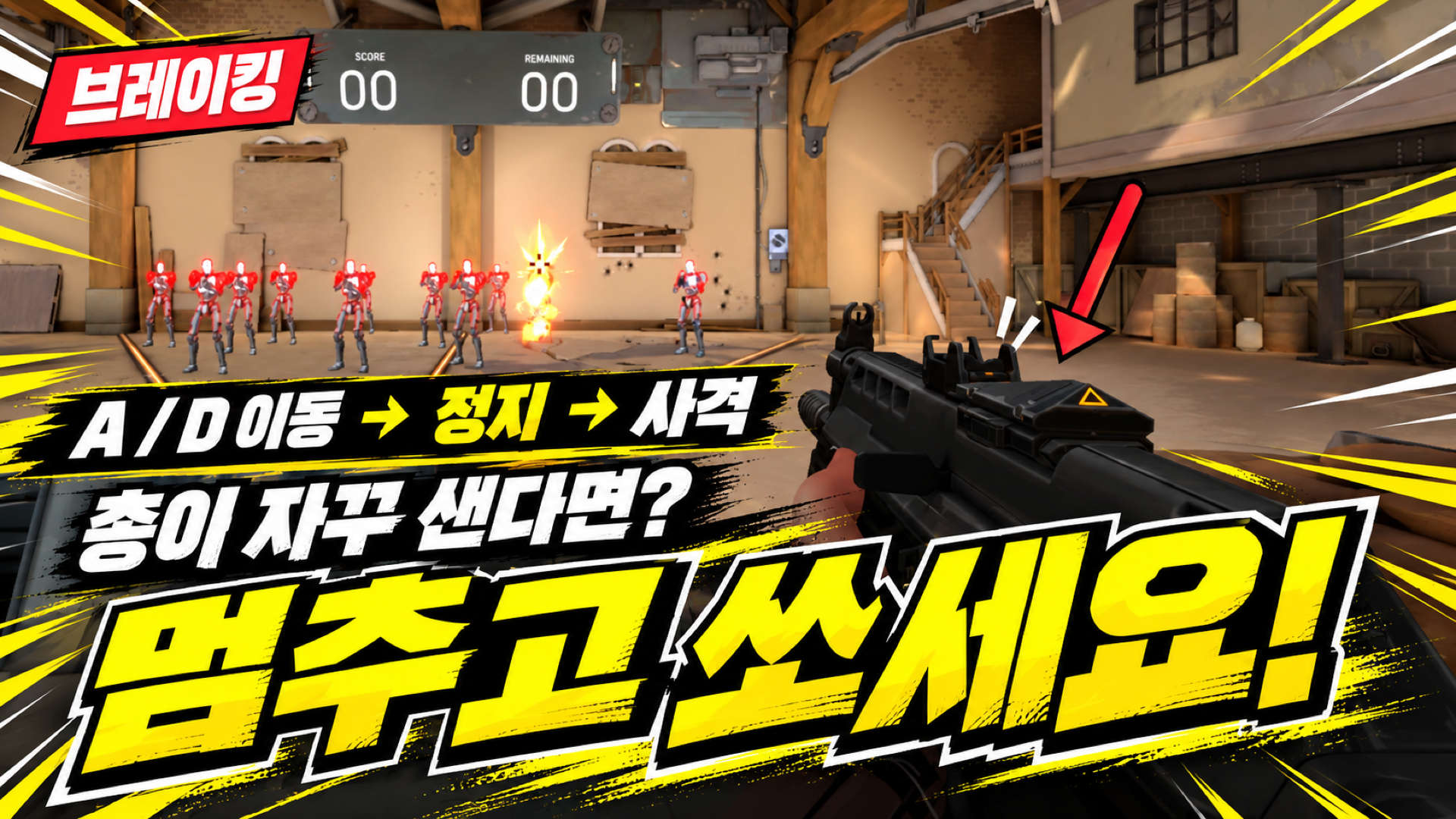
Movement affects accuracy in VALORANT. For a controlled rifle first shot, learn to stop before firing.
Here, the Korean guide’s ‘braking’ means ending movement to reach an accurate shooting state. Begin by releasing the movement key, stopping, then shooting.
- Choose one bot in front of you.
- Hold A to strafe left.
- Release A, let movement stop, then fire one aimed shot at the head.
- Hold D to strafe right.
- Release D, stop, then fire one shot again.
Move → release the key → stop → shoot. Repeat slowly enough to recognize each step. As it becomes consistent, reduce unnecessary gaps between them.
A and D alternate the movement direction in this drill. You are not required to tap the opposite key to stop. First distinguish the release timing from the firing timing.
Your Character Moves; Your Crosshair Follows the Head
As you strafe, the target changes position on screen. Use the mouse to keep following its head.
Begin with one bot. Check whether the crosshair stays near the head during movement and needs only a small correction when you stop.
Waiting until the shot to correct everything leaves too much work after stopping. Connect tracking during movement with firing after the stop.
Do not copy the Range’s repetitive strafe pattern into every real duel. Cover and enemy positions determine direction and exposure distance in a match.
A Four-Step Practice Routine
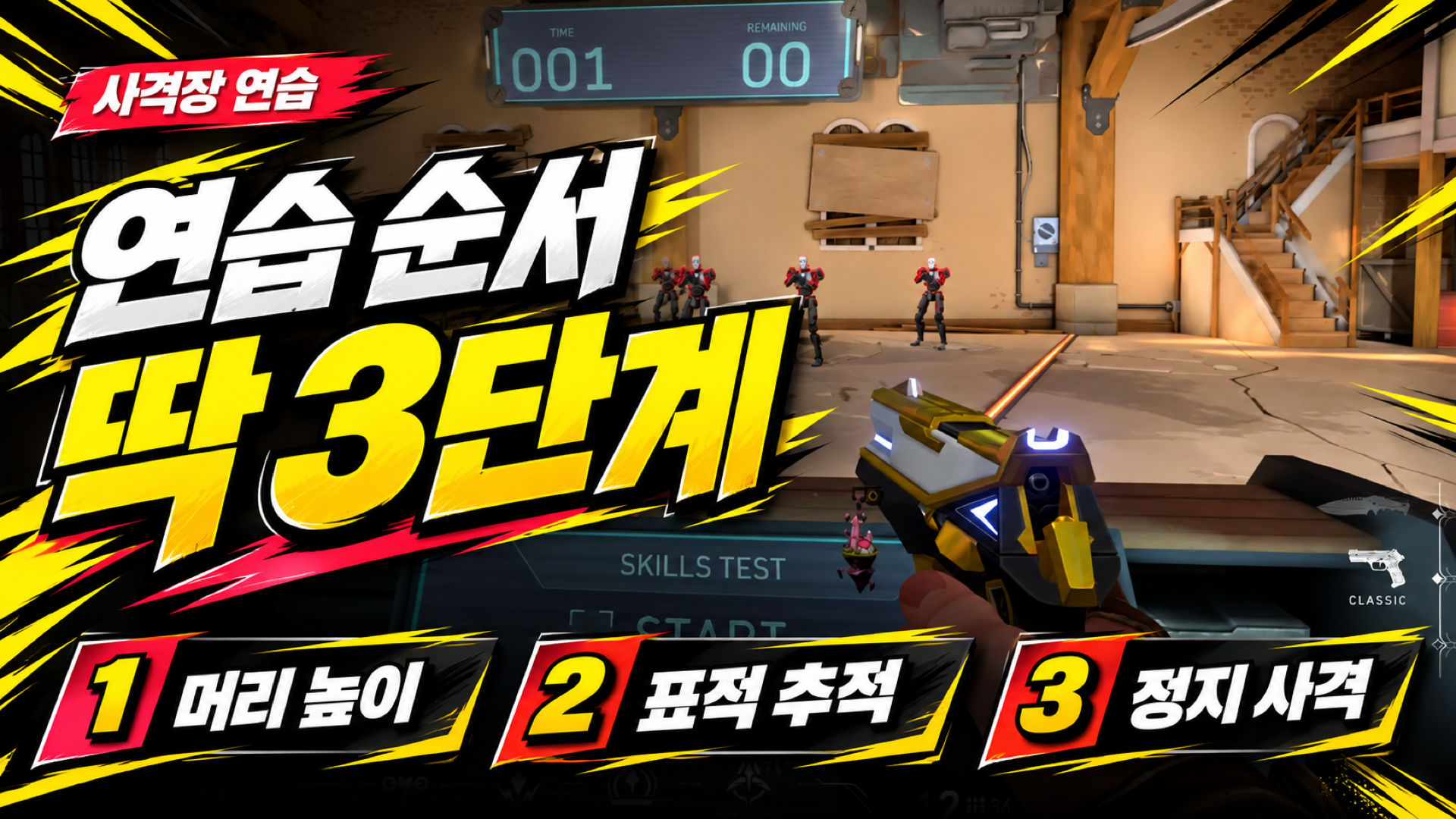
Combine the drills below. Focus on the error at each step rather than filling a fixed timer.
| Step | Drill | Check Before Progressing |
|---|---|---|
| 1 | Stationary switches between two bot heads | Does the crosshair avoid large vertical drift? |
| 2 | Strafe while aiming at one bot | Does the crosshair stay near the head? |
| 3 | Stop after each strafe and fire once | Are you firing before movement ends? |
| 4 | Repeat the sequence slightly faster | Are height and stopping timing still controlled? |
If consistency falls, isolate the failing part instead of restarting everything. Return to step 1 for overshoots or slow step 3 for moving shots.
Aim Practice FAQ
Does Stopping Guarantee a Headshot?
No. It reduces movement-related inaccuracy; wrong aim, spread, and recoil can still miss. Check whether you stopped and whether you aimed correctly separately.
Is Shooting While Moving Always Wrong?
Weapons and distances can make it useful in some situations. For this rifle-precision drill, judge repeatable stopping and firing rather than one lucky moving hit.
Will This Routine Guarantee a Higher Rank?
No. These are shooting fundamentals; map knowledge, utility, and teamwork also affect results.
For the next fight, review two questions: was the crosshair at the expected head level before contact, and did the first shot follow the stop?Use those two checks to guide the review.
Look beyond the hit to what changed before firing. That gives the next practice session a clearer target.
Regional and version notes
This guide uses US English terminology. The drills and tactical examples are practice frameworks, not a guarantee of rank improvement. Mouse-and-keyboard inputs refer to PC and may differ from console controls. Some illustrations are retained from the Korean edition and may include Korean labels. Use the English article text for instructions.
Localization sources checked October 22, 2026 (Korea time):