

If you see enemies first but lose the duel, mouse speed alone will not explain it. Check crosshair placement before contact, movement on the first shot, and what you do after missing.
Start with preparing at head height, stopping before shooting, and correcting one repeated mistake at a time. Here is a sequence from settings through Range drills to real matches.
Diagnose What Makes Your Aim Inconsistent
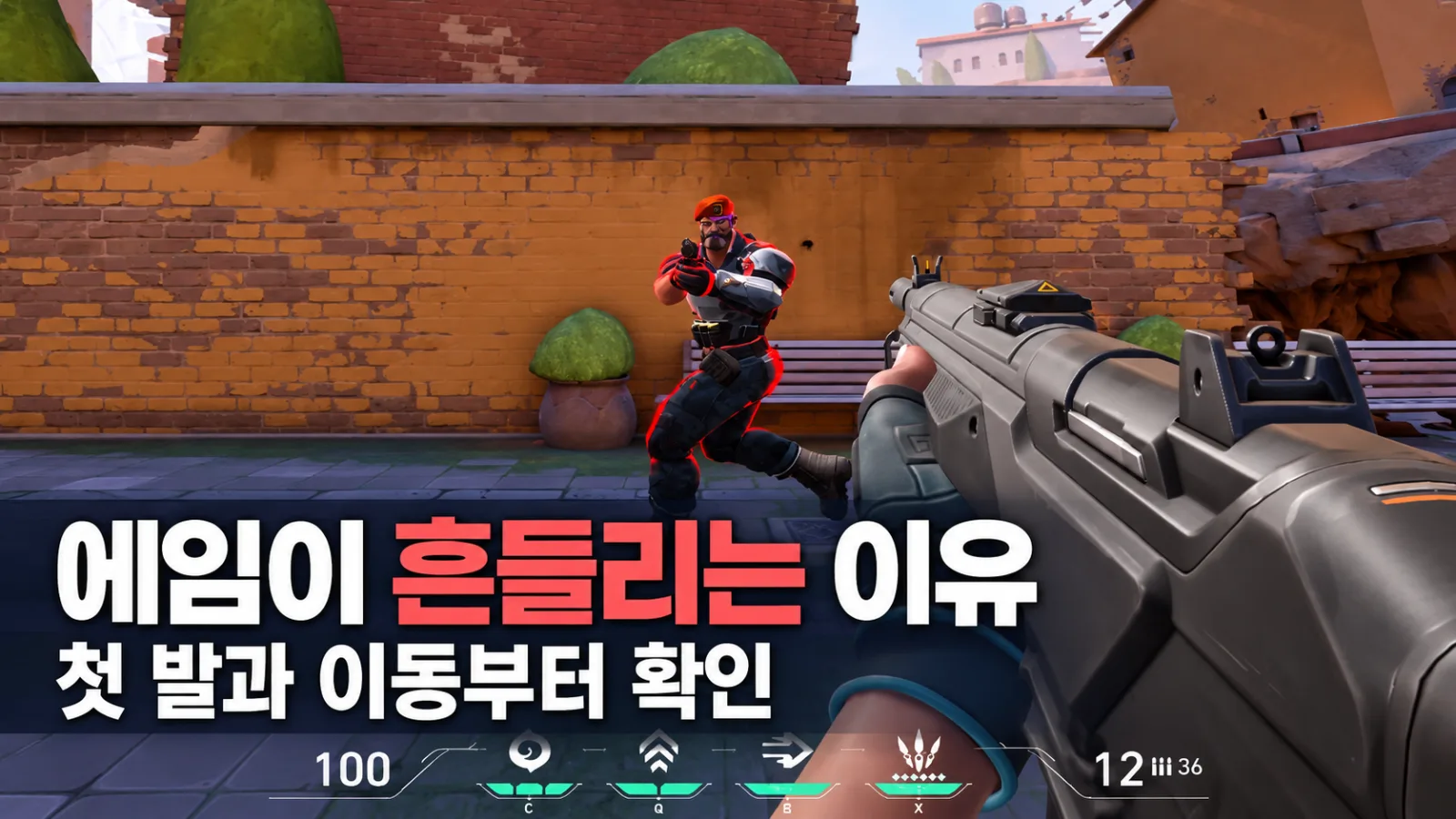
If the Range feels easy but ranked does not, compare the demands. Matches combine movement, clearing, and utility reactions. A large correction every time an enemy appears adds pressure just before the shot.
Record a few recent fights and use these examples to separate causes.
|
Observed Problem |
Check First |
Practice Target |
|---|---|---|
|
Large upward correction at contact |
Crosshair height during movement |
Pre-aim expected head level |
|
Repeated first-shot misses |
Movement at the firing moment |
Fire the first shot after stopping |
|
Overshooting and correcting back |
Mouse movement and sensitivity |
Controlled travel followed by a small adjustment |
|
Holding fire after losing the target |
Response to a miss |
Reset firing and reacquire the target |
|
Taking damage from several directions |
Exposure and cover |
Clear one angle at a time |
A first-shot miss does not prove sensitivity is wrong. Separate placement from movement timing before choosing the fix.
Reduce Work Before Contact with Crosshair Placement
Maintain Expected Head Height While Moving
Prepare the crosshair before the opponent appears. Looking at the floor creates an extra upward correction. Use standing head height on level ground and adjust for stairs or elevated positions.
Walls and box edges can be reference points, but not every object marks head height. Learn landmarks against actual player positions on each map.
Pre-Aim Likely Contact Points
Riot’s beginner guidance emphasizes learning where enemies can appear and watching those places. Apply that by checking doorways, corners, and box edges in sequence.
The gap between your crosshair and a corner depends on the opponent’s movement and your response time. If they pass it before you shoot, hold slightly wider. If a tiny peek requires a large correction, try a tighter hold.
Check First-Shot Accuracy After Stopping
Stop Before Firing
Riot’s guidance recommends stopping for accurate fire. In basic rifle practice, inspect any habit of pressing movement and fire together as soon as an enemy appears.
Strafe in the Range, stop, aim, and fire once. Separate movement and shooting slowly at first. Gradually reduce wasted waiting without firing before the stop.
The goal is learning when your own first shot becomes consistent, not mechanically copying one key pattern.
Re-Aim After a Miss
In practice, stop firing and reacquire rather than instantly compensating with many more bullets. Real fights can still call for spraying depending on weapon, range, and target movement; not every duel needs single taps.
If you habitually hold fire at long range after losing aim, practice short bursts and a reset. With nearby cover, also practice disengaging before taking the next duel.
Sensitivity and Crosshair Settings
Compare Sensitivity Under Consistent Conditions
A copied pro sensitivity still needs to fit your hand movement and mousepad space. Watch for repeated overshoots or undershoots.
Adjust DPI or in-game sensitivity one at a time. Test both small distant corrections and larger close-target switches. Changing everything after a few misses makes comparisons unreliable.
Choose a Crosshair That Helps You See the Target
Neither a dot nor a cross is right for everyone. Check whether it obscures the head and whether its center remains visible on bright or busy backgrounds.
Compare changes at the same distance on the same targets. The purpose is easier target recognition and centering.
An Adjustable Pre-Ranked Routine
The following is an approximately 15-minute example—not an official required duration or a guaranteed improvement formula. Adapt it to focus and available time.
|
Step |
Time |
Drill |
Check |
|---|---|---|---|
|
Small corrections |
3 minutes |
Slowly center stationary bot heads |
Overshooting and correcting back |
|
Stop and shoot |
4 minutes |
Strafe, stop, fire once |
Firing while still moving |
|
Target switches |
3 minutes |
Move between separated targets |
Skipping the final small correction |
|
Match-like contact |
5 minutes |
Focus on one habit in Deathmatch |
Crosshair height and stopping |
In the Range, Repeat the Correct Action
Chasing only a speed score can repeat rushed shots. Slow down to confirm aim and stopping, then increase speed when the action is stable.
In Deathmatch, Choose One Goal
Use placement independently of leaderboard rank. Pick head-height control, first-shot timing, or reacquiring after misses. Sudden crossfire deaths need not all count as aim failures.
Transfer Practice into Matches
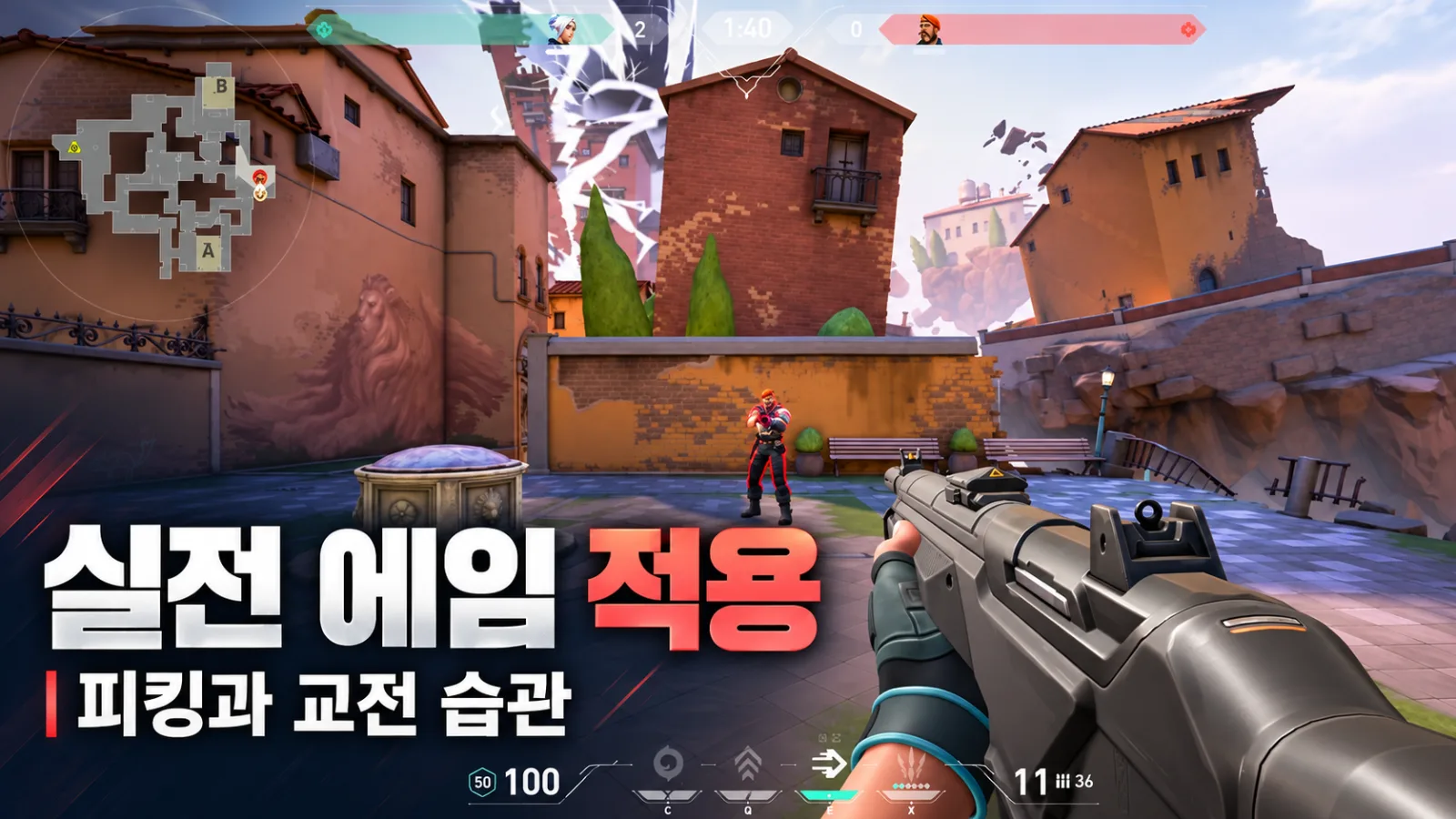
Reduce the Angles in Each Peek
A peek exposes you from cover to check opponents. Clear likely dangers in order instead of checking everything with one wide swing. If you expose several enemies at once, review route choice alongside aim speed.
Check Utility and Teammates Before Contact
Smokes and a coordinated entry change the duel. Riot’s guidance also emphasizes smoke-assisted entries and sharing information. Before exposing alone, check support and whether teammates can follow immediately.
Change One Habit After Review
Pick three lost fights and inspect the pre-contact crosshair and first shot. Repeated moving shots point to stopping practice; a consistently low crosshair points to placement. Choose one recurring cause rather than changing everything.
Aim Practice FAQ
Is an Aim Trainer Enough?
It can practice target switching and corrections, but movement and map clearing also need in-game work. Use the Range for stopping and match-like contact for placement.
Is Lower Sensitivity Always Better?
No. Compare small corrections with the ability to turn comfortably. A badly placed crosshair before contact still needs its own fix.
Why Do I Lose Ranked Despite Good Aim?
Positioning, communication, utility, and team buys matter too. Review unnecessary exposure after a first kill and isolated fights away from support.
What if My Warm-Up Goes Well but I Miss in Matches?
Check whether the practiced action survived the transition: head-height placement and a stopped first shot, for example. Observable habits give the next session a specific target.
Before changing sensitivity today, inspect crosshair height and the timing of the first shot.
Regional and version notes
This guide uses US English terminology. The drills and tactical examples are practice frameworks, not a guarantee of rank improvement. Mouse-and-keyboard inputs refer to PC and may differ from console controls. Some illustrations are retained from the Korean edition and may include Korean labels. Use the English article text for instructions.
Localization sources checked October 22, 2026 (Korea time):