

The reason to combine a Thumbgrip and Heavy Stock on the M416 is straightforward: the stock supports recoil control during sustained fire, while the grip eases the transition into aiming down sights. It balances the moment you begin aiming with the period you keep shooting.
Do not mistake that for a “zero recoil” setup. Attachments reduce workload; they do not hold your aim for you. A useful M416 setup is one that lets you repeatedly spot, aim, and keep hitting, rather than one impressive spray clip.
This guide concerns PUBG: BATTLEGROUNDS on PC and console, covering what these attachments do and how to compare alternative grips.
The grip and stock help at different moments
The Thumbgrip’s strength is ADS speed, with additional help for vertical recoil and breath sway. The Heavy Stock improves vertical and horizontal recoil control at the cost of ADS speed and hip-fire accuracy. Each has a different job.
Official patch history illustrates the pairing. Update 20.1 raised the Thumbgrip’s ADS-speed bonus to +40%, and 31.1 increased vertical recoil control to +10%. The same 31.1 update raised the Heavy Stock’s vertical and horizontal recoil control to +10% each. Its ADS-speed penalty has been listed as -10%.
These figures describe functions, not a license to add +40% and -10% and claim exactly 30% less aiming time. Speed and elapsed time are different quantities, and stacking rules matter. The useful point is that the grip offsets the stock’s slower aiming transition in principle.
Spotting an enemy while sprinting emphasizes how quickly you can aim; already holding an angle emphasizes maintaining hits. The pairing is a compromise between those situations in one setup.
A steady-looking spray is not the same as more hits
Spray appearance also depends on mouse control, standing or crouching, magnification, range, and burst duration. Comparing clips under different conditions and crediting one attachment can identify the wrong cause.
Distinguish camera shake from bullet dispersion. A clearer view may help tracking, but visual stability alone does not establish recoil performance or accuracy. Feeling comfortable and hitting better at every range are different claims.
The Heavy Stock also reduces hip-fire accuracy. A setup chosen for aimed sprays is not automatically best for a very close encounter without ADS. Faster aiming from the Thumbgrip does not erase every drawback.
Look for repeated mistakes rather than one ideal pattern: late first shots, climbing after several rounds, or losing the target horizontally imply different needs. This combination is a candidate for balancing ADS and sustained fire, not a universal cure.
The M416’s value shows in repeatable mid-range hits

Damage per bullet and fire rate attract attention, but fights also depend on how many successive rounds actually connect. Strong specifications are harder to exploit when recoil sends rounds past the target.
That is a practical reason to use a familiar M416: consistently following enemies between cover is a real advantage. If you already control another weapon comfortably, however, there is no automatic requirement to switch.
Later balancing also matters. Update 39.1 reduced M416 horizontal recoil by about 5% and increased AUG horizontal recoil by about 4%. That helps contextualize handling comparisons, but does not make the M416 superior everywhere. Recoil changes do not equalize fire rate or armor-dependent kill requirements.
Use the pairing in ways that exploit it. Cover and pre-aiming a likely route give more preparation than a sudden face-to-face exchange. At longer range, stop and reset a drifting spray instead of forcing the whole burst. Good attachments do not make one firing pattern appropriate at every distance.
Other grips deserve a comparison
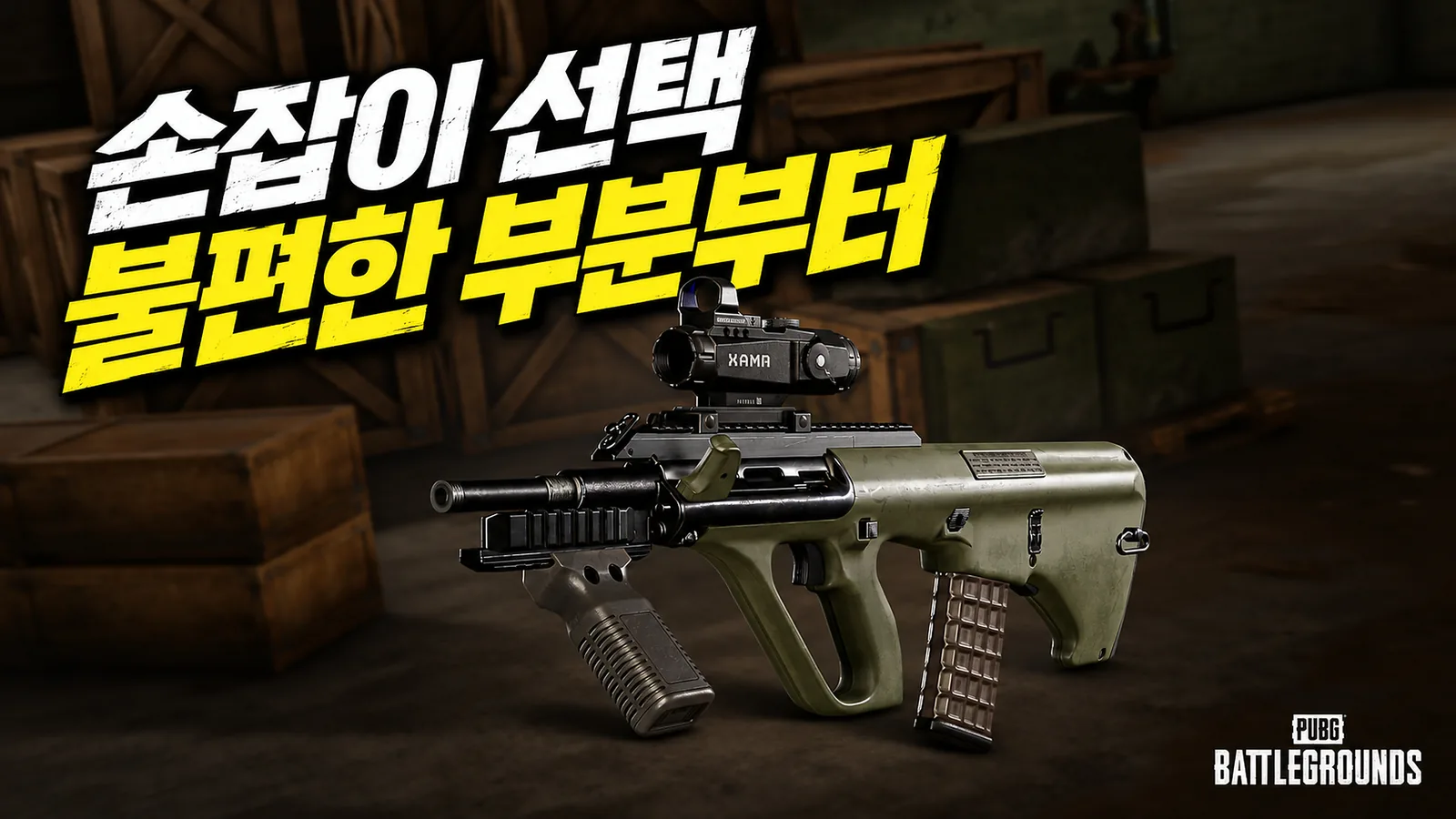
A Thumbgrip recommendation should not make you ignore alternatives. Update 41.1 introduced the Tilted Grip and improved Half Grip horizontal control. Remembering one older setup can hide newer options.
At introduction, the Tilted Grip listed +12% vertical recoil control, +6% horizontal control, and +25% firing-camera-shake control. Half Grip horizontal control rose from +8% to +16%. The same update removed the Angled Foregrip from world spawns, another reason not to reuse an old attachment chart unchanged.
| Problem you notice first | Option to compare | What to observe |
|---|---|---|
| Slow transition into ADS | Thumbgrip | The transition from spotting an enemy to initial aim |
| Too much upward pull while aiming | Vertical Foregrip or Tilted Grip | Vertical control at the same range |
| Losing enemies left or right during a spray | Half Grip | Horizontal misses and target tracking |
| Camera shake makes tracking difficult | Tilted Grip | The difference between a steadier view and actual hits |
This is a starting point, not a ranking. Aim movement and recoil control can interact even when one symptom stands out. Changing grips also changes the ADS feel, so a stationary wall pattern should not decide everything.
Change one variable at a time
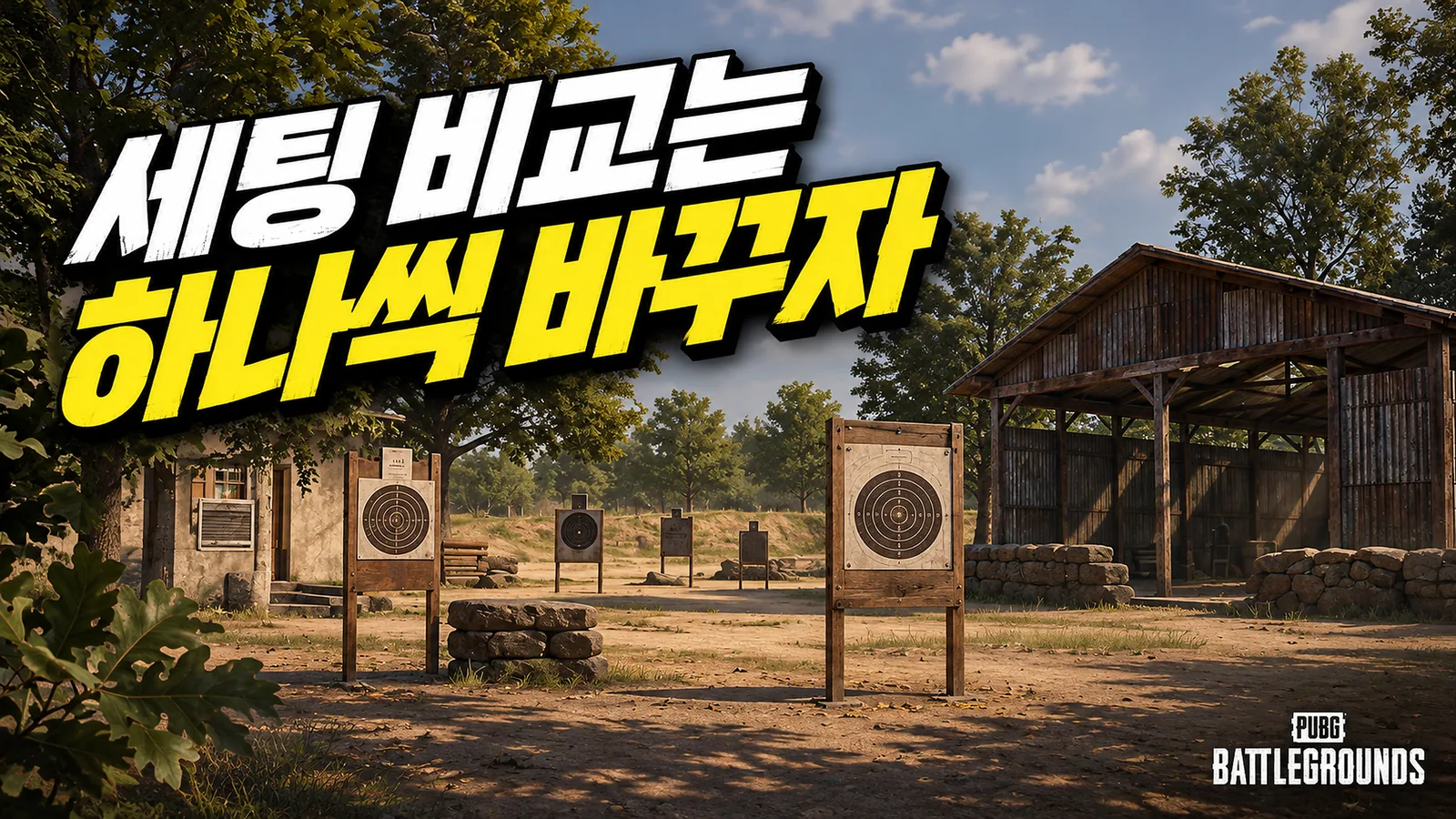
Use Thumbgrip plus Heavy Stock as a baseline, then change only the grip. Changing muzzle, scope, and sensitivity at the same time makes improvement hard to explain. Keep your usual muzzle and optic fixed and compare from the same stance.
Start with repeated bursts of similar length at a stationary target at the same range. Look for recurring deviations instead of selecting your best magazine. Compare standing and crouching separately so posture does not become a hidden variable.
Next, lower and raise your sights between attempts. Starting every test already aimed misses the Thumbgrip’s main transition benefit. Finally track a moving target to distinguish tight wall grouping from the ability to follow an opponent.
After selecting a grip, compare Heavy and Tactical Stocks while holding everything else constant. Instead of copying someone’s sensitivity or vertical multiplier, judge whether you can repeat the intended motion with your own input.
Fight preparation matters before a fully attached rifle
Looting does not always provide every preferred attachment. Delaying a necessary rotation to find a Thumbgrip or Heavy Stock can cause a bigger problem than imperfect handling. Losing a strong position or being chased by the blue zone cannot be fixed with a completed attachment set.
Use the grip available while keeping your preferred setup in mind. Range, ammunition, reload cover, and teammate sightlines let attachments do their work. Even a comfortable rifle gives the enemy time if you expose yourself for an entire magazine.
Thumbgrip and Heavy Stock are a useful baseline for balancing ADS transitions and sustained fire. Choose by whether you can keep the sequence from first aim to follow-up shots stable at your usual range. That criterion also makes substitutions easier when the preferred parts do not appear.
