

For Water-type Pokémon in Pokémon GO, coasts, beaches, lakes, and rivers are useful environments to investigate. This guide concerns destinations in South Korea for Trainers already visiting the country; it is not a North American location list.
Biomes affect which Pokémon can appear. The official beach examples include Squirtle, Psyduck, Seel, and Magikarp, though those examples do not guarantee today's pool at every waterfront.
Season, events, weather, and time can change encounters. Evaluate PokéStop access and an easy walking route as well as the presence of water.
The original Korean guide's first choice was the Gwangalli Beach–Millak Waterfront Park area in Busan. That is the author's route preference, not a measured spawn-rate ranking.
Choosing a Water-Type Hunting Route
A sea or river on the map is only one part of a useful location.
For a longer session, consider:
- Coastal, beach, lakeside, or riverside surroundings
- Accessible PokéStops and Gyms
- A practical pedestrian route
- Convenient public transit
- Places to rest and replenish supplies
- Accessible stops where Lure Modules can be used
- An active local Trainer community when you need raid partners
A beach biome with few stops may make ball supplies difficult. Conversely, a dense city route beside water may still feature mostly urban encounters. Check the game instead of assuming the real-world shoreline fixes the encounter pool.
Busan: Gwangalli Beach and Millak Waterfront Park
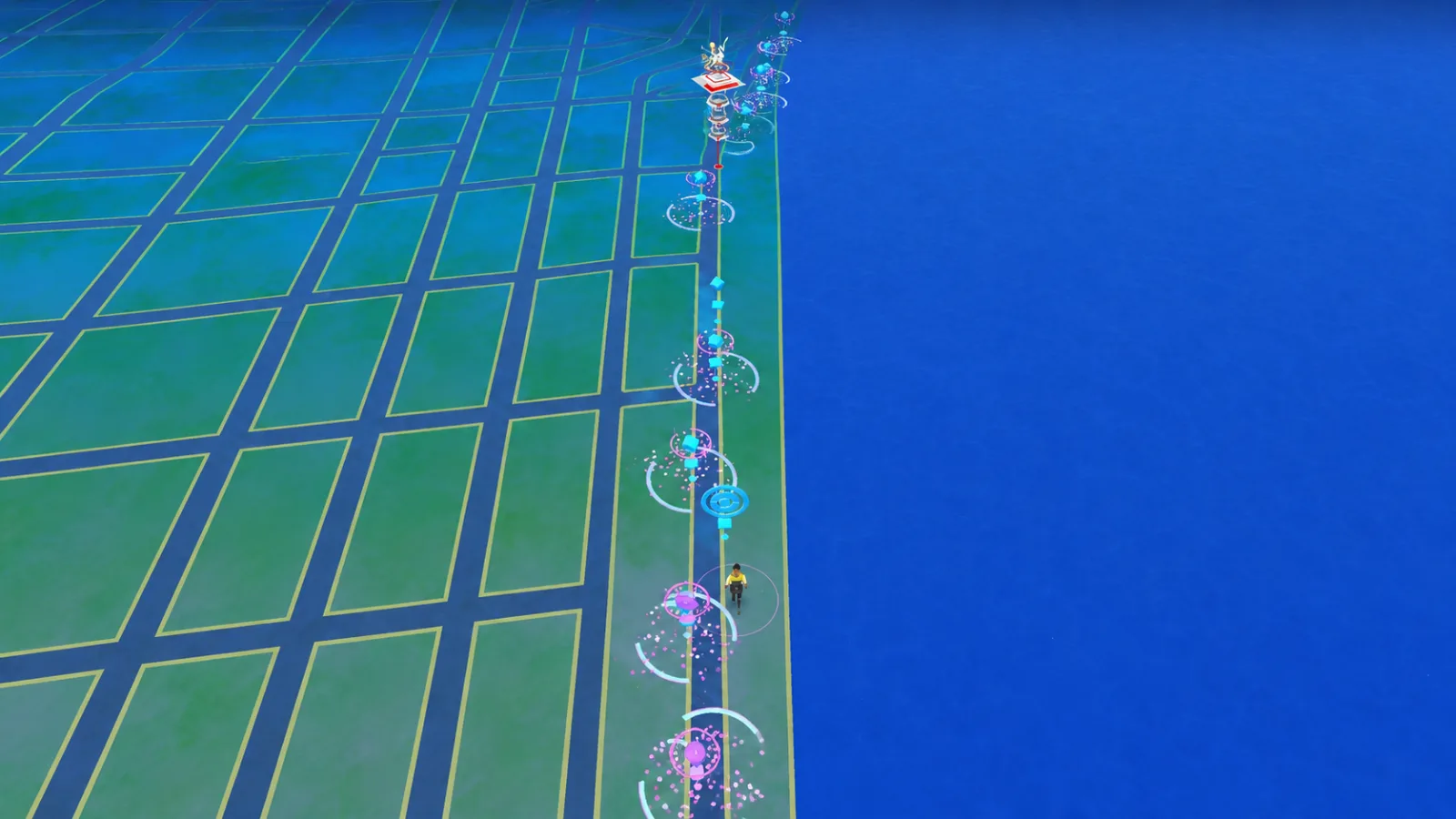
The source's preferred Korean route combined Gwangalli Beach with the Millak waterfront area.
The appeal was the coastal setting and nearby city amenities. Moving along the waterfront can connect beach and park sections, subject to current access and conditions.
A Suggested Gwangalli Route
From the Gwangan or Geumnyeonsan station area, the source suggested visiting these sections. Check a current pedestrian map before following the entire route.
- Central Gwangalli Beach
- Beach promenade
- Millak Beach Park
- Millak Waterfront Park
- Toward the Suyeong River mouth
That route lets you compare beach, waterfront-park, and river-mouth encounters rather than assuming every section has the same biome.
Nearby restaurants, cafés, and shops can make breaks easier. On community event days, the area may also attract other Trainers; the guide does not establish a guaranteed meetup or charging facility.
Crowds and Event Days
Weekend evenings and festivals can be busy. Pay attention to pedestrians and cyclists when moving between encounters.
Large events such as Busan's fireworks festival can change access, crowding, and mobile connectivity. Check local notices and avoid assuming an ordinary quiet walking route during a festival.
Seoul: Yeouido Hangang Park
For someone staying in Seoul, the source favored Yeouido Hangang Park for accessibility rather than proving it had the highest Water-type spawn rate.
The official Seoul tourism guide confirms its location near Yeouinaru Station. Riverside paths and public facilities make it a place to combine a walk with checking nearby game activity.
A Suggested Yeouido Route
The source proposed starting at Yeouinaru Station and exploring the park around Mulbit Square, adjusting the route to current access.
- Yeouinaru Station
- Mulbit Square
- Hangang Park walking paths
- The area beneath Mapo Bridge
- Toward Yeouido Park
Check riverside encounters while replenishing items at available stops. Moving toward Yeouido Park offers a different urban and park setting; it need not share the waterfront's encounter pool.
Other Hangang Parks to Consider
If Yeouido is too crowded or inconvenient for your itinerary, the source offered these alternatives:
- Ttukseom Hangang Park
- Banpo Hangang Park
- Mangwon Hangang Park
- Jamsil Hangang Park
- Nanji Hangang Park
Stop distribution and encounters differ by section and can change. Check Nearby after arrival; if the targets are absent, try another accessible stretch instead of assuming the whole river shares one pool.
Sokcho: Cheongchoho Lake and Sokcho Beach
Sokcho offers the chance to compare a lake and the coast within the same trip.
The source linked Cheongchoho, Expo Tower, and Sokcho Beach to sample lake, city, and beach environments. Treat this as a sightseeing route to adapt, not a guaranteed continuous spawn corridor.
The Source's Sokcho Stops
- Cheongchoho Lake Park
- Expo Tower
- The southern lakeside paths
- Sokcho Beach
- Toward Oeongchi Beach
Check the lake's nearby encounters first, then compare the game's beach environment near Sokcho Beach.
The sections are spread out. Breaking them into separate walks or using suitable local transport can be more practical than walking every segment in one session.
Combining Play with a Sokcho Visit
The source suggested combining catches with other activities:
- AR photos with lake or sea scenery
- Beach walks and Egg hatching
- Gym battles where available
- Visiting accessible sightseeing-area PokéStops
- Joining an available raid group
Sokcho was proposed for combining travel and collecting, rather than as a verified fastest farming location.
Incheon: Songdo Central Park and Cheongna Lake Park
The source's Incheon options were Songdo Central Park and Cheongna Lake Park.
Both provide urban waterfront walking settings. Do not assume a lakeside park is classified as a beach biome; check encounters and stops as you walk.
Songdo Central Park
The source highlighted transit access and nearby cafés and restaurants. A lakeside loop can provide a straightforward walking session, subject to current park access.
Its mix of city, park, and water settings may suit a broader catch session rather than Water-types alone.
Cheongna Lake Park
The connected lakeside paths were suggested for longer walks, potentially combining catching with Egg and Buddy distance.
Stop density need not be uniform. Use the live game map to identify useful accessible sections rather than expecting continuous resupply everywhere.
Jeju: Coastal Options
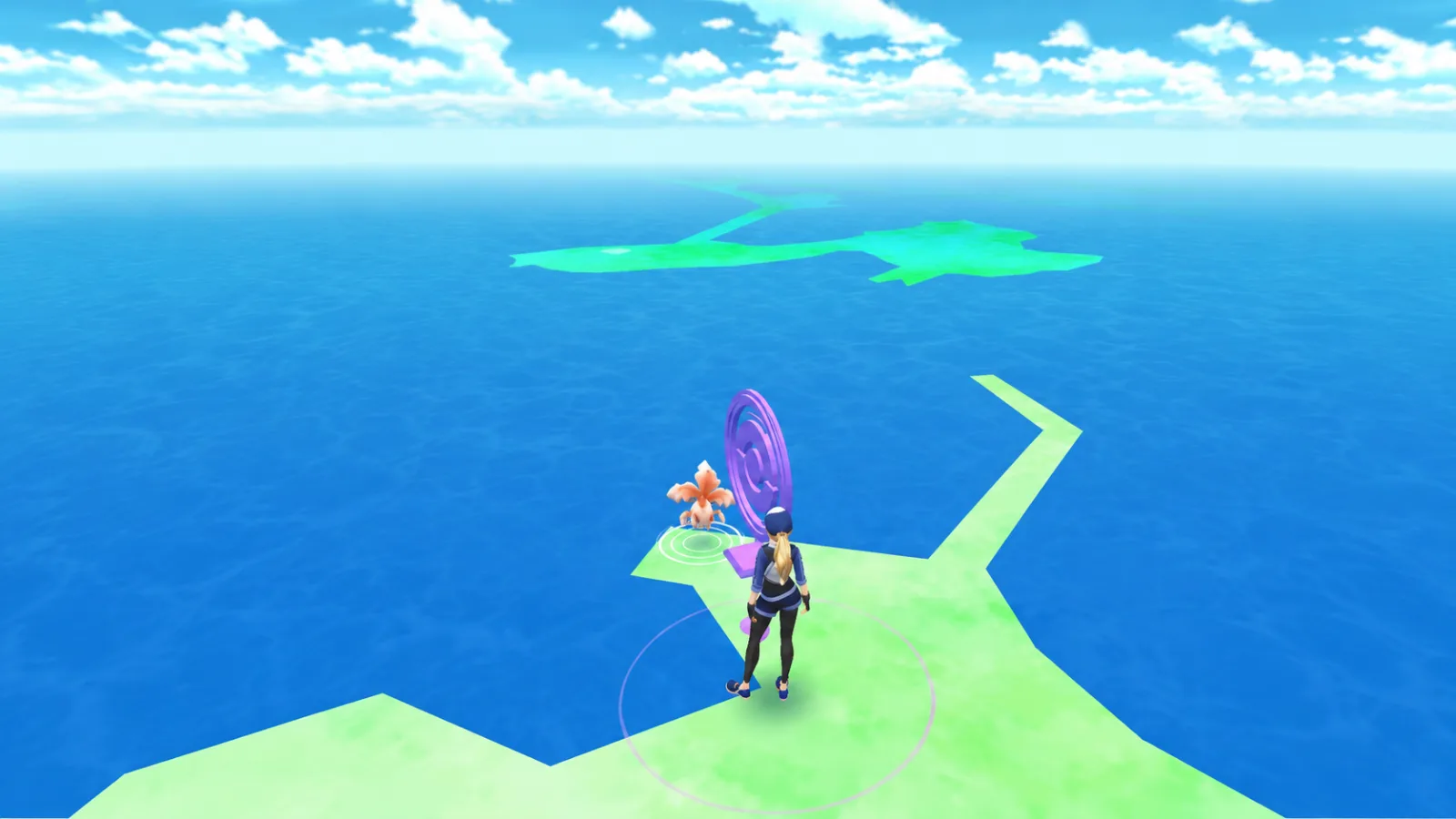
Jeju has many coastal settings, but an island-wide coastline does not make every location the same biome or encounter pool.
The source mentioned popular beaches such as Hamdeok, Iho Tewoo, and Hyeopjae for someone already traveling on Jeju. It did not provide evidence that a separate trip would be worthwhile for a specific Pokémon.
Jeju Locations Mentioned in the Source
- Hamdeok Beach
- Iho Tewoo Beach
- Hyeopjae Beach
- The Tapdong waterfront performance-area surroundings
- The Yongyeon Cloud Bridge area
- The Saeyeongyo Bridge area in Seogwipo
These places are spread across the island. Choosing an accessible beach near your accommodation is usually easier than trying to link several distant coasts into one catching session.
Strong wind or heavy rain can make coastal paths unsuitable. An in-game bonus is not a reason to ignore real-world access conditions.
Rainy Weather and Water-Type Encounters
Pokémon GO's weather system can boost Water, Electric, and Bug types when the game displays rainy weather. It does not guarantee a particular species.
Weather-boosted wild encounters can have higher levels and award extra Stardust when caught, subject to the usual weather rules.
Check the in-game weather alongside the location when choosing a target pool.
Real rain does not always match the app immediately. Open the weather icon and check which types the game currently boosts.
During heavy rain, typhoons, or lightning, follow local conditions rather than trying to maximize catches.
Making a Catching Session More Useful
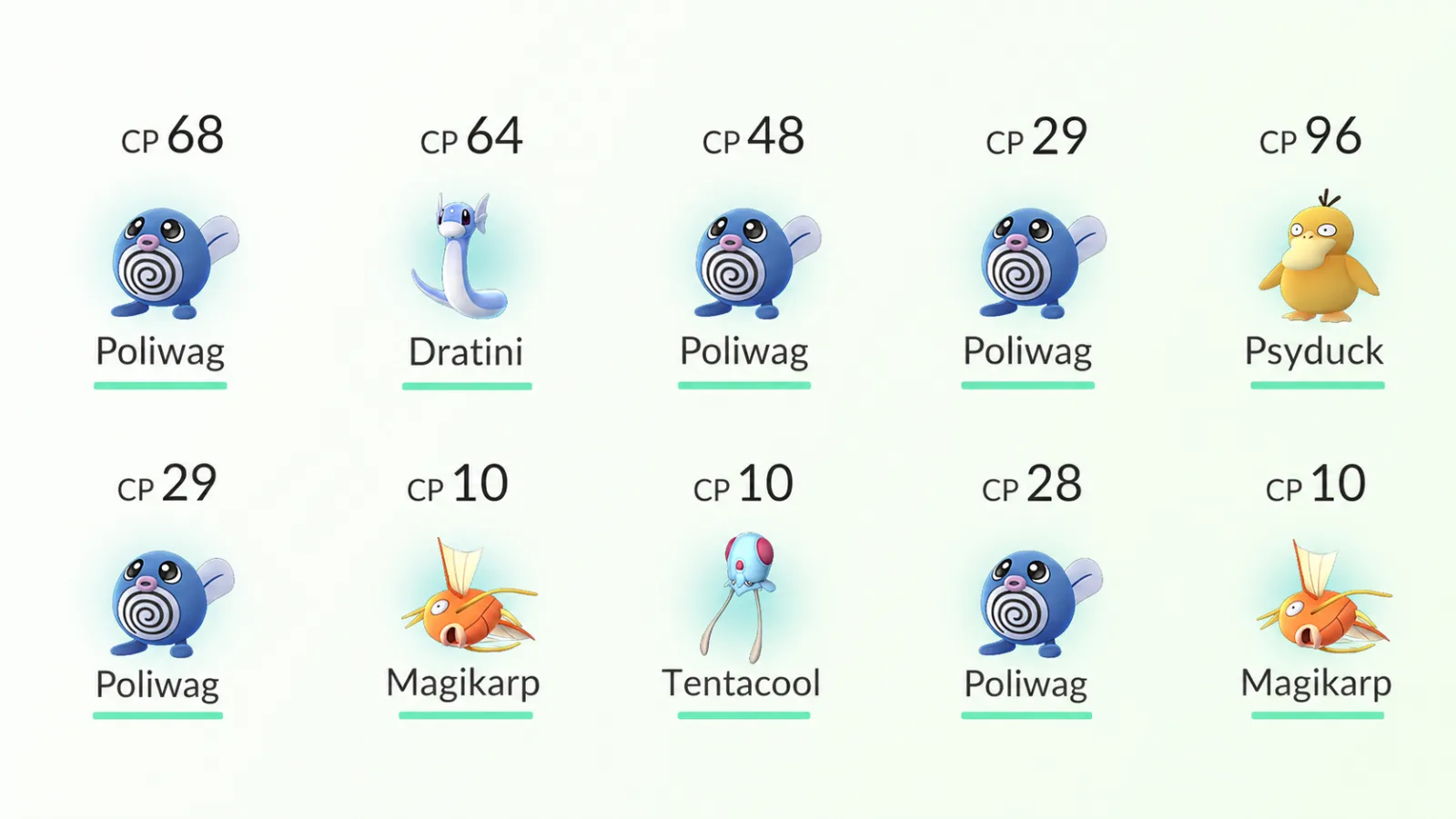
Even a promising route becomes inconvenient if balls or battery run out first.
Check Nearby
The lower-right Nearby panel can help identify Pokémon around nearby PokéStops.
Select a desired encounter and use its in-game location guidance rather than wandering the whole coast without a target.
Choose Lures for Your Goal
Accessible clusters of stops can make Lure Modules useful for extra encounters.
Rainy Lure Modules can attract Water-, Bug-, and Electric-associated Pokémon; Glacial Lure Modules can attract Water- and Ice-associated Pokémon. Their actual pools and other nearby wild encounters still matter.
Neither Lure guarantees exclusively Water-type spawns.
Use Incense While Walking
A suitable long pedestrian route lets you combine moving Incense encounters with accessible stop spins. Check which kind of Incense and any active event rules apply.
Bring Enough Balls
Prepare Poké Balls, Great Balls, and Ultra Balls before going to a route with limited resupply.
If the beach has few stops, replenishing in an accessible urban section first may be more convenient.
Check the Event Before Traveling
Community Days, Spotlight Hours, or seasonal events can dominate encounters and reduce the usefulness of a biome-focused plan.
A Water-focused event may give you the targets you need in a nearby city park. Check Today View and official event details before spending time traveling to a distant beach.
Comparing the Source's Korean Destinations
| Area | Suggested location | Route appeal | Best fit within the guide |
|---|---|---|---|
| Busan | Gwangalli / Millak Waterfront Park | Connect coastal and waterfront sections | A waterfront-focused catch walk |
| Seoul | Yeouido Hangang Park | Transit access and public amenities | Someone already staying in or near Seoul |
| Sokcho | Cheongchoho / Sokcho Beach | Compare lake and coastal environments | Combining sightseeing with catching |
| Incheon | Songdo Central Park / Cheongna Lake Park | Longer urban waterfront walks | Combining walking distance and catches |
| Jeju | Hamdeok / Hyeopjae / Iho Tewoo beaches | Different coastal settings | Collecting during an existing Jeju trip |
Which Location Should You Choose?
The original guide chose Gwangalli–Millak as its most balanced Korean option. That remains the author's preference, not an official biome designation or live spawn-count comparison.
The proposed advantage was combining a coastal walk, transit, and nearby amenities. Verify current stop access and encounters before committing to a long session.
For an existing Seoul stay, Yeouido may be more convenient; Sokcho fits a sightseeing trip; Incheon's lake parks suit longer urban walks. Your actual itinerary should decide the destination.
Season, events, and in-game weather ultimately affect what appears. Check Nearby on arrival and adapt the route. The guide does not promise any species, exact spawn density, or a North American equivalent for these Korean places.
Regional and version notes
English localization reviewed October 23, 2026. Global schedules marked local time use the clock at your play location, including North America. Korean destination activities retain KST. Ended event and reward windows do not reopen through this guide. Recommendations and tier comparisons are the original author’s strategic assessment, not an independently measured current leaderboard or guaranteed outcome. These are South Korean routes retained for visitors, not North American local alternatives or audited live spawn hotspots. Tourism sources establish geographic context and access examples; they do not verify PokéStop counts, exact biome boundaries, current nest species, or a measured spawn ranking. Check local access and the live game before a long session. Some illustrations are retained from the Korean edition and may include Korean labels. Use the English article text for instructions.
Localization sources checked October 23, 2026 (Korea time):