

A long raid Shiny drought or repeated imperfect Lucky trades can make it feel as though your Pokémon GO account is unusually unlucky.
Such streaks can arise naturally from probability. A 1/64 chance does not promise success within 64 attempts, and 1/216 does not guarantee a hundo by raid 216. The calculations below depend on their stated assumptions, not an audit of the game's random-number implementation.
Here is why commonly discussed RNG figures can feel different from an individual's results.
Perfect IVs from an Already-Lucky Trade
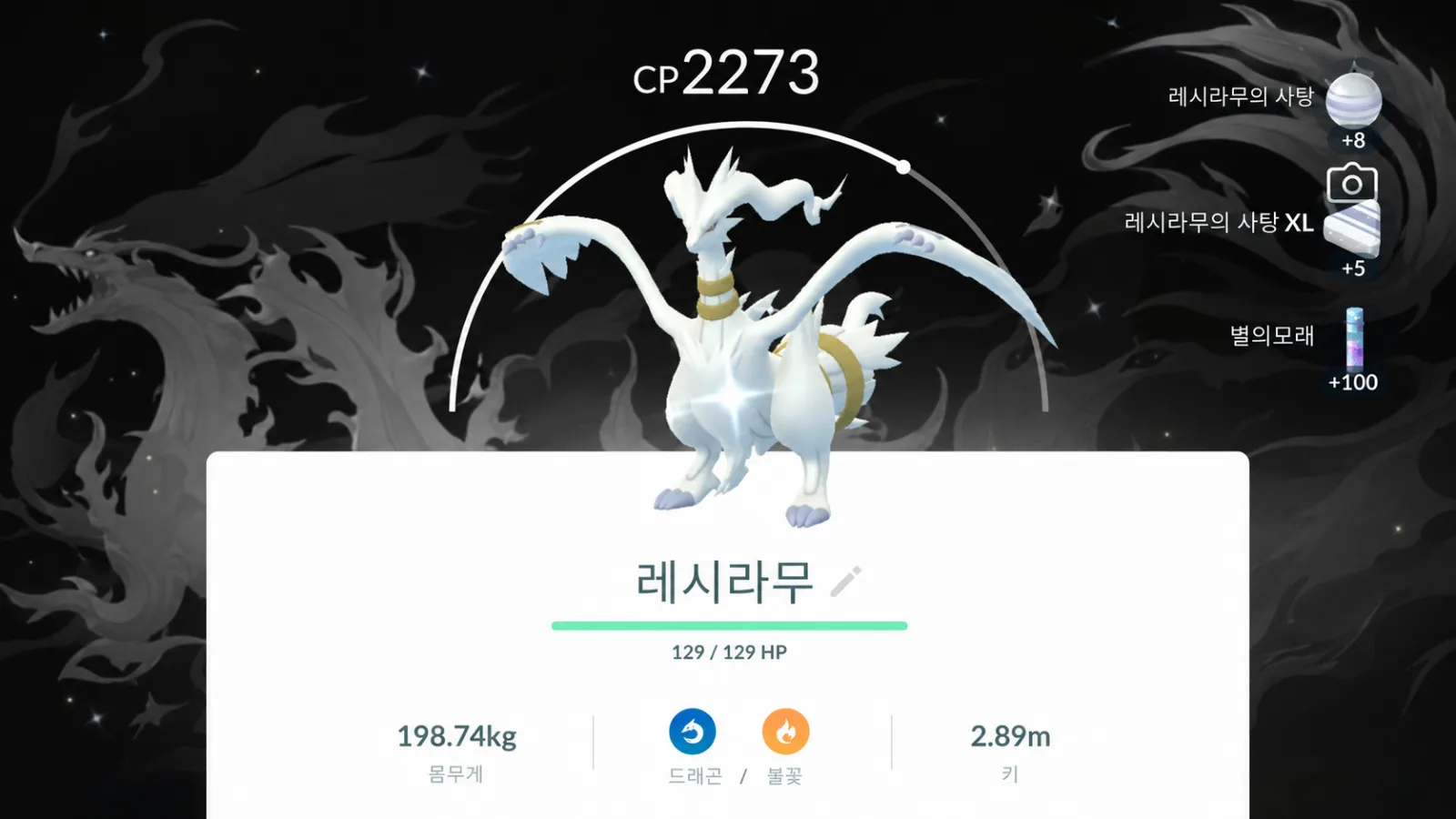
The source uses the standard community-recorded Lucky IV floor of 12 for Attack, Defense, and HP. For this calculation, assume each of those stats is independent and uniformly distributed from 12 to 15.
Each stat then has four possible values: 12, 13, 14, and 15. The possible combinations are:
4 × 4 × 4 = 64
Only one combination is 15/15/15. Conditional on that trade already producing a Lucky Pokémon under this model, the perfect-IV chance is 1/64, or about 1.56%. This is not the probability that an ordinary trade becomes Lucky in the first place.
Do 64 Lucky Trades Guarantee a Hundo?
No. With independent 1/64 rolls, 64 already-Lucky results give about a 63.5% chance of at least one hundo.
There is still about a 36.5% chance that none of those 64 is perfect.
| Already-Lucky trades | At least one hundo | No hundos |
|---|---|---|
| 10 | About 14.6% | About 85.4% |
| 44 | About 50.0% | About 50.0% |
| 64 | About 63.5% | About 36.5% |
| 100 | About 79.3% | About 20.7% |
| 146 | About 90.0% | About 10.0% |
| 195 | About 95.4% | About 4.6% |
| 292 | About 99.0% | About 1.0% |
Even after 100 already-Lucky trades, roughly one in five sequences would still contain no hundo under the model. That is a plausible outcome, not evidence by itself of a broken account.
Why 98% Lucky Results Are More Common
The usual community label 98% covers these three IV spreads:
- 15/15/14
- 15/14/15
- 14/15/15
They occupy three of the 64 combinations, giving 3/64, or about 4.69%under the same uniform model.
That is three times the perfect-IV probability, so a near-perfect result should occur more often in the long run. It does not prescribe the order of an individual's results.
| Lucky IV result | Model probability |
|---|---|
| 100% IVs | About 1.56% |
| 98% IVs | About 4.69% |
| 96% IVs or higher, using rounded community labels | About 15.63% |
| Exactly the minimum 12/12/12 spread | About 1.56% |
Near misses can feel disproportionately common partly because there are more such combinations than the single perfect one.
Perfect IVs in a Standard Raid Model
For the source's standard non-Shadow raid example, assume each IV is independently and uniformly chosen from 10 through 15. Shadow encounters or special events can use different conditions.
Six possible values per stat produce:
6 × 6 × 6 = 216 combinations
Only one is 15/15/15, so the perfect-IV encounter chance in this model is 1/216, or about 0.46%. Encountering it does not by itself guarantee catching it.
Do 216 Raid Encounters Guarantee a Hundo?
At 1/216 per independent eligible encounter, 216 encounters give about a 63.3% chance of at least one perfect result and about a 36.7% chance of none.
| Eligible raid encounters | At least one perfect-IV encounter | No perfect-IV encounters |
|---|---|---|
| 50 | About 20.7% | About 79.3% |
| 100 | About 37.1% | About 62.9% |
| 150 | About 50.1% | About 49.9% |
| 216 | About 63.3% | About 36.7% |
| 500 | About 90.2% | About 9.8% |
| 808 | About 97.6% | About 2.4% |
| 993 | About 99.0% | About 1.0% |
The at-least-one probability first exceeds 50% at 150 encounters in this model. After 100, no hundo is still the more likely result.
A Shiny Hundo Example
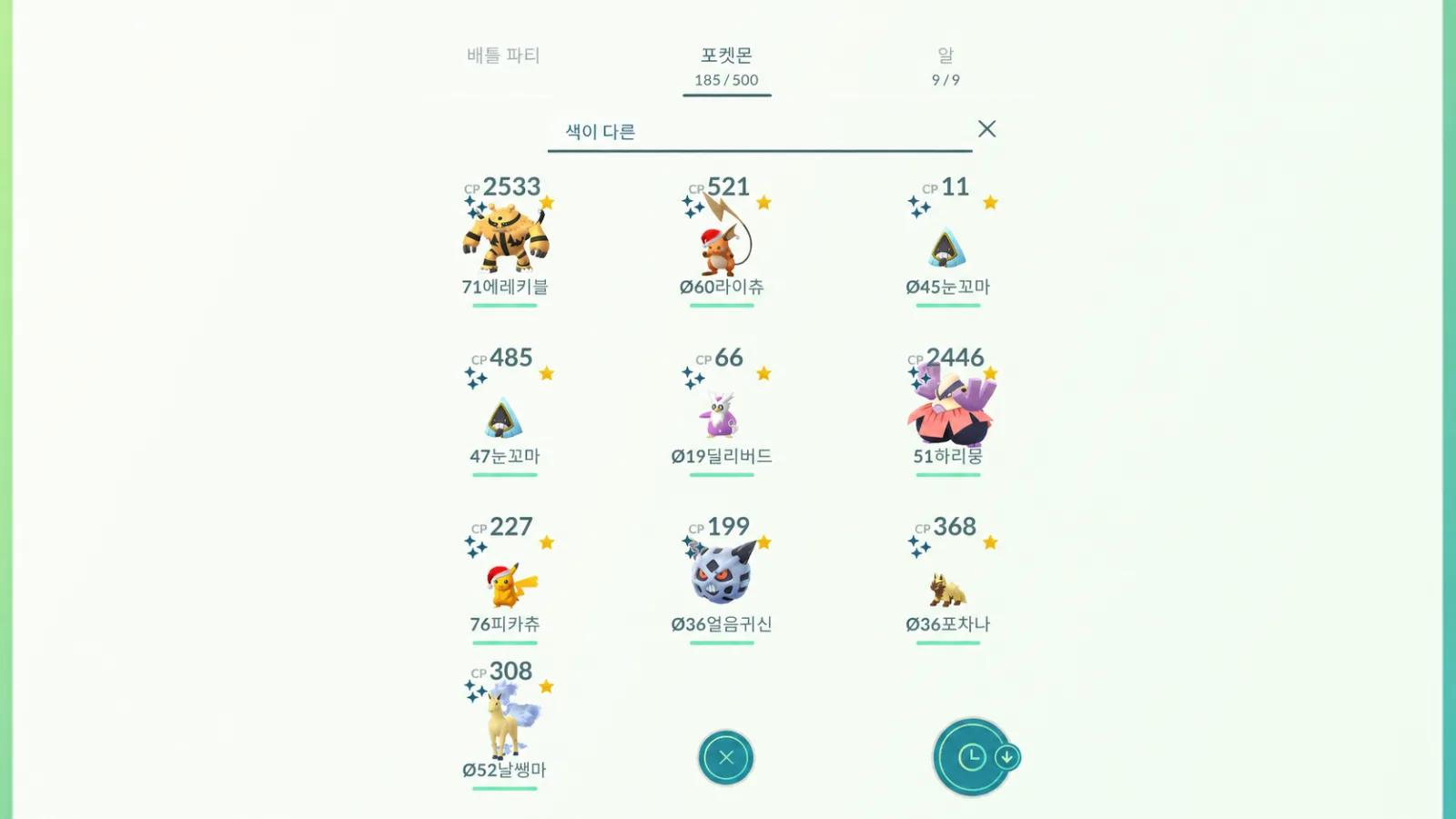
Now additionally assume a 1/20 Shiny chance, independent of the 1/216 IV roll. This is an illustrative assumption, not a universal Shiny rate for every raid species or event.
1/20 × 1/216 = 1/4,320
That is about a 0.023% chance of a Shiny perfect-IV encounter per eligible raid under those assumptions.
The community commonly calls a Shiny hundo a shundo.
Two Shundos in a Row
For two specified consecutive independent raids under that exact model, the probability that both are shundos is:
1/4,320 × 1/4,320 = 1/18,662,400
Approximately one in 18.66 million.
An event that is very unlikely for one specified pair of attempts can still appear among the huge number of attempts made worldwide. Selecting an impressive pair after seeing the results is a different probability question.
Shiny Chances and Dry Streaks
Even an assumed 1/20 Shiny rate does not guarantee a Shiny within 20 encounters.
| Independent encounters | At least one Shiny | No Shinies |
|---|---|---|
| 10 | About 40.1% | About 59.9% |
| 14 | About 51.2% | About 48.8% |
| 20 | About 64.2% | About 35.8% |
| 30 | About 78.5% | About 21.5% |
| 45 | About 90.1% | About 9.9% |
| 90 | About 99.0% | About 1.0% |
Twenty straight misses still have about a 35.8% probability in that model. A per-encounter chance and a guaranteed result by a deadline are different things.
Why an Expected Value Is Not a Promise
An expected value describes an average under a probability model, not an outcome reserved for each individual.
At 1/64, 640 already-Lucky results have an expected 10 hundos. An actual sequence might contain five, 15, or another number.
Likewise, a 1/216 raid model does not allocate exactly one hundo to each block of 216. Both clusters and long gaps are possible.
Do Failures Increase the Next Chance?
If the attempts are independent with a fixed success probability, earlier results do not change the next roll. A separate announced guarantee or special mechanic would need its own model.
Under the examples here, 100 missed Lucky hundo rolls leave the next chance at 1/64; 200 missed standard raid hundo rolls leave it at 1/216.
Feeling that enough misses make the next attempt certain is the gambler's fallacy.
Long-run proportions tending toward the underlying probability does not require the game to compensate for a specific player's earlier failures. Random variation becomes a smaller share of the total as the sample grows.
Key Probability Takeaways
- Under the stated uniform Lucky IV model, a hundo chance is 1/64 after Lucky status is already established.
- Sixty-four such results still have about a 36.5% chance of no hundo.
- A 98% result has about a 4.69% chance under the same model.
- The independent uniform 10–15 raid IV model gives a hundo encounter chance of 1/216.
- Two hundred sixteen such raid encounters still have about a 36.7% chance of no hundo.
- An assumed independent 1/20 Shiny rate still allows about a 35.8% chance of 20 misses in a row.
- Combining that Shiny assumption with the raid IV model gives 1/4,320 for a shundo encounter.
- Prior failures do not raise the next chance under a fixed independent model. None of these tables is a guaranteed acquisition count or a reason to buy a prescribed number of attempts.
Regional and version notes
English localization reviewed October 23, 2026. Global schedules marked local time follow your play location, including North America. Ended event, ticket, and reward windows are historical. Counter choices, upgrade order, and efficiency suggestions are editorial guidance, not guaranteed wins, catches, or a current measured performance ranking. All odds are conditional mathematical models: uniform independent 12–15 Lucky IVs or 10–15 standard raid IVs, and a hypothetical independent 1/20 Shiny rate. The 1/64 is conditional on Lucky status, not the chance an ordinary trade becomes Lucky. Recalculation corrects 146 Lucky rolls to 90.0% and 195 to 95.4%. These are encounter or IV probabilities, not guaranteed catches or purchase targets. Some illustrations are retained from the Korean edition and may include Korean labels. Use the English article text for instructions.
Localization sources checked October 23, 2026 (Korea time):