

A stronger Pokémon GO roster starts with a role, not just a perfect appraisal. Decide which Pokémon you need for which activity, then budget Stardust, Candy, and Candy XL.
Upgrading many candidates at once can exhaust scarce resources quickly. New and returning Trainers should compare species, moves, and the relevant current battle format before judging IVs alone.
Choosing a Build and Assessing Its Role
Why Species and Moves Can Matter More Than IVs
Check base stats and practical use first. A perfect-IV individual still needs suitable attacks and a useful role to perform well in a raid.
A strong species with appropriate moves can remain useful even with imperfect IVs.
For example, ordinary Aggron's defensive stats do not automatically make it a strong offensive raid choice. Mewtwo can fill an appropriate Psychic role with suitable attacks despite a less-than-perfect appraisal. This is a role comparison, not a current universal tier ranking.
Use this order when comparing candidates:
- Choose the activity: raids, Gyms, PvP, or Max Battles.
- Check evidence for the species in that particular role.
- Check whether the intended individual can obtain the required moves and meet entry rules.
- Then compare IVs and total build cost.
Budget Options for a New Account
A usable high-level wild catch can be a more practical starting point than an expensive Legendary or Shadow project.
If evolution gives it the right species and attacks, it may contribute with little additional power-up spending. High CP alone is still not proof of the correct role.
Start with a team for the bosses you actually face rather than trying to finish six attackers of every type immediately.
IVs and Functional Hundos

Checking Appraisal
Open the Pokémon's menu and select Appraise to inspect Attack, Defense, and HP IVs. Each ranges from 0 to 15; 15/15/15 is commonly called a hundo or 100% IV Pokémon.
For an English-language game, useful searches include:
4*: The highest appraisal category, with all three IVs at maximum3*: The three-star appraisal category, not every useful PvP candidate4attack: The maximum Attack-IV appraisal bracket; check the displayed Attack barlucky: Lucky Pokémon
Language-dependent search words differ with game language. Use the supported English terms for an English game and inspect the results rather than copying Korean keywords unchanged.
What Does 15/15/14 Actually Mean?
A 15/15/14 individual is not automatically functionally perfect. For some species and levels, HP rounding makes its actual HP match 15/15/15; when the relevant battle stats match, players may call that a functional hundo.
The source mentions Zacian as an example at selected power-up stages, without establishing every form and level here. Changing the final level or Best Buddy boost can change the comparison.
Check the intended species, form, level, and actual HP before spending. Matching HP does not mean the appraisal IV or displayed CP becomes identical to a perfect specimen.
How Much Does 15 Attack IV Matter in Raids?
Higher Attack can help when comparing the same species, level, and moves against the same target. A timer makes damage important, but IVs are only one contributor.
A 14-versus-15 difference does not change every hit in every matchup. Damage breakpoints also depend on the boss, moves, weather, friendship, and other active modifiers.
These factors can outweigh a small IV difference in a practical group:
- Species base stats
- Attack typing and move performance
- Pokémon level
- The boss's actual weaknesses
- Applicable Mega and friendship bonuses
Why Capped PvP Can Favor Lower Attack
In Great or Ultra League, lower Attack with higher Defense and HP can often fit more total stats under the CP cap. The optimal spread still depends on species, matchups, and the intended format.
Applying the raid heuristic prioritize 15 Attack to every capped-PvP candidate can cause useful Pokémon to be transferred by mistake.
Master League has no CP cap, so high IVs usually remain desirable. Evaluate PvP candidates for the actual league instead of using one appraisal rule everywhere.
Managing Stardust and Candy XL
 Stardust Spending Principles
Power-ups, trades, and additional Charged Attacks draw on the same Stardust supply. Unplanned projects can therefore delay each other.
A manageable budget follows these principles:
- Wait until you actually need the build.
- Use suitable high-level wild catches when practical.
- Avoid unnecessary duplicate projects for the same role.
- If a task requires power-ups, compare low-cost options before confirming.
- Time Star Pieces around a relevant bonus or planned reward claim.
When a raid boss changes, check your existing teams before building another Pokémon from scratch.
Candy XL and Level 50
Powering above Pokémon level 40 requires Candy XL. The source's standard non-Shadow, non-Purified level-40-to-50 example costs 296 Candy XL; special states or bonuses can differ. This is Pokémon level, separate from Trainer level.
Candy XL is not reserved only for hundos or 15/15/14 candidates. The intended role changes the criteria:
- Master League: compare high-IV candidates and actual matchups.
- Raids: compare Attack IV, species, level, and moves together.
- Great / Ultra League: use the intended format's CP and IV considerations.
- Shadows: weigh higher damage against durability, eligibility, and extra cost.
- Scarce Legendaries: consider Candy access and realistic chances to obtain another candidate.
There is no need to preemptively reach level 40 or 50 on something you will not use yet. Stop at a useful level and reassess after actual play.
Lucky Pokémon and Trading
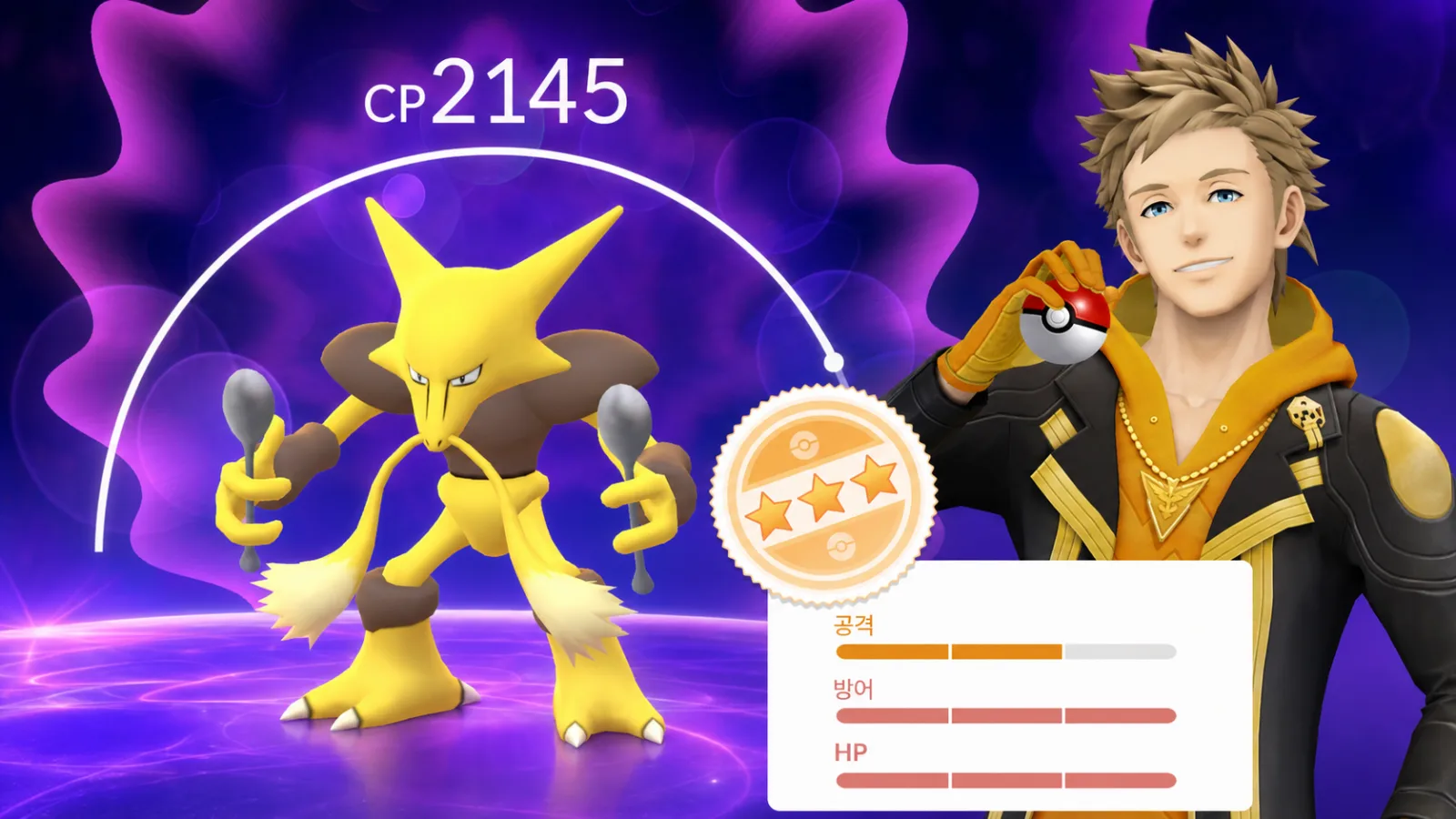
What Lucky Status Saves
The source records the standard Lucky power-up Stardust discount as 50%, with a usual 12/12/12 IV floor. This is a power-up benefit, not a blanket half-price discount for every Stardust action.
If each stat is independently and uniformly distributed from 12 through 15, a hundo has a 1/64 chance among already-Lucky results. That is not the chance an ordinary trade becomes Lucky.
A suitable Lucky candidate can reduce Stardust spending for a new account. Lucky status does not halve the ordinary Candy or Candy XL power-up requirement.
Lucky Friends and Guaranteed Lucky Status
After Best Friends, qualifying friendship interactions can give a chance of Lucky Friends. Check current friendship rules rather than assuming each repeated activity supplies an unrestricted extra roll.
The next eligible completed trade between Lucky Friends makes both results Lucky and clears that status. Choose a costly build or collection target if it fits both Trainers' goals; Lucky does not mean perfect IVs.
Trading rerolls IVs. A good starting appraisal is not preserved merely because the trade is Lucky.
Check Old Pokémon Before Transferring Them
Older catches can have increased Lucky chances, and specific age-based guaranteed-Lucky rules can apply under their account conditions.
The eligible years and accumulated guaranteed-trade limit can change, so do not interpret every Pokémon caught in 2016–2018 is guaranteed Lucky as an unconditional current rule.
Before using an older catch in a trade, check:
- Its catch year
- The relevant guaranteed-Lucky counters and conditions for the accounts
- Any special move it already knows
- Whether that individual is eligible for the intended kind of trade
- Special Trade availability and Stardust costs where applicable
Returning Trainers should inspect old moves and collection value before mass-transferring or trading an entire year of catches.
Saving Candy with Trade Evolution
Machop, Gastly, Abra, and Other Lines
For eligible received Pokémon, the trade-enabled final evolution can cost no Candy. The source's examples include:
- Kadabra → Alakazam
- Machoke → Machamp
- Graveler → Golem
- Alolan Graveler → Alolan Golem
- Haunter → Gengar
- Boldore → Gigalith
- Gurdurr → Conkeldurr
- Karrablast → Escavalier
- Shelmet → Accelgor
- Phantump → Trevenant
- Pumpkaboo → Gourgeist
For example, Machop to Machoke normally needs 25 Machop Candy, while an eligible traded Machoke can evolve into Machamp without the usual 100-Candy final cost. Earlier evolution or power-up expenses are not all removed.
A Pokémon cannot normally be traded again after it has been traded. Check exactly which individual each person is giving; do not plan to send it back after the free evolution.
Events and Special Moves

Check the Featured Evolution Window
Some Community Days and other events grant a particular move through an eligible evolution during a specified window. Ordinary Fast or Charged TMs do not necessarily provide that move afterward.
Metagross's Meteor Mash is one example of a valuable special acquisition. If the project needs it and there is no urgent use now, a confirmed future opportunity may be worth waiting for.
Outside an evolution window, an Elite Fast or Charged TM may offer the needed move. Not every special move is always on an Elite TM list, so check before committing; Dragon Ascent's Meteorite requirement is a separate system.
When Waiting Can Make Sense
Consider pausing the final evolution when:
- You have a reason to wait for an announced opportunity, or are deliberately saving a speculative candidate.
- A past move could return, while its next availability remains unconfirmed.
- The intended role specifically needs a restricted-acquisition move.
- You have not checked the final Pokémon's actual move options.
An immediate raid need with no usable alternative can justify evolving now. Balance that need against the future Elite TM cost rather than waiting indefinitely on a rumor.
Using Candy Bonus Windows
Catch Candy, transfer Candy, trade Candy, and increased Candy XL chances are different bonuses. A confirmed event can help with one or more of them without making them interchangeable.
A planned resource sequence might be:
- Use a Pinap or Silver Pinap Berry where the successful catch is worth the extra Candy.
- Separate usable high-level candidates from intended trade copies.
- Complete eligible trades under the actual active bonus and trade rules.
- Keep only the unwanted copies you have space to save for a confirmed transfer bonus.
- Prioritize suitable catches during an applicable Candy XL chance bonus.
Use tags and compatible search terms to distinguish raid, trade, and PvP candidates before storage fills up.
A Starting Plan for New and Returning Trainers
Budget Progression for New Trainers
A practical sequence is:
- Catch suitable high-level wild candidates.
- Evolve those that cover a current boss weakness with obtainable moves.
- Use what can contribute without a large Stardust investment.
- Consider eligible trade Evolutions and suitable Lucky Pokémon.
- Power useful builds toward a practical level, often around 30–40, then check results.
- Reserve Candy XL for a justified long-term role.
Several usable teammates with correct attacks can help an early raid group more than one perfect specimen with no support.
What Returning Trainers Should Inspect First
Before cleaning out old storage, check:
- Catch years
- Special moves no longer available through ordinary TMs
- Candidates with collection or Lucky trade value
- Potential Mega Evolutions and their separate requirements
- Pokémon with a current raid or intended PvP role
- Eligible trade-evolution lines
Old Pokémon may retain moves that are difficult to replace. Catch date alone is not enough to decide whether to transfer or trade one.
An Upgrade Workflow
Before spending, work through these decisions:
- Choose a role: Decide the raid, Gym, PvP, or Max Battle use.
- Check species and moves: Compare the actual stats, attacks, and eligibility for that role.
- Select an individual: Use raid or league-specific IV considerations as appropriate.
- Compare the cost: Budget Stardust, Candy, and Candy XL availability.
- Consider trading: Use eligible Lucky or trade-evolution options when they fit the plan.
- Check events: Look for a confirmed special-move opportunity and its exact conditions.
- Upgrade in stages: Stop at a useful level and test the result before spending more.
The source's central resource rule is do not pre-build every Pokémon that looks promising. Spend when the role and timing are clear, with only the investment the intended task needs.
Casual players can prioritize suitable wild and Lucky options; raid players should compare species, moves, and Attack considerations; PvP players need the rules and matchups of their actual league. For Max Battles, confirm the specific individual's eligibility rather than assuming an ordinary raid attacker qualifies.
Regional and version notes
English localization reviewed October 23, 2026 for North American players. Global event schedules marked local time follow your actual play location. Japanese destination schedules retain JST and Mexico City schedules retain GMT−6. Ended event and reward windows are historical. Team priorities and upgrade suggestions are editorial guidance, not guaranteed wins, IVs, or a current measured performance ranking. English game search terms replace the Korean keywords. Functional-hundo status depends on species, form, and final level; 15/15/14 is not universally identical to 15/15/15. The 296 Candy XL, Lucky discount, and IV-floor figures are standard source-recorded examples rather than every special-state cost. The 1/64 calculation assumes independent uniform Lucky IV rolls after Lucky status is established. Trading rerolls IVs and eligible trade Evolutions do not remove power-up costs. Remote Trades have separate Forever Friend and Pokémon-eligibility requirements; Lucky status alone does not grant that access. Some illustrations are retained from the Korean edition and may include Korean labels. Use the English article text for instructions.
Localization sources checked October 23, 2026 (Korea time):
- Pokémon GO Help: Appraising Pokémon
- Pokémon GO Help: English storage search syntax
- Pokémon GO Help: Lucky Pokémon
- Pokémon GO Help: Lucky Friends
- Pokémon GO Help: separate Forever Friend Remote Trade conditions
- Pokémon GO Help: Shadow evolution special-move rules
- Pokémon GO: Max Pokémon eligibility and battle roles