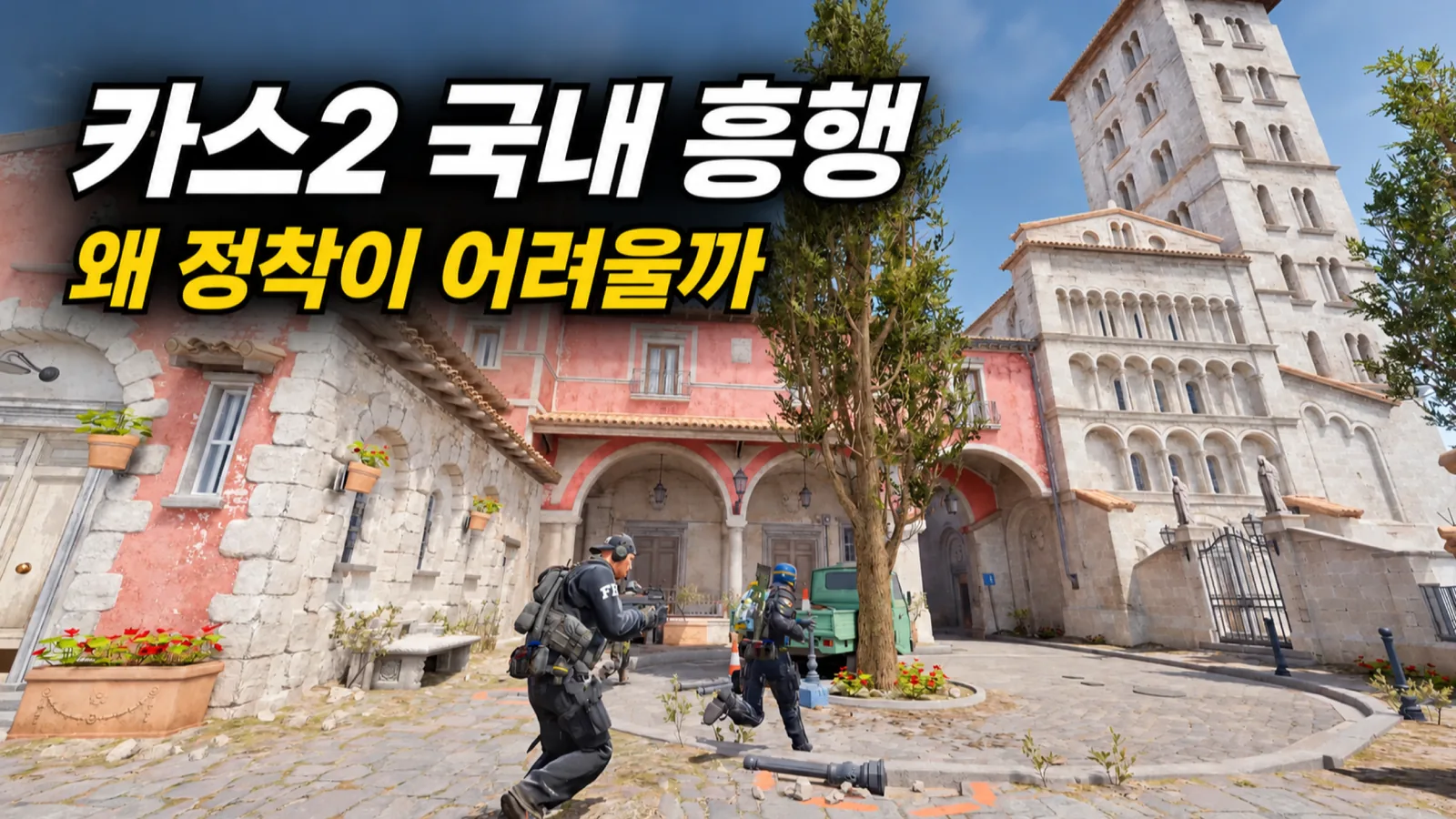

For Counter-Strike 2 to reach more players in Korea, promoting its gunplay is not enough. Interested newcomers need somewhere they trust to practice. Recoil and maps are already demanding; doubts about fairness, third-party service choices, and overseas-server access can wear people out before the appeal becomes clear. This article looks specifically at that Korean entry experience.
Claims that Koreans simply dislike Counter-Strike, or that cheating guarantees failure, go beyond the available evidence. There is no single dataset here proving both the domestic population and why players leave. It is more useful to separate the barriers than to declare a national preference.
Global popularity does not guarantee a local group to play with
A large Steam player count does not mean a Korean newcomer can easily gather friends. Concurrent users combine many regions; nearby Korean-speaking teammates are a different measure. Even an enormous game can have a smaller presence in one local social circle.
Korean PC bangs—gaming cafés—already offer established alternatives. Gametrics' café playtime figures place VALORANT, PUBG, Sudden Attack, and Overwatch prominently. Those figures are not a census of every Korean player, especially home Steam users. They describe the competition friends encounter when choosing a café game.
That creates an incumbency advantage. A game with friends, familiar terminology, existing accounts, and learned maps is easy to return to. A replacement needs a reason for the whole group to move, not just an interesting pitch to one individual.
Historical first-mover advantages do not explain every current problem, however. Whether someone who installs today returns next week depends on today's matches. History explains different starting positions; it does not make present friction inevitable or acceptable.
How much does VALORANT experience help?
VALORANT players will recognize attackers and defenders, round-based buying, information gathering, and site execution. Thinking about team economy and positioning alongside aim transfers naturally to CS2.
That is a genuine reason to try it. Players interested in shared guns, utility, and the relationship between movement and shooting can find different depth without agent ability combinations. Even a shared smoke grenade changes a fight depending on where and when it is used.
The mechanics do not transfer unchanged. Stopping before an accurate shot, recoil during sustained fire, map angles, and utility lineups still need practice. A familiar bomb-defusal structure shortens the introduction, not the path to mastery.
These differences are rules to learn rather than defects. Learning a new skill within a familiar genre can be rewarding. The key is understanding losses well enough to believe that correcting movement or decisions will improve the next attempt.
Cheating concerns undermine trust in learning, not just results
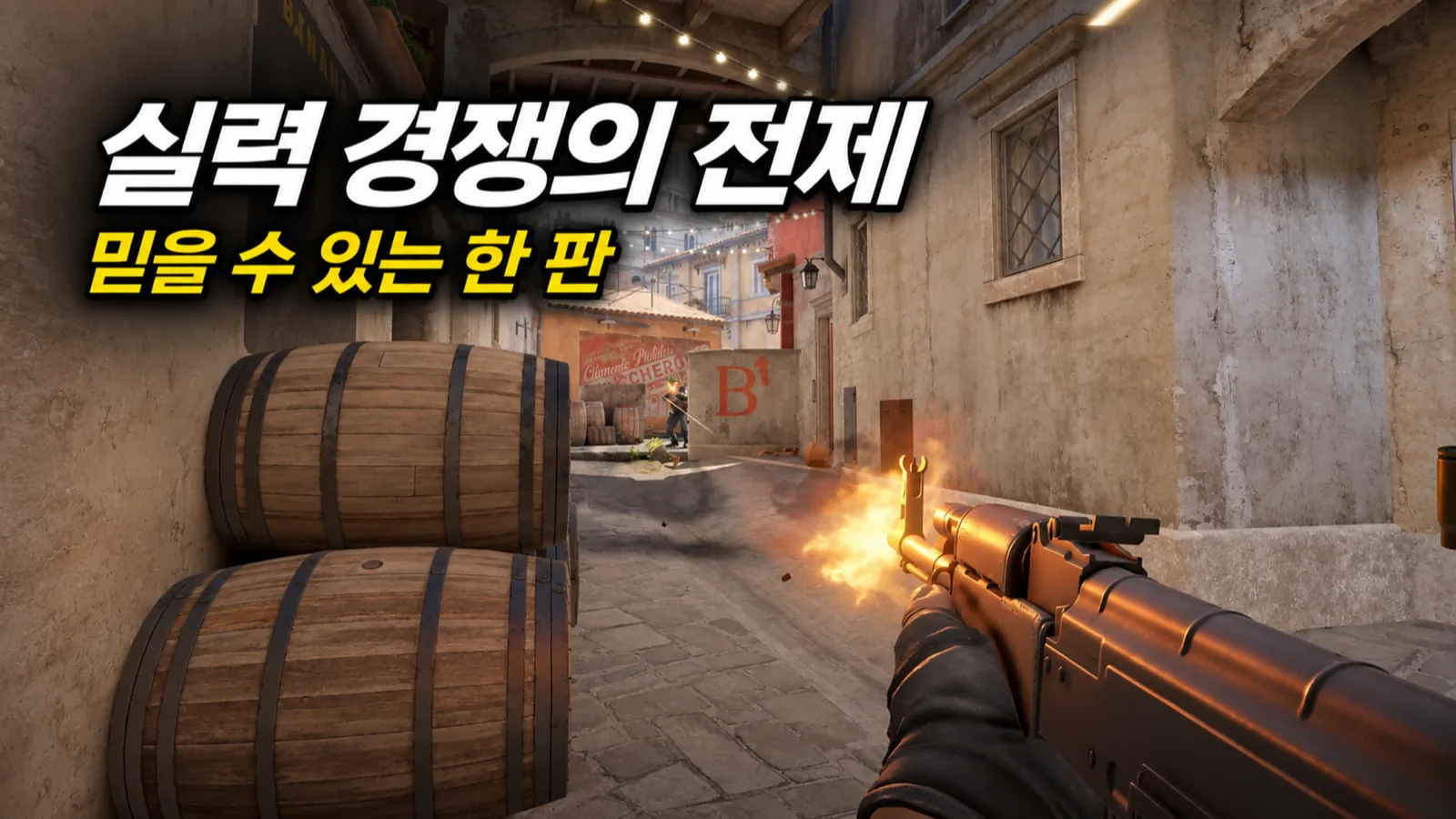
It is difficult to responsibly attach a number such as cheaters per match to CS2. Experiences differ by region, skill bracket, and mode, so personal encounters cannot establish the overall rate. Equally, the existence of Valve Anti-Cheat, VAC, does not guarantee every match is fair.
For beginners, the immediate harm is not knowing how to interpret a loss. Did the enemy locate you through footsteps, a teammate's call, or a predicted prefire? Growing suspicion of cheating can divert attention from reviewing your own mistakes toward examining the opponent's account.
Being hit first in the same corridor may call for better crosshair placement or a different entry timing. If you cannot trust the contest, the reason to make those adjustments weakens. One suspicious moment is not proof of cheating, but a loss of confidence in results still burdens a competitive game.
Anti-cheat evaluation should also include reporting follow-up, explanations of suspicious situations, and whether legitimate players trust the next queue. Losing to a skill gap provides a goal; not knowing whether the contest was fair can obscure it.
FACEIT is an option, not a complete Korean onboarding solution
FACEIT is a third-party competitive matchmaking platform with its own anti-cheat and rating system. It offers another environment for serious matches. Its FAQ allows newcomers but warns that experienced opponents can make early games challenging.
That does not mean serious play requires immediately paying for private servers. FACEIT has standard matchmaking available to free users, alongside subscriptions and match types with separate eligibility. CS2 Prime and an external platform subscription are different purchases.
Free access and easy entry are also different. Connecting accounts, installing another anti-cheat, and learning platform ratings and rules add tasks. Routine steps for established users can burden someone still learning the game itself.
Connection conditions matter in Korea too. FACEIT's official server FAQ identifies Singapore for the Southeast Asian region. Latency from Korea varies by connection and routing, so one ping number cannot represent everyone. It is still not safe to assume identical conditions to a nearby server, and a routing service does not guarantee improvement.
An external platform can broaden competitive options without replacing good onboarding in the base game. Telling beginners to go elsewhere can make where and how to connect their first concern, before they understand why they enjoy the game.
Farming bots can also weaken low-pressure practice
Weekly rewards offer legitimate players a small incentive. Steam's guidance distinguishes Prime users, who are eligible for XP and weekly drops, from non-Prime users. Having rewards is different from automating accounts to farm them.
These farming bots are not the game's AI practice opponents. They are automated accounts used for rewards or account growth. Reports include disrupted matches and misuse of vote-kicks against ordinary players. That does not establish that an entire mode is always unusable or that most concurrent players are bots.
The effect extends beyond competitive queues. Casual and Deathmatch should offer a lower-pressure place to learn weapons and maps. When ordinary encounters become difficult there, newcomers lose part of the practice path that should lead toward organized competition.
Case prices and farming profitability are not useful central measures of Korean popularity. Prices change; the more basic question is whether ordinary people can play matches. A lively reward economy still needs intervention if it disrupts the play space.
What would make CS2 easier to enter?
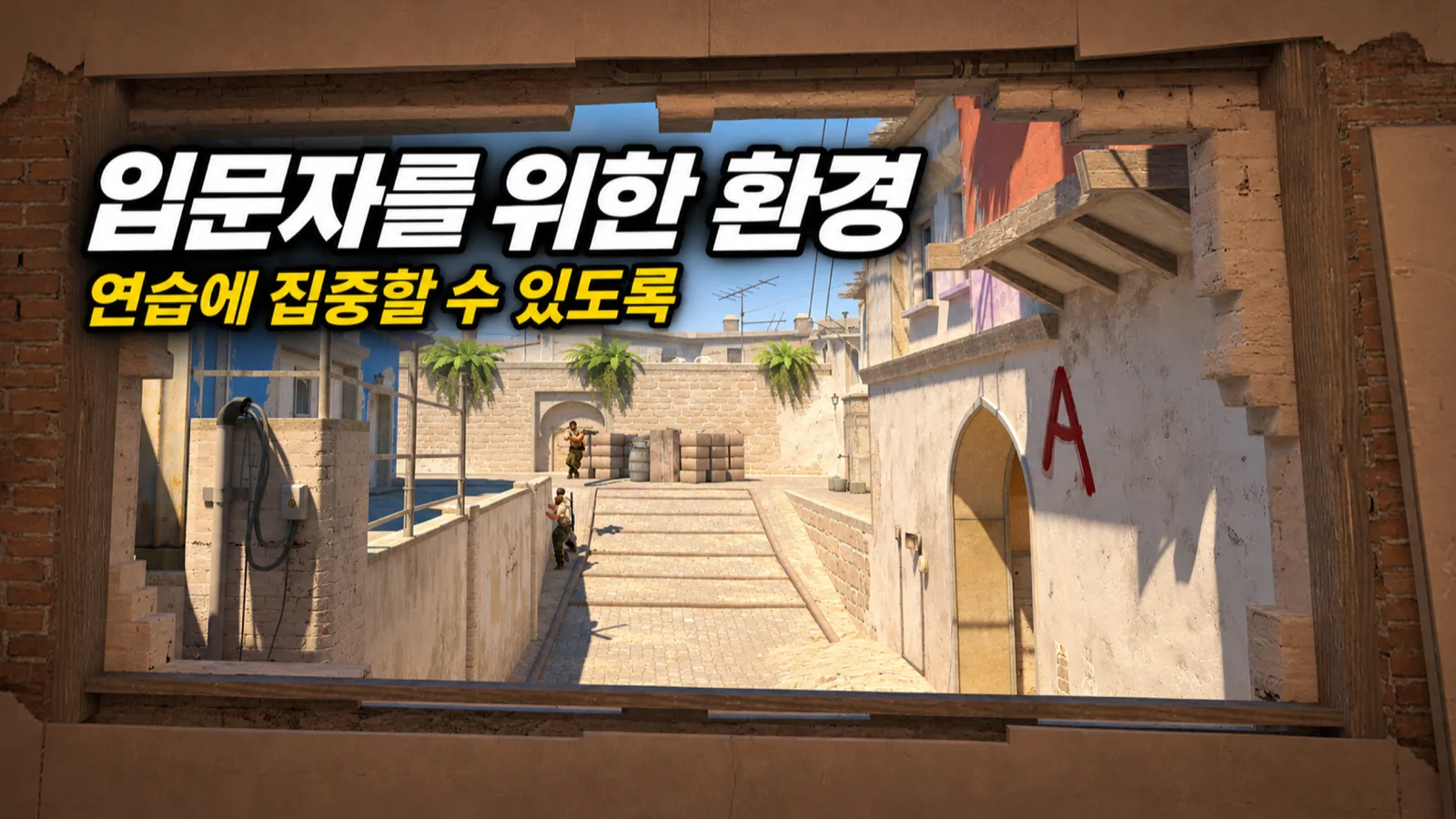
It would be unfair to say Valve offers no learning support. Official map guides and in-game utility guidance can reduce the need to search through external tutorials. Those tools are steps toward making unfamiliar routes and throws easier to learn.
The connection to real matches remains a separate question. Players need to try lessons in low-pressure games, meet reasonably comparable opponents, and understand failures. Teaching controls and building an environment where beginners stay are different jobs.
Prime's conditions also need to be clear. CS2 is free, but Premier requires Prime and profile level 10. Prime users match with other Prime users; a premade group with a non-Prime friend enters non-Prime matchmaking. Buying Prime is not buying access to a cheat-free server. Eligibility and anti-cheat effectiveness should not be confused.
For broader adoption in Korea, I would look at those connected experiences before advertising scale: can friends enter the same match without a maze of instructions, can practice modes provide normal fights, and does a loss leave a reason to try again?
CS2's precise shooting and team tactics give people a reason to learn for years. Preserving that depth and reducing first-entry friction are compatible. The change Korea needs is less about making shots easier and more about consistently providing matches where players can trust their mistakes and progress.
