

The war on the Korean Peninsula in Modern Warfare 4 does not begin with a North Korean surprise attack alone. A succession struggle, a Russian-backed strategy, and the arms deal Price is investigating converge in a catastrophe. For the South Korean soldiers on the front line, ordinary life collapses overnight; behind it, several people have already been pursuing their own objectives.
To understand the story, look beyond the identity of the final enemy and ask who each character is fighting to protect. Private Park advances to save people, while Price, after losing someone important, drives toward revenge. Their different motives give the ending its weight.
This article contains major character deaths, the campaign ending, and post-ending material. The war in Korea and the political and military events discussed here are fictional elements of the game.
Price’s revenge continues from the previous game
This is a continuation of the reboot timeline—Modern Warfare (2019), Modern Warfare II (2022), and Modern Warfare III (2023)—rather than a direct continuation of Call of Duty 4 (2007). Mixing events from the original series into the reboot can confuse relationships and who is still alive.
Soap’s death and Shepherd’s assassination are the essential background. After losing his teammate while trying to stop Makarov, Price personally kills Shepherd and moves beyond official channels. His relationships with the other members of Task Force 141 are no longer what they were.
Revenge does not end with one target. Price’s pursuit of Makarov is understandable, but eliminating him would not remove the funding, weapons, or war plans behind him. That is why the story looks beyond Makarov to Archer: the person pulling the trigger and the power enabling him are different problems.
The plan behind the second Korean War
The conflict begins with a struggle between North Korea’s new leader, Ri Seung-ho, and his sister, Ri Ju-yeong. He does not see war as an inevitable solution; she seeks power through coercion and force. Their family conflict becomes a dispute over the direction of an entire country.
Archer, Russia’s defense minister, exploits the split, supporting Ri Ju-yeong’s takeover and incorporating war on the peninsula into his plan. Removing Ri Seung-ho also removes a voice against war. Treating the invasion as the unanimous project of an unchanged leadership misses what the North Korean perspective contributes.
A compact EMP weapon enables the military surprise. Equipment capable of disabling communications and electronics reaches Archer through a deal involving Makarov and Valeria and becomes part of the invasion plan. The early chaos in Hajin reflects preparations that undermine defense and response, not simply the arrival of a large army.
Archer’s objective extends beyond Korea. While international attention and responses focus on the peninsula, he intends to push Russian expansion in the Middle East. This connects North Korea’s power struggle, South Korea’s defense, and Price’s investigation into the same narrative.
These events should not be treated as a real military comparison or forecast. The EMP’s capabilities and the course of the war are dramatic premises. The story is interested in how a regional crisis serves another power’s objectives, rather than predicting a real conflict’s outcome.
Private Park fights to restore ordinary life
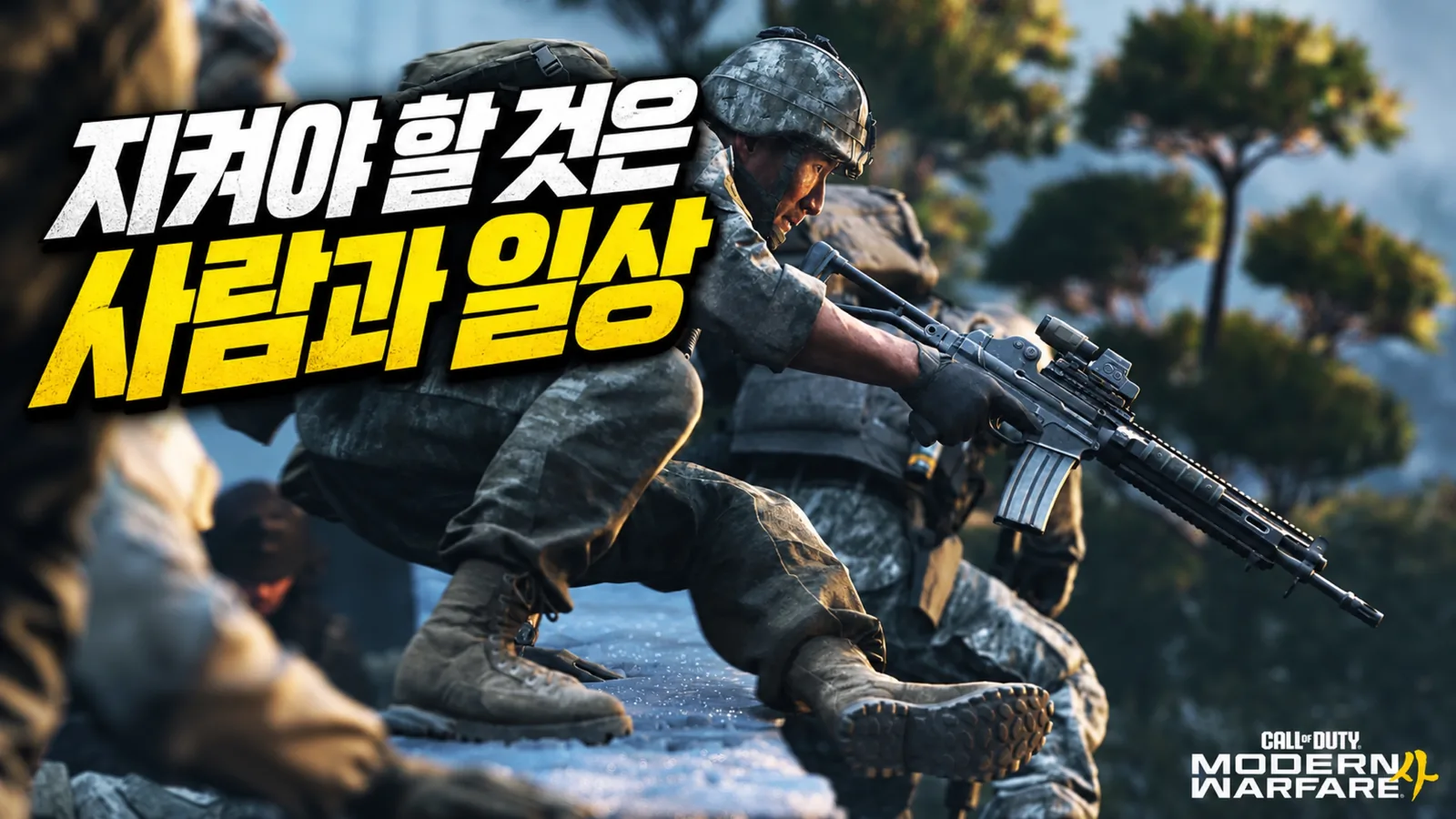
For Private Park Hyeon-jun and the joint South Korean–US squad Sierra One, the war begins in the streets before them, not on a strategic map. Routine life is overturned by bombardment and invasion, forcing soldiers to survive and evacuate civilians with little time to prepare.
That matters because Park does not begin with the authority or intelligence to end a war. With the enemy’s identity and advance still unclear, he must protect the next street and escape route. His perspective puts people he can save now ahead of grand justifications for fighting.
The retreat from Hajin and its later recapture give the same streets different meanings. An escape route becomes a place where people need their lives back. Taking a city and restoring civilian life may resemble the same military victory, but place different values at its center.
The nuclear power plant threat follows the same logic. Driving out an enemy does not itself guarantee residents’ safety; preventing a facility disaster remains necessary. War’s consequences do not end neatly when shooting stops. Park’s continuing commitment to protection gives his storyline its force.
Why Ko Jin-hyeok breaks with his orders
Ko Jin-hyeok’s perspective prevents the North Korean military from appearing as a single unified will. Initially acting within the system, he reassesses what he serves after witnessing violence against civilians and Ri Ju-yeong’s decisions.
Describing this simply as changing sides misses the issue. Loyalty to a country is not necessarily obedience to its leader, and following orders cannot automatically justify every action. Wanting to protect residents becomes a reason to resist the existing command structure.
His decision to help isolated South Korean soldiers matters in that context. A uniform does not create trust, but survival and the mission allow limited cooperation. Trust grows through actions that involve risk rather than declarations alone.
Ko’s decision to remain in North Korea at the end keeps his story from becoming a straightforward escape narrative. He does not equate rejecting the regime with abandoning his country. The emphasis is on whom he will act for, not merely where he belongs.
Why Price clashes with his former teammates
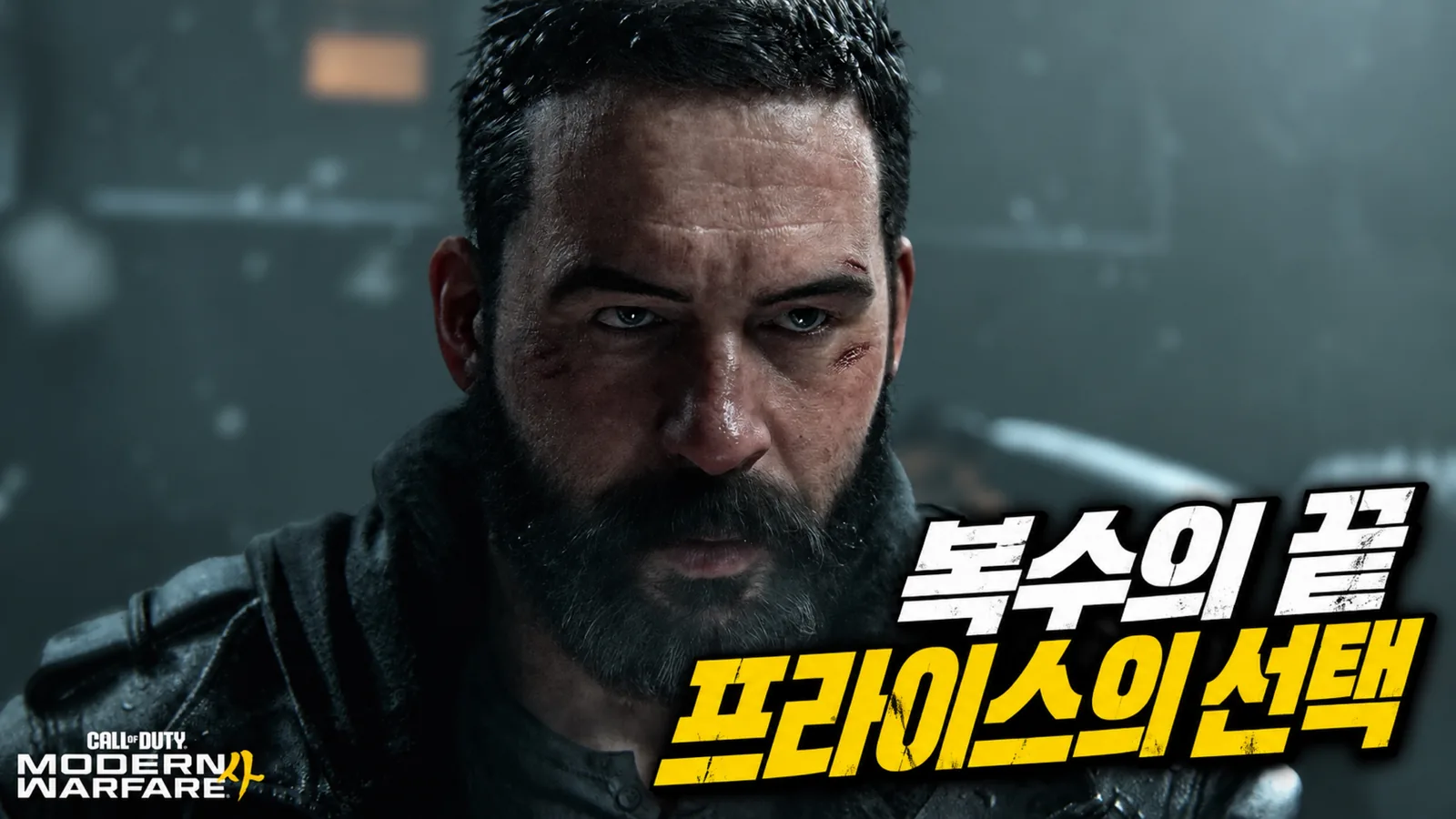
Price works with his former enemy Valeria to reach Archer. To him, it is access to the mastermind; to his colleagues, it means assisting a dangerous arms deal. The same action looks like necessary infiltration to one side and a threat to stop to the other.
Good intentions do not resolve that conflict. Even if the ultimate objective is justified, weapons still move and civilians still suffer along the way. Reaching Archer does not erase the damage being done in the present.
Gaz and Ghost pursuing Price is therefore more than a simple betrayal plot. Trusting a teammate conflicts with stopping his choices. The story asks whether loyalty to a former commander requires accepting what he is doing now.
Park provides a useful contrast. He works with teammates toward immediate protective objectives, while Price’s repeated decision to carry the burden alone distances him from others. Both take risks, but for different purposes and with different ways of sharing the cost.
The ending separates victory from recovery
The South Korean storyline reaches an operation that removes Ri Ju-yeong and breaks the center of power. One death, however, cannot resolve civilian suffering or every postwar problem. Ko’s decision to stay points to the work that remains afterward.
Price’s final opponent is Archer, revealed as both the architect of the war and Makarov’s father. Their confrontation combines strategic calculation with family loss. Price kills him but dies from mortal wounds. Ghost’s survival does not restore the relationships that have been lost.
Reducing this to “revenge is bad” would ignore the real threats within the fiction. The sharper question is what remains after the enemy is defeated. Achieving an objective and recovering personally are not the same thing, which keeps Price’s ending far from a simple triumph.
After the ending, weapons left in the conflict zone and unofficial operations lead into DMZ. The campaign closes personal conflicts while leaving the war’s dangers alive in another form. This does not confirm unreleased sequels or future relationships, but clearly continues the struggle over weapons.
What lingers about the Korean setting is more than recognizable streets and signs. Some characters seek power, some seek revenge, and others try to preserve a life to return to. Separating those motives brings their choices into focus. Park’s advance differs from Price’s relentless pursuit because the people immediately in front of him remain the ones he wants to protect.
