

Modern Warfare 4's multiplayer changes more than the map count. Movement after a vault, the relationship between muzzle direction and impacts, and layouts you must read again between rounds all change the conditions of a fight. That matters whether you want familiar Call of Duty or a break from repetitive encounters.
A more grounded movement system doesn't necessarily mean slower, easier fights. The key is where you expose yourself and the angle from which you start the next engagement. Connecting movement, gunplay, and modes through that lens makes it easier to judge whether this multiplayer suits you.
What happens around an obstacle matters more than sprint speed
Movement emphasizes chaining low-cover vaults, slides, and pipe climbs. You can adjust direction during a vault or flow into the next action. That's a different freedom from simply sprinting faster across flat ground.
When crossing a street to a low wall, arriving first isn't the only goal. Consider your exit after the vault, who can see your landing, and the next cover. A fluid animation doesn't make landing inside an enemy sightline a sound decision.
Climbing a pipe creates a route upward, not guaranteed high-ground superiority. The area you overlook and the approaches behind you both change. Decide which sightline the movement should earn before trying to use every new move.
For new or returning players, start with vaulting one obstacle and reacquiring your aim. Proving Grounds provides dedicated movement practice, letting you examine landing positions and interrupted movement without the distraction of chasing opponents.
Removing bloom isn't removing recoil
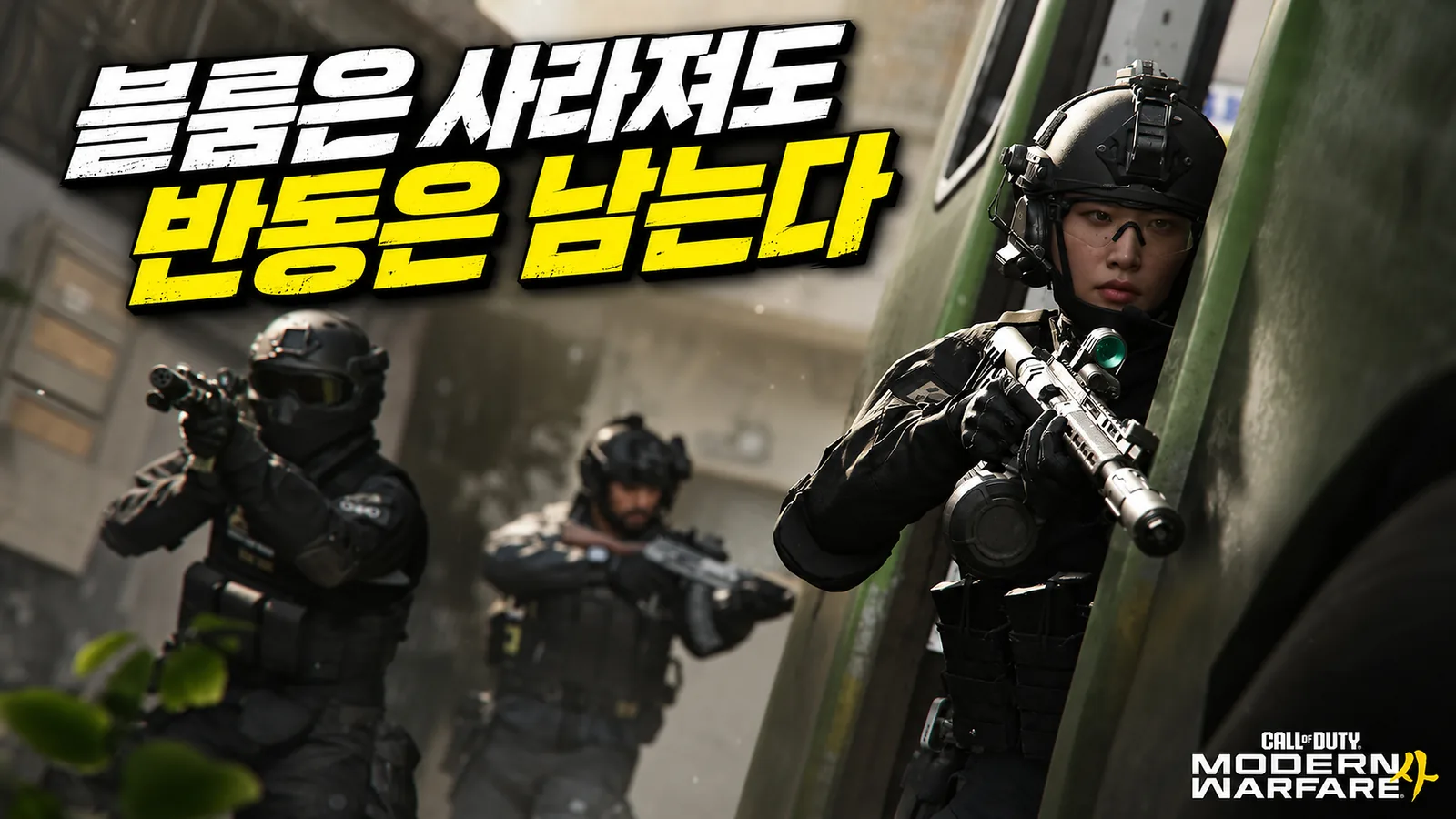
Bloom is random shot dispersion independent of muzzle alignment, especially relevant to hip fire. The announced direction removes that randomness, but it doesn't produce a gun whose muzzle stays still during sustained fire. Recoil, sway, movement, and handling still affect accuracy.
That changes how to diagnose a miss. If the muzzle leaves the target during firing, consistent impacts still won't hit it. Check whether the weapon points at the enemy at the moment of the shot. Predictable dispersion doesn't replace your own control.
TTK—time to kill—also cannot be summarized by one number. Weapons, range, hit location, and mode-specific health affect it, as do first-shot timing and follow-up accuracy. One statistic or short clip won't establish that every gun is easier.
Compare stationary and moving fire at the same range with the same weapon. Constantly changing attachments mixes adaptation with loadout differences. Narrowing the conditions makes the comfortable and difficult parts easier to identify.
Smoke conceals a route, but sightlines can reopen
New volumetric smoke reacts to gunfire and explosions, while Smoke Wall creates a forward path of smoke to help cross exposed ground. Both the player deploying it and the player watching through it have more decisions to make.
Deploying smoke doesn't establish safety. Blocking vision and blocking bullets are different things. Plan your direction inside it, cover beyond the exit, and the exit the opponent expects. Repeatedly emerging at the same point can remain predictable despite concealment.
On offense, smoke can open movement; on defense, it changes how you read an approach. Assess coverage and duration rather than spectacle. The meaningful change is how it supports repositioning, not merely hiding.
Killblock is about repeated adaptation, not 500 separate maps
Killblock combines modular training areas into changing layouts. Two ends connect through a center, with reconfiguration between matches or Gunfight rounds changing sightlines and approaches. More than 500 configurations doesn't mean 500 independently finished maps.
A recognizable section doesn't guarantee familiar connections around it. Holding the same once-effective corner can leave a new side angle open. The challenge is deciding which knowledge still applies and what needs checking again.
Start with the long central sightline and nearby cover, then identify possible flanks. Reading every connection at once is unrealistic. Changing layouts may burden players who prefer rehearsed routes, but appeal to those who want to test the same aim in different situations.
The launch offering is described as supporting 3v3 and 10v10 Gunfight. Don't assume identical experiences at different player counts. One missing angle has more weight in a small team; larger teams create more simultaneous fights. Enjoying a changing layout and enjoying its combat density are separate judgments.
Gunny offers a starting point, not a final answer
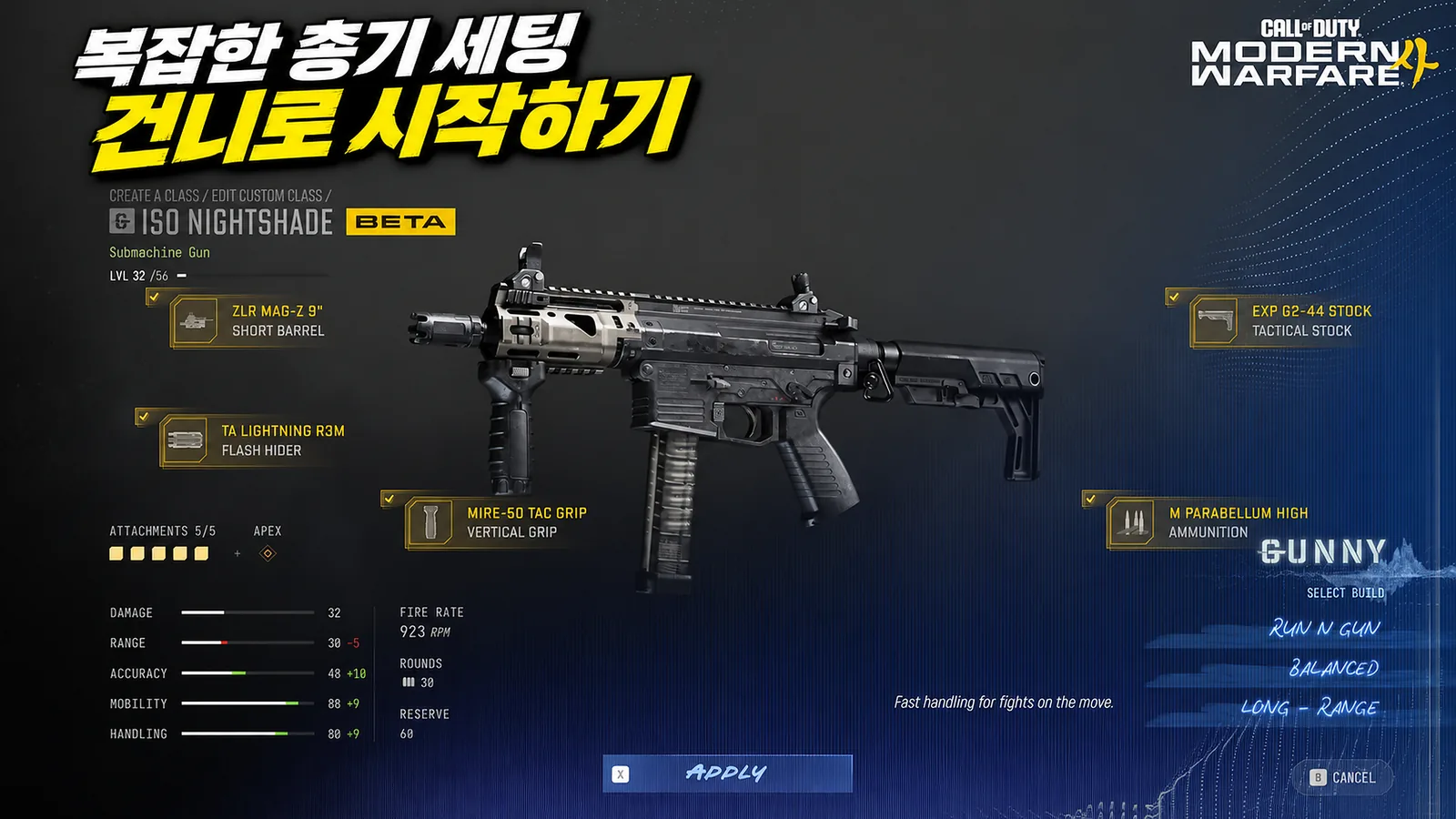
Gunny helps build close-range, balanced, or long-range setups from attachments you've already unlocked. It doesn't automatically unlock missing parts or establish an optimal build for every situation.
Its value is avoiding a blank setup screen. Try a recommendation, then identify one issue: sluggish corner handling or trouble sustaining distant fire. Changing one part and comparing the same situation explains more than replacing several at once.
Fully progressing a weapon also opens Apex Attachments that alter its function. What matters isn't the number unlocked but how they change your role and preferred range. A weapon for entering an objective needn't match one holding a long lane. Test whether the finished setup fits your actual job.
Choose the kind of match you want to repeat
Multiplayer doesn't have one universal pace. Repeated close fights, limited-life rounds, and moving with a team across a large battlefield suit different preferences.
| Desired experience | Where to start | What to assess |
|---|---|---|
| Repeated fights around familiar objectives | Core modes such as Team Deathmatch and Domination | Typical engagement range and objective approaches |
| Adapting to changing terrain | Killblock Gunfight | Whether reading new connections and sightlines is enjoyable |
| Following a frontline across a large battlefield | 32v32 Ground War | The balance of infantry fights, vehicles, and objectives |
| Protecting cash while managing risk | Inflation | When to risk accumulated cash and position exposure |
Inflation rewards kills with cash, but carrying enough makes you a high-value target and reveals your location. Success creates the next risk: keep pursuing opponents, or regroup to protect what you've earned? The choices continue after the elimination.
You don't need to like every mode. A better test is whether there's a fight you want to repeat while gradually mastering its movement and shooting. Judge the changes by how often they make you want to try a different choice next match, rather than the amount of content alone.
