

The most interesting change in Modern Warfare 4 multiplayer is how much room you have to change your decision mid-fight. Redirecting a mantle, changing elevation, and cutting sightlines with smoke all give you ways to react. There is a reason to expect more than a race to occupy the strongest position first.
More features do not automatically make this the right multiplayer game for everyone. Some players will enjoy Killblock's changing terrain and weapons; others want familiar maps and their own loadouts. Start with the kind of firefight you enjoy, rather than the size of the content list.
What does Modern Warfare 4 multiplayer include?
Led by Infinity Ward, Call of Duty: Modern Warfare 4 launched on October 23, 2026. This is a different game from 2007's Call of Duty 4: Modern Warfare. The similar placement of the number makes the names easy to confuse; this guide covers the new Modern Warfare 4.
The launch lineup includes 12 core 6v6 maps, four separate 2v2 Gunfight maps, three 32v32 Ground War maps, and the modular Killblock. These offer very different rhythms. Repeated close-range engagements and a large battlefield shared by infantry and vehicles demand different kinds of awareness.
Judging everything by one mode can hide the part you would actually enjoy. Campaign storytelling and multiplayer replay value also deserve separate judgments. What sustains multiplayer is usually the changing decisions within familiar rules, rather than the ending of a story.
Movement matters most when you still have control over a mantle
Mantling—climbing over an obstacle—is central to the movement changes. Officially introduced options include transitioning straight into a slide, preserving forward momentum, steering sideways during a mantle, aiming, and canceling the action. Pipes and movement while hanging also add routes through different elevations.
These options let you manage the vulnerable transition between moving and fighting. If an enemy appears beyond a low wall as you climb, being able to redirect or disengage changes the encounter. The important question is not just how fast you move, but whether you can respond once you recognize danger.
More routes also make enemies harder to predict. A position that once needed coverage of one doorway may now be vulnerable from above or below. Start by learning where a mantle exposes you and which escape routes remain, rather than chaining every technique immediately.
The appeal is the extra decision: keep attacking, return to cover, or flank from another height. Busy inputs alone do not create that depth. Movement needs to work with the map's actual routes to make fights more interesting.
Removing bloom does not remove recoil, and TTK depends on the weapon
Removing bloom and removing recoil are different changes. The official explanation describes a more direct relationship between where a weapon points and where its hip-fired shots travel. Removing random spread does not make every weapon perfectly stable; recoil, sway, movement, and handling still affect accuracy.
Muzzle effects and aiming visibility are also being addressed, with smoke and flash adjusted so they do not obscure the target. Strong weapon feedback and a readable sight picture can coexist. Knowing whether you missed because of aim, movement, or visual clutter makes the next fight easier to improve.
Time to kill, or TTK, cannot be judged by one blanket label. Damage, fire rate, range, and hit location all matter. Missed shots and aiming time extend real encounters, while cover and distance determine whether you can escape after taking the first hit.
If you are considering a return, look beyond a shots-to-kill claim. Ask whether targets are readable, whether the weapon fits your preferred range, and whether you can reach another piece of cover. Gun feel and opportunities to survive are connected, but they measure different things.
Volumetric smoke can create a route, not just hide a view
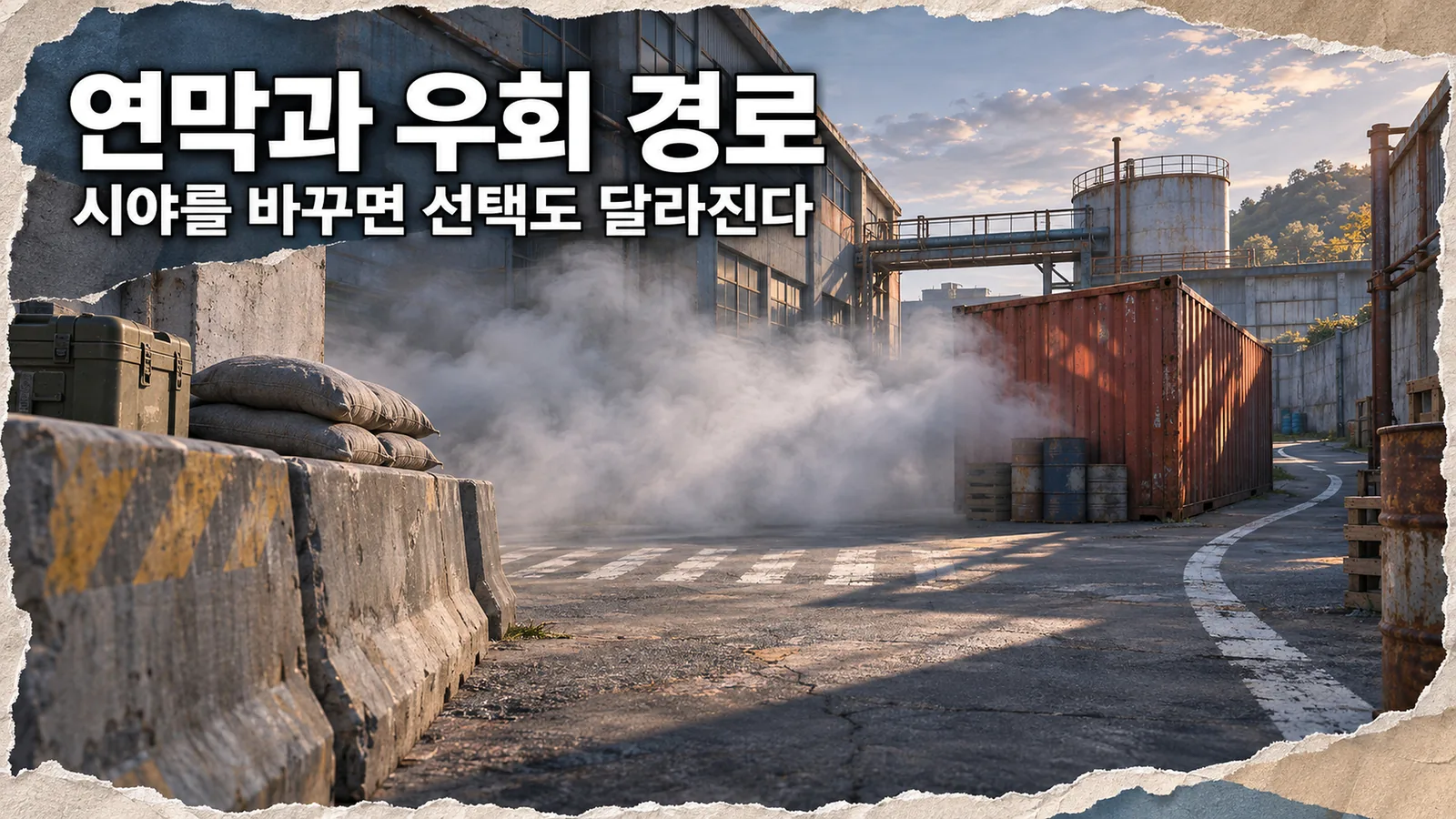
Smoke Wall advances to lay down a smoke path. According to the official description, volumetric smoke interacts with terrain and can be disturbed by gunfire or dispersed by explosions. The sightline itself can change during combat, rather than staying behind a fixed screen.
Its value is the option to cross exposed ground. Against an enemy holding a long angle, you can cut visibility and reposition instead of repeatedly challenging the same lane. Defenders, in turn, can read the smoke as a possible push and take a new angle.
Smoke blocks vision, not bullets. Gunfire and explosions remain threats, and your smoke may also obscure teammates. Decide which angle you want to cut and which cover you want to reach. The equipment changes the conditions for an attack; it does not make the crossing safe by itself.
Killblock means changing combinations, not 500 separately built maps
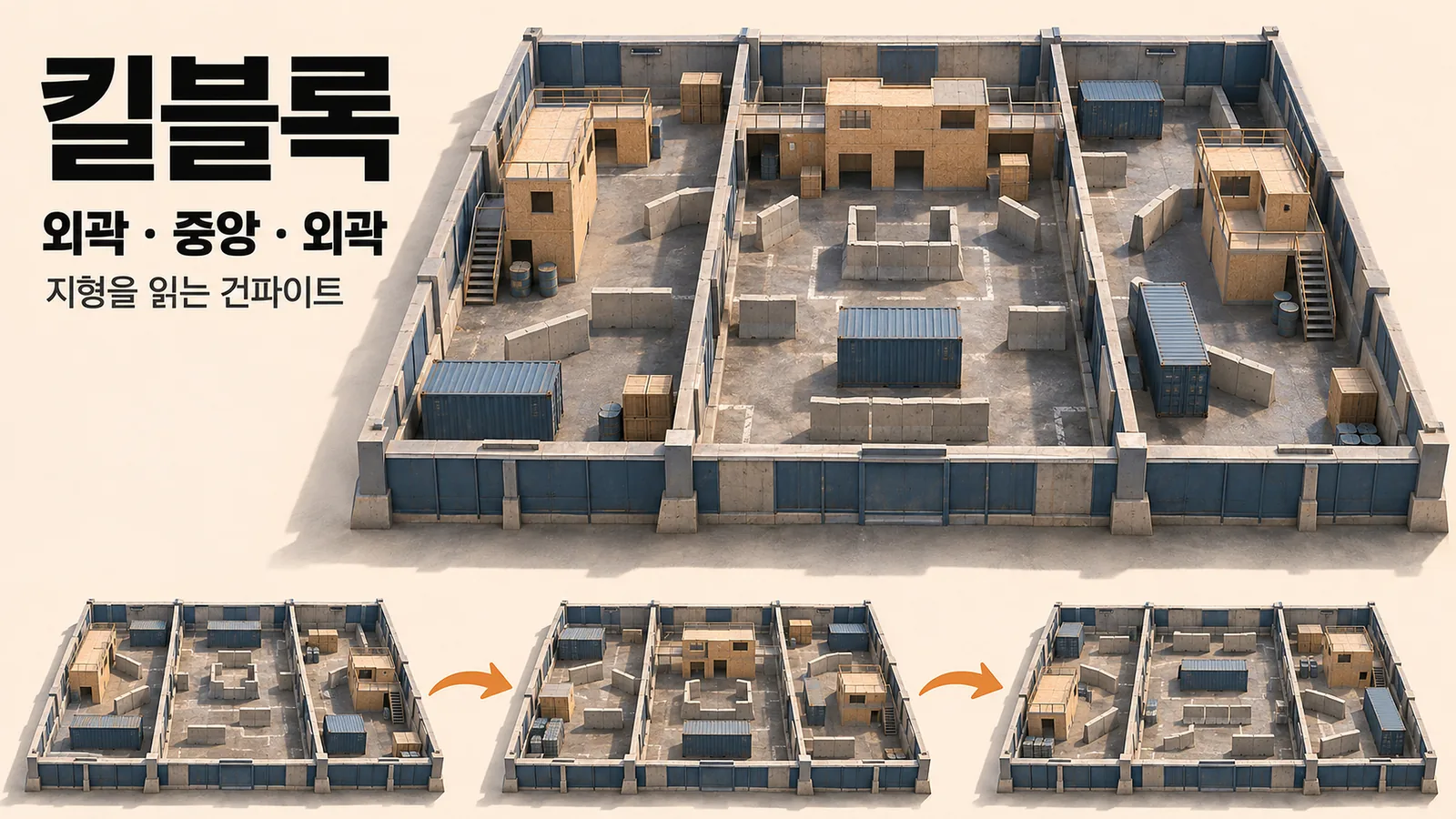
Killblock connects three modular slabs: two outer sections and one center. It was designed to support more than 500 combinations at launch. That is different from having over 500 independently authored maps. Changing neighboring sections alters sightlines and approaches.
The launch versions of Killblock Gunfight are 3v3 and 10v10. Everyone has one life per round and receives the same weapons and equipment, rather than bringing a custom loadout. Teams switch sides after round one; after round two, both the terrain combination and issued equipment change. The cycle repeats until a team wins six rounds.
Familiar knowledge gains a different use here. A section you recognize may have a new sightline because its neighbor changed. Quickly reading the links between center and outer sections can matter more than running a memorized route across an entire map.
Equal equipment does not erase differences in aim, audio awareness, or team coordination. Still, the format lets you compete with issued gear without first building an extensive unlock collection. That can appeal to players who want team fights independent of progression.
Killblock is not synonymous with Gunfight's rules. Season 1 added 6v6 Killblock modes and a fixed Crash-themed combination. Terrain changes every two rounds and equal issued weapons describe Gunfight, not every experience played in Killblock.
Gunny and Apex Attachments solve different problems
Gunny offers a practical starting point if loadout building feels overwhelming. It suggests close-range, balanced, or long-range builds using attachments you have already unlocked. You do not need a complete collection before it becomes useful.
Use a recommendation as a baseline, then identify a specific problem: slow aiming, or instability at distance. Adjusting one issue at a time makes the result easier to understand than comparing every stat immediately. Gunny's suggestions need not be treated as universal best builds.
Apex Attachments are optional customizations unlocked by fully leveling supported weapons. Some add a firing mode or equipment; others change the weapon's battlefield role. They equip separately from normal attachment slots, but cannot be combined with certain attachments.
The interesting question is whether an unlock gives you a reason to try a new range or role, not merely how much a number rises. Progression becomes more meaningful when a new attachment changes how you approach the next match.
Returning players should choose a mode before a weapon
Respawn modes such as Team Deathmatch offer repeated opportunities to learn movement and shooting. If you prefer contributing around an objective, try Domination or Hardpoint. Smartstreaks connect objective play to killstreak progress, giving those actions a direct reward.
Gunfight or Search and Destroy may suit players who prefer protecting one life and coordinating decisions. Killblock Gunfight emphasizes adapting to new terrain and issued gear over repeating a favorite loadout. Ground War shifts the focus toward vehicles, open space, and reading a broader front.
Modern Warfare 4's promise lies in how these choices connect: redirecting movement, reshaping visibility with smoke, and rereading routes through Killblock. Does the next firefight make you want to try a different solution? How often multiplayer gives you that opportunity is a useful way to decide whether it fits.
