

At top tier in War Thunder, a missile opportunity involves more than an enemy crossing your sights. You need to connect its direction of travel, your next turn, and any other opponents approaching your flank. In an aircraft carrying weapons for multiple targets, such as the F/A-18E Super Hornet, positioning to keep fighting matters beyond whether one missile hits.
Ask whether your position preserves both an opportunity to attack and room to defend. Retreat too far and you may survive without pressuring enemies fighting your team; chase every shot and you may face missiles from several directions. Notching and recommitting shift the balance between offense and defense.
Hot and cold targets change what the same range means
“Hot” means a target is approaching you; “cold” means it is moving away. A beaming target travels roughly across your line of sight. A recommit is a return to the fight after defending or disengaging. These terms describe the behavior you need to read before worrying about the aircraft’s name.
Two targets at the same distance can present very different shots. A missile chasing a retreating aircraft must cover an increasing distance, while an approaching target can change the situation by turning defensive. Range alone misses why the same weapon produces different outcomes as target movement changes.
Your launch speed and altitude, plus the target’s speed and heading, affect missile reach. Instead of memorizing one launch distance, ask whether the target will keep closing or turn away. Range is one condition; the target’s vector suggests how that condition will change.
The F/A-18E needs target management as much as missile capacity
The F/A-18E combines an AESA radar with a substantial air-to-air loadout. Firing once at every visible opponent just because you carry many missiles can leave fewer options against the targets actually threatening your position. Balance conserving weapons with applying pressure when it matters.
Prioritize the targets that become dangerous if you leave them unchecked, rather than simply the closest. An opponent already engaged by several teammates is different from one approaching unopposed. Track enemies moving beneath you: increasing vertical separation makes it less safe to assume they will remain inside the scan volume with your nose unchanged.
That is not a rule to always attack the lowest target first. An unopposed high-altitude enemy entering your team’s formation may deserve pressure sooner. The useful question is what your teammates are covering and which direction is exposed, not whether high or low targets rank first.
This also explains pressure shots. A missile can help without scoring a kill if it forces an opponent to turn or delays its approach, buying teammates time. But a shot unlikely to force a response is not automatically useful suppression. First assess whether the target has a reason to respect it.
A notch needs adjustment after the initial turn
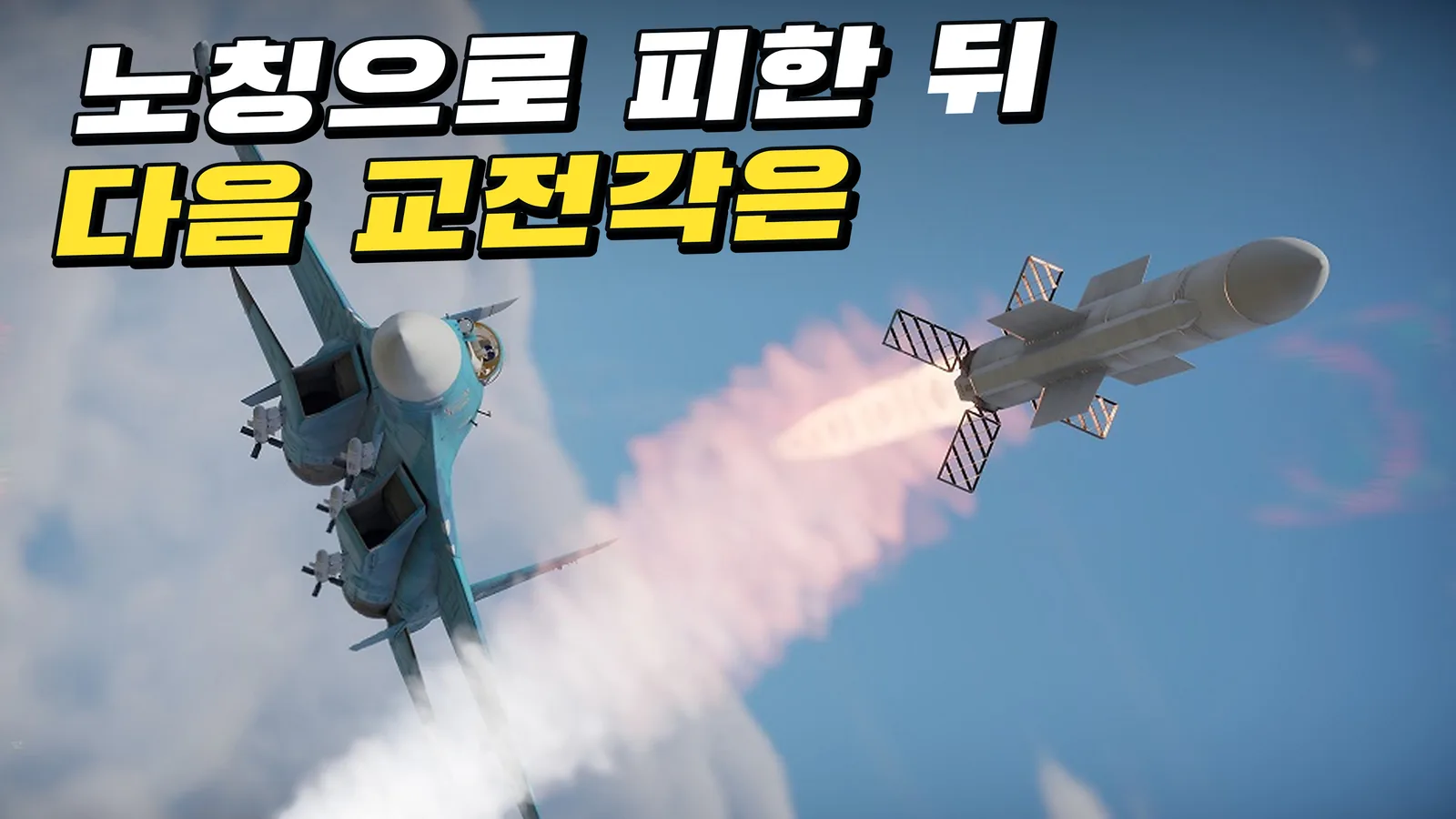
Notching is a defensive maneuver that makes your motion harder for pulse-Doppler radar to distinguish. The basic idea is to fly roughly perpendicular to the threatening radar while using chaff. The goal is to create favorable radar conditions, not merely release more countermeasures.
Beaming describes geometry; notching uses that geometry defensively against radar. Putting an enemy off your wing does not finish your defense against every missile. Once an active radar missile tracks with its own seeker, its bearing can differ from that of the launching aircraft.
Turning right against an enemy ahead can also point you poorly relative to another enemy approaching from farther right. A maneuver that works against the first threat may not work against the second. Reassess the threat layout instead of stubbornly holding one notch direction.
Treat your defensive route as a path to keep updating. Check whether enemies have completed their turns, another group is flanking, and teammates remain on the side you intend to turn toward. Reacting only to the loudest warning can leave you in a worse position after that warning stops.
An enemy’s recommit can create the next shot
When an opponent is beaming, there may be value in waiting for its next turn instead of immediately firing again. You can see whether it keeps defending away or turns back to attack. Its transition back to a closing aspect changes the firing conditions.
This is not an absolute ban on shooting beaming targets. Match the weapon to the path the opponent chooses. Pressuring a target turning back in can sometimes protect your position better than chasing one already leaving, because it must choose between continuing its attack and defending again.
A recommit still does not guarantee a hit. Results depend on room for another notch, separation, and whether your missile suits the conditions. Timing improves the use of a shot; it does not remove the other requirements.
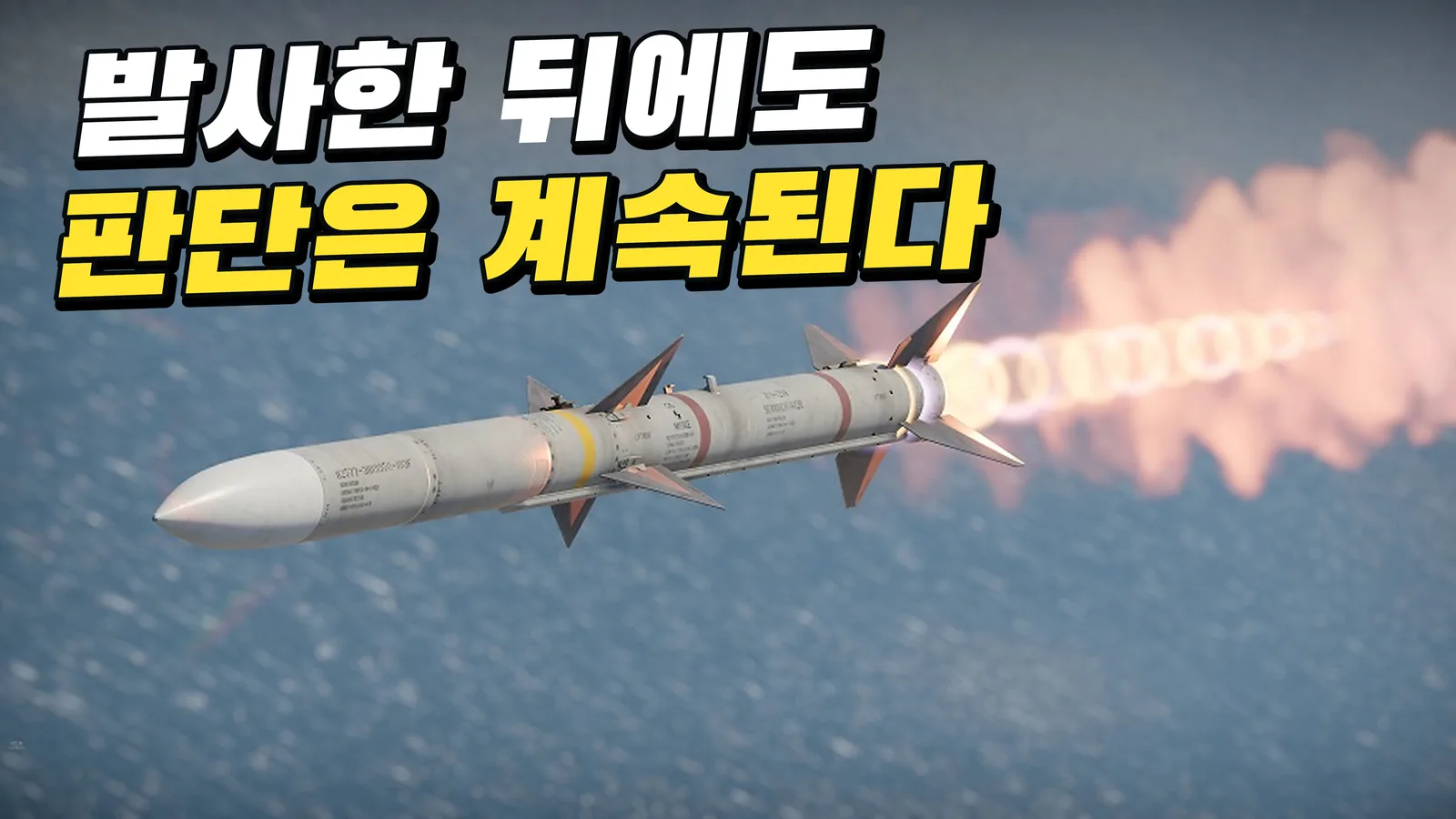
Active radar missiles do not always become entirely hands-off at launch. At long range, midcourse updates can help until the seeker acquires the target. TWS tracks targets while scanning and can support those updates. Weigh the benefit of maintaining target information against the need to defend immediately.
Position to reduce the directions you must defend at once
Several enemies surrounding your nose create a different problem from the same number entering from one direction in sequence. Threat geometry changes your workload even when the count stays the same. Fighting one group while exposing your flank to another makes sustained offense difficult.
Watch the routes enemies use to return after defending, but avoid becoming isolated in the middle of them. Read friendly positions and enemy movement together, seeking a position where you can engage the immediate threat while retaining a useful defensive aspect against others. The aim is fewer simultaneous threat directions, not magically separate one-on-one duels.
Retreating farther is not always better. It can improve personal safety while delaying your return when teammates need help. Holding without support, however, can turn a fight into an encirclement. Preserve both effective pressure distance and room to leave; the gap depends on your aircraft and the situation.
A quiet RWR is not sufficient reason to turn back in. It detects radar emissions, not every approaching infrared missile, and aircraft differ in frequency coverage and blind spots. Combine radar, visible missiles and aircraft, and friendly positions before deciding your next turn is safe.
Review the turn that created the problem, not just the final seconds
When practicing engagement geometry, look earlier than the kill or last-second defensive input. Before asking why you failed to evade, identify when you began taking threats from two directions. Finding the moment you lost defensive space helps you change course sooner next time.
Review your own launches the same way: the target’s heading at launch, its next turn, and whether you could maintain tracking. An extra missile at a departing target might have been avoidable; missing a recommit might reveal that you watched one enemy too long.
A good top-tier firing angle is more than a neat sight picture at launch. It is a position that pressures where the opponent will go next while keeping your own defensive route open. Think through the following turn before firing, and a notch becomes preparation for your next attack as well as a way to survive.
