

If you're thinking about trying War Thunder, look beyond whether you can fly your favorite fighter and consider the battles you'll actually fight in it. The appeal of piloting an F-15 or F-16 is obvious, but modern air combat offers more than getting on an enemy's tail. Reading radar information, setting up a missile shot, and preserving enough room to defend before the return fire arrives are major parts of the experience.
The key question for a new player is whether you'll enjoy the combat at the top, rather than how quickly you can reach the best-performing aircraft. You can start for free, but no upfront cost does not mean a small learning curve. If modern fighters are your goal, budget time for learning the controls and interpreting the information they give you.
Why information can be harder than the controls
Pointing your nose at an enemy aircraft and pressing fire is relatively easy to understand. The difficult part is working out why the same missile hits in one situation and misses in another. Range is only one factor: approach angle, altitude, launch speed, and the target's evasive maneuvers all affect the result.
Radar is not an all-seeing map that automatically reveals every enemy ahead. Search coverage and available modes vary by aircraft, and ground clutter can make targets harder to detect or track. Seeing an aircraft yourself and being able to track it reliably on radar are two different things.
The same applies to the radar warning receiver, or RWR. It detects radar emissions around you and alerts you to threats, but different aircraft do not receive identical information. In Realistic and Simulator Battles, the receiver's frequency coverage and ability to warn of tracking or launches depend on the model. No warning does not always mean you were safe.
That makes it easy to misdiagnose a defeat. You might blame your aircraft when the target was outside your radar's search coverage, or blame a missile after launching it from an unfavorable range. A beginner needs an explanation of how on-screen information translates into decisions before an exhaustive list of keybinds. The more a game asks you to learn, the more a sensible learning order matters.
Modern jet combat is more than close-range turn fighting
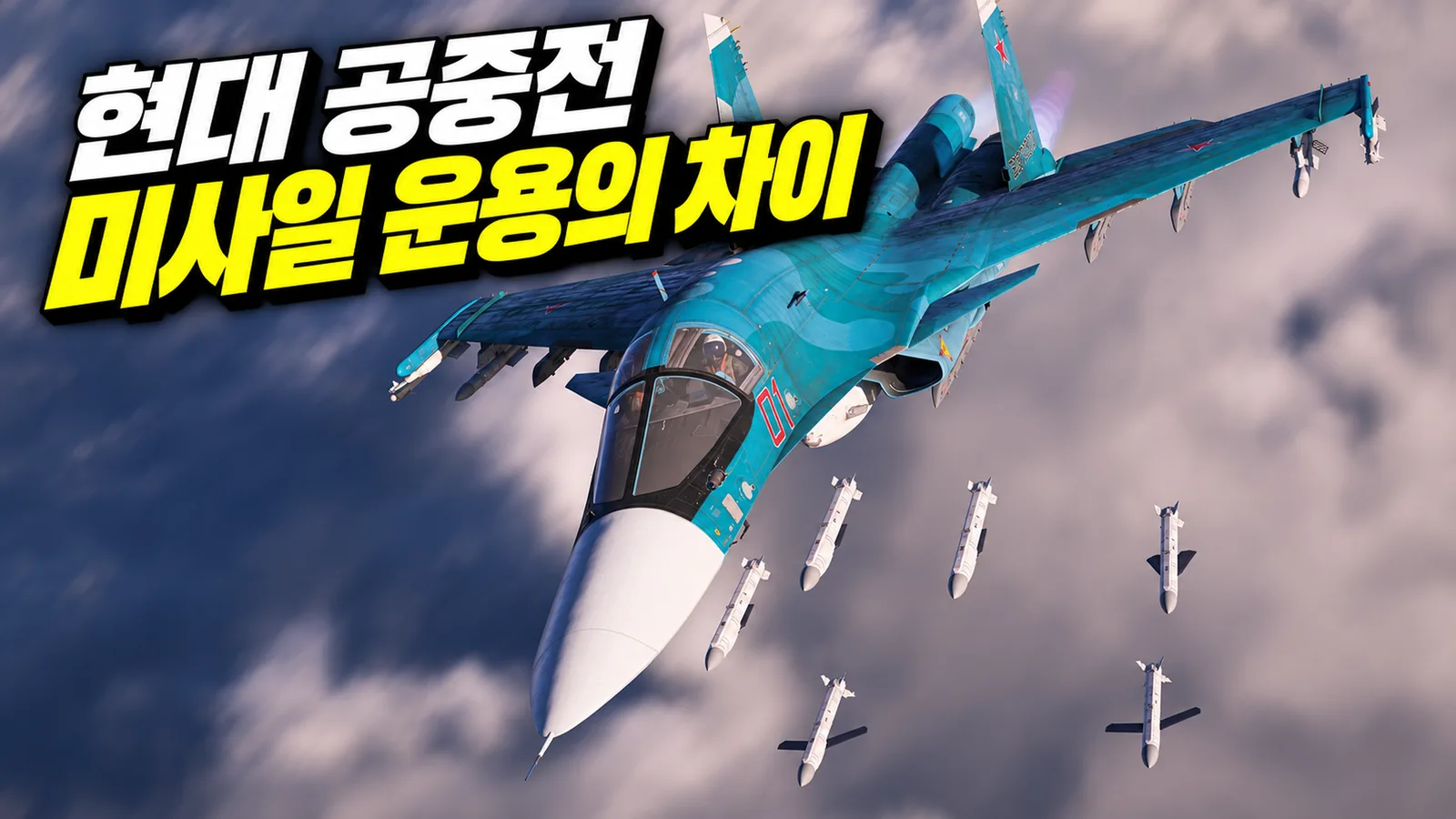
To understand high-tier jet combat, start by separating missile guidance types. Broadly, infrared-guided missiles track heat, while radar-guided missiles use radar information to follow their targets. Within the latter category, semi-active and active radar guidance place different demands on the pilot after launch.
A semi-active radar-homing missile generally needs the launching aircraft to keep illuminating its target with radar. Continuing the attack means maintaining an attitude that allows you to track the target, which can conflict with the need to evade an incoming attack.
Active radar-homing missiles, commonly called FOX-3s, carry their own radar seekers. They can track a target independently in the terminal phase, giving the launching aircraft more freedom. However, midcourse target updates still matter for long-range shots. Turning away immediately after every launch will not necessarily deliver the same result.
As a result, high-tier air combat often rewards launching first from favorable conditions and forcing the opponent to defend more than staying close and turning for a long time. Focusing on a dogfight can also expose you to missiles from another direction. Good turn performance does not guarantee that every engagement will be a one-on-one duel.
Whether that sounds fun is a matter of taste. Some players enjoy managing the spacing between detection, launch, and defense; others want the immediate feel of outmaneuvering an opponent they can see. Modern air combat may appeal to the first group, while top-tier jets may not be the reward the second group expects. Climbing higher does not automatically bring you closer to your preferred kind of combat.
Battle Rating does not match aircraft by historical era
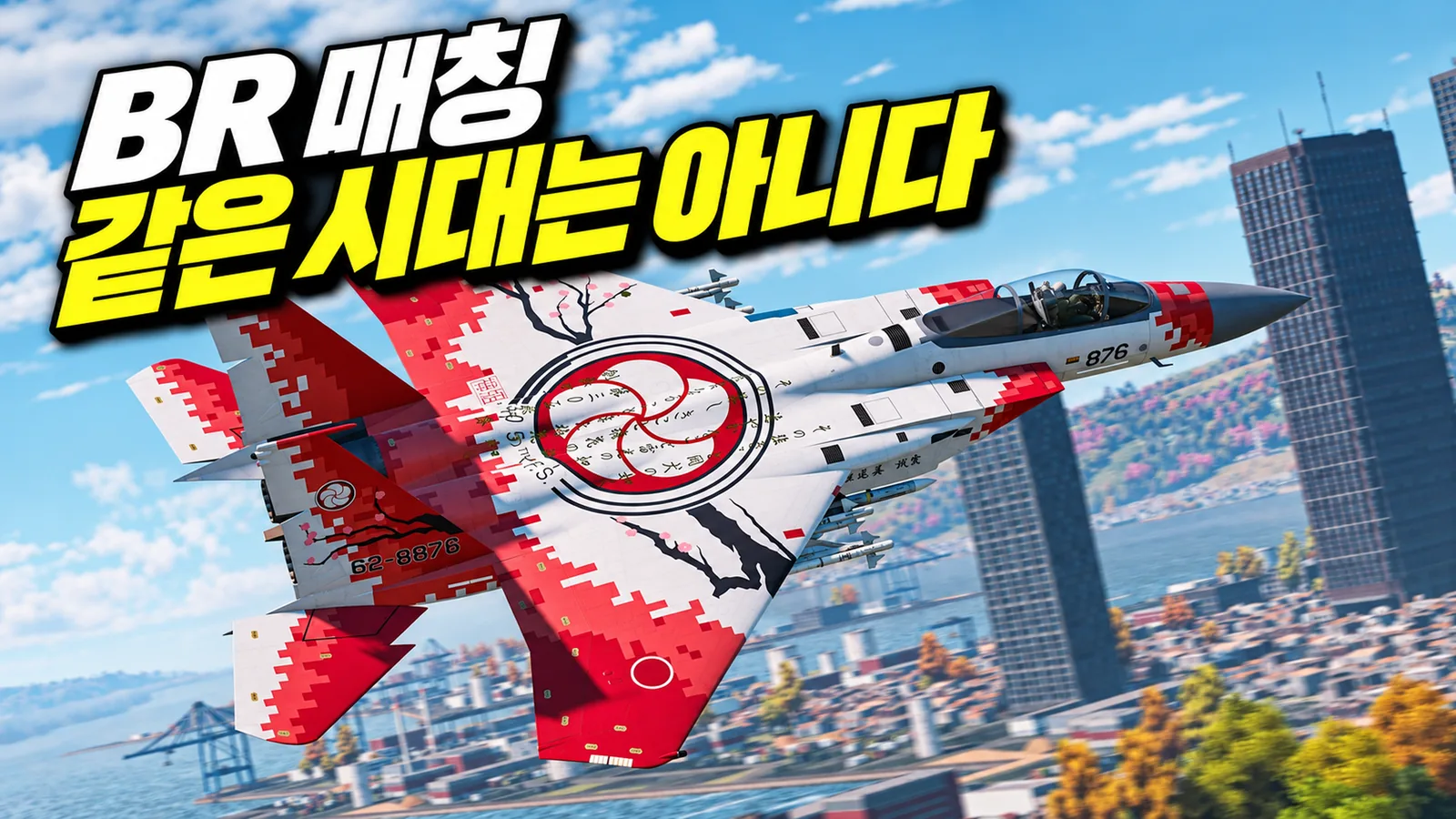
BR stands for Battle Rating, the combat-performance rating used for matchmaking. It does not group aircraft by service-entry date or by the war in which they appeared. It also serves a different purpose from rank in the research tree: rank describes progression, while BR is the number to check first when considering which opponents you may face.
Standard Air Realistic matchmaking uses the BR of your selected aircraft, with a maximum BR spread of 1.0 within a battle. For example, an aircraft rated 8.7 can enter a battle spanning 8.7 to 9.7. That is an example of an uptier. In other matches, your aircraft can sit at the top of the bracket instead.
The same 1.0 gap will not always feel equally significant. Missile types and defensive equipment can change an engagement more dramatically than a simple difference in top speed. An aircraft accustomed to chasing slower opponents may struggle to pursue a faster one and instead have to wait for that opponent to make a mistake.
Still, one unfavorable match in a particular aircraft does not prove that all matchmaking is unfair. BR condenses overall performance into a single number; it cannot eliminate every asymmetry in weapons, maneuverability, or defensive equipment. That is the more useful way to understand its limits.
For a beginner, the practical lesson is clear. Do not assess a favorite aircraft in isolation: look at the opponents it can meet and the fights it should avoid. An aircraft can also have different BRs in different modes. Air Arcade uses its own average-BR rules, so do not apply the Realistic explanation unchanged.
Time played is not the same as lessons learned
War Thunder has an official wiki and developer explanations, so it would be wrong to say there are no resources. But knowing what a feature does and knowing how to use it in a fight are different things. Learning that TWS means tracking targets while scanning does not automatically tell you when to narrow the search area.
Start by reducing the number of problems you try to fix at once. If you could not find an enemy, check your radar coverage and heading first. If a missile missed, begin with launch range and the target's movement. Judging yourself only by kills can hide progress such as surviving longer or avoiding a bad engagement.
Apply the same thinking to fuel and loadouts. More fuel gives you more flying time but adds weight; less fuel reduces your margin for getting home. Rather than memorizing one fuel quantity for every map and aircraft, learn to balance the time needed for combat and the return trip. That knowledge stays useful longer.
Even a guide for the same aircraft may assume different conditions. Mode, loadout, and modification status all change what advice means. A resource explaining the speed, altitude, and target aspect of a launch is more useful than a bare claim that a missile hits from a certain range. Trial and error remains, but each failure can teach you more.
Free-to-play is viable, but spending does not buy understanding
War Thunder is free to play, and progression can continue without purchasing premium currency. You do need to distinguish research from operating resources. Research Points, or RP, unlock vehicles and modifications; Silver Lions, or SL, pay for vehicle purchases, crew training, modifications, repairs, and rearming.
Finishing research therefore does not mean all your preparation is complete. If you focus only on the rate at which you earn RP, purchase and operating costs can become a separate obstacle. Vehicle research and modification research are also distinct, so obtaining an aircraft and equipping it with the weapons and performance you want are separate stages.
Premium accounts and premium aircraft affect rewards and progression speed. Describing paid options as purely cosmetic would be inaccurate. Earning efficiently and understanding combat are still different matters, though. Acquiring a high-rank aircraft early does not also buy the ability to interpret radar and warning displays or choose a good launch opportunity.
There is no single reliable number of hours for reaching a desired modern aircraft. The nation and research route you choose, your battle results, and whether you use a premium account all change that timeline. Before making a large purchase at the start, find out whether you enjoy learning the basic combat. It makes sense to check that you like the destination before paying to get there faster.
Choose a starting mode you can comfortably keep playing
Air Arcade simplifies flying and combat, making it an accessible place to learn aircraft control and shooting. Realistic adds more demanding flight characteristics and operating constraints, while Simulator asks for further adaptation in controls and view management. You are under no obligation to start with the strictest mode to learn properly.
In standard Air Realistic, you take one aircraft into the battle, so an early mistake carries more weight. Managing limited ammunition and returning to base for resupply are part of the fight. Players who enjoy the preparation before an engagement may find that immersive; those who want rapid opportunities to fight again may find it frustrating. Special variants can have different rules, so this discussion concerns classic air battles.
Propeller aircraft and modern jets also emphasize different kinds of fun. The former let you focus on climbing, speed management, and creating a firing position. The latter add sensors and guided weapons, increasing the number of threats you must interpret and answer. Enjoying the propeller tiers does not guarantee the same satisfaction in modern jets, or vice versa.
How to decide whether War Thunder is for you
If learning equipment and narrowing down the cause of a failure is enjoyable, War Thunder offers plenty to explore. If your goal is to unlock a favorite aircraft and immediately repeat cinematic dogfights, check your expectations against the actual combat at higher tiers first.
The biggest waste for a beginner is not staying at a lower tier. It is treating a style of play you dislike as homework you must endure to unlock an aircraft. Let whether you want to collect an aircraft and whether you want to fight in it point in the same direction guide both starting and spending. The satisfaction of reaching the top matters less in the long run than enjoying the battles you will keep playing there.
