

Improving your aim in VALORANT takes more than moving the mouse faster. You need to prepare your crosshair where an enemy may appear, adjust while moving if that aim is off, and stop before you fire. What matters most is not how quickly you rush the shot after spotting someone, but how well you set up the first shot in advance.
If your shots land in the Range but miss in matches, start by checking that sequence. Aiming at a stationary target and firing at the right moment against a moving opponent around a corner are different skills. This guide focuses on mouse-and-keyboard play on PC and rifle fights with the Vandal and Phantom.
Separate aim errors from firing-timing errors
A missed shot can have several causes. If the crosshair was beside the head, your mouse adjustment needs work. If it was close to the head but you were moving, look at the transition from stopping to firing. If you kept holding the trigger after missing the first bullet, accumulated firing error and recoil may explain the later misses too.
Calling all of that a sensitivity problem makes practice less focused. If your crosshair was on the floor when the enemy appeared, keeping it at head height may be a higher priority than learning a huge upward flick. If your crosshair was ready but you fired before stopping, repeatedly shooting the same target will not fix the whole issue.
Riot's official beginner guide also emphasizes stopping before firing for accuracy. That does not mean every bullet will land at the exact center of the crosshair once you stop. A weapon's inherent spread and your firing state still matter. Look for repeated errors in the same action rather than diagnosing everything from a single miss.
That is a useful standard for practice as well. One attempt in which you can explain the miss often does more to improve the next action than one lucky hit.
Pre-aiming means matching head height and distance from the corner
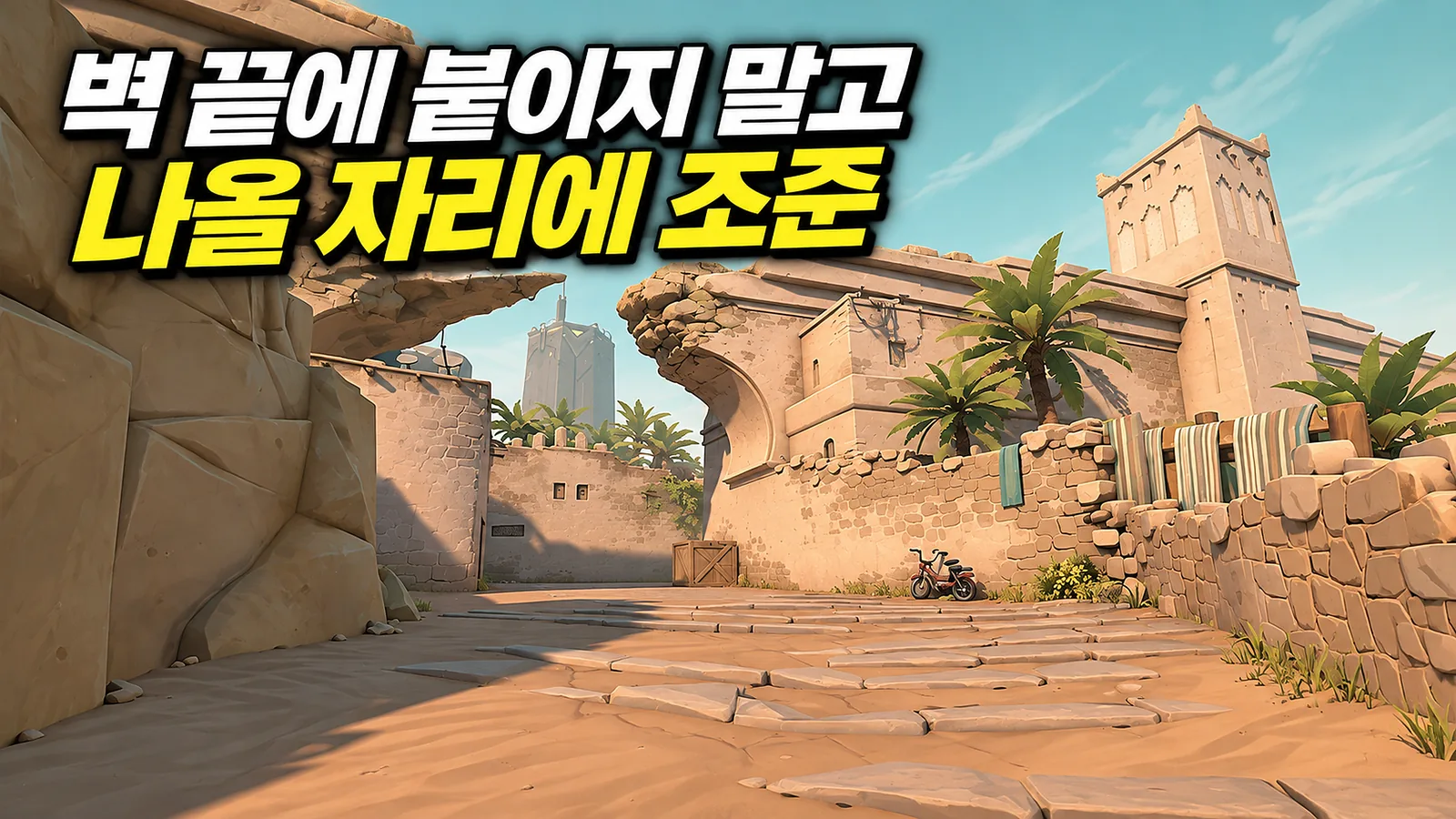
Pre-aiming means placing your crosshair at an expected enemy position before you see them. Head height is the starting point; the gap between your crosshair and the edge of the wall matters too. A height that works on flat ground may be wrong for someone on stairs or a tall box.
Imagine holding a doorway on defense. If an enemy swings wide while your crosshair hugs the frame, their head may already have passed it by the time you react and click. You prepared the angle but still have to chase the target. Leaving space along their expected path can reduce that extra adjustment.
Holding farther from the wall is not always the answer. If the opponent barely exposes themselves or stops at the corner, your crosshair may now be too wide. The right position depends on whether you expect a committed swing or a brief information peek.
That is why copying someone else's crosshair placement as a fixed number of pixels has limits. Distance, movement direction, apparent speed, and your own reactions all contribute. When you miss a held angle, distinguish an enemy who passed your crosshair before the click from one you shot at before they reached it. That tells you how to adjust the gap.
Clear angles by preparing the next shot before exposing yourself
Slicing the pie means checking an area beyond a corner in sections rather than exposing every angle at once. If your body comes out first and your mouse follows whatever becomes visible, you only start preparing after the enemy can see you. The key sequence is to choose the next position to check, pre-aim its expected head height, then move out to clear it.
If you need to clear the end of a corridor and then behind a box on the right, choose which comes first instead of vaguely aiming between them. Clear one position, move the crosshair to the next, and open the angle again. That sequence becomes faster with practice, but rushing immediately makes it harder to tell whether your body or crosshair moved first.
Short peeks and wide swings also serve different purposes. A narrow peek limits how much you check, but does not guarantee that you see the opponent first or have the advantage. The two players' distances from the corner can let part of your body become visible first. A wide swing may move you away from their held crosshair, but can expose you to other positions as well.
Practicing short movements while managing sound is useful when approaching quietly. But if avoiding footsteps ruins your pre-aim or keeps you in a dangerous spot too long, you have lost sight of the purpose. First learn the path and crosshair positions that let you check one area at a time, then add control over movement width and sound.
Movement should buy time to correct your aim
Strafing left and right is not automatically good movement. Repeating the same distance at the same rhythm makes your next position easier to predict. You may even return to the line of fire you thought you had escaped. Where you move while adjusting matters more than how often you change direction.
The basic drill can stay simple. Move in one direction while aligning your crosshair with a target, stop, fire a short sequence, and move again. Practice each direction separately at first, then vary the distance once your first shot after stopping is consistent. If speeding up repeatedly makes you fire while moving, that pace is ahead of your current control.
This does not mean standing still for a long time until the aim is perfect. Use movement to make yourself harder to hit while correcting an off-target crosshair, then connect the stop and shot once you are ready. Movement alone cannot rescue every situation, including one where you have already taken a headshot or exposed yourself to several enemies.
Crouching is another option, not a button to press automatically in every duel. Its value depends on whether you intend to keep firing from the crouch or move back into cover. If basic stop-and-shoot timing is inconsistent, practice separating movement from firing while standing before adding crouch. That keeps the causes of mistakes easier to identify.
Vandal taps and Phantom bursts are drills, not permanent rules
Careful single shots with the Vandal help you focus on the first bullet. They expose the habit of clicking before you are on target or continuing to hold the trigger while missing. Short Phantom bursts also let you examine how well you maintain aim after the first bullet and when you stop firing.
But memorizing “always one bullet with the Vandal, always two with the Phantom” restricts your options too much. The Vandal can burst and spray, while the Phantom still benefits from controlled intervals against a small distant target. Restricting an action for practice is different from using only that action in a real fight.
Riot's weapon tuning reflects that distinction. In patch 11.08, Riot discussed the prevalence of tap-strafing with PC rifles and explained changes intended to make spraying a more meaningful option at close and medium range. That is another reason not to treat tapping as the ultimate form of aim. The adjustment aimed to broaden the choice between firing styles.
Taps or short bursts can help reset your aim when targeting a small head at long range. At close range, if bullets are already connecting with the body, continuing the spray may be better. Holding the trigger while missing and staying on a spray that is landing are very different decisions.
Choose ADS—aiming down sights—based on distance too. It can help identify a distant target, but automatically using it in close fights changes your field of view and handling rhythm. Judge whether it made the target and your next response easier to manage, rather than treating ADS itself as evidence of good or bad shooting.
The Range and Deathmatch train different problems
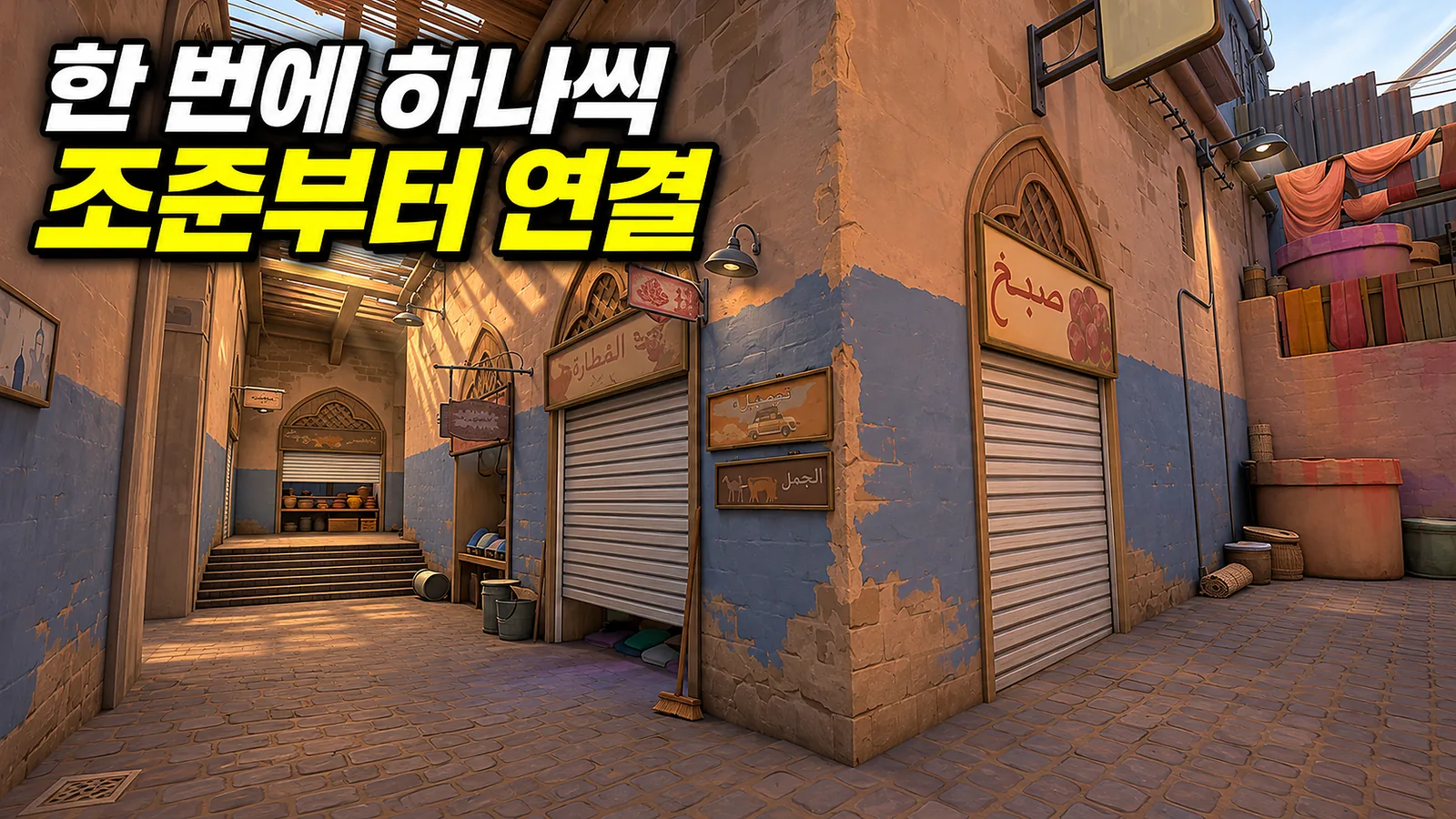
Instead of simply extending practice time, reduce the number of things you are checking at once. The sequence below separates actions before reconnecting them. It is not a claim that you must hit a fixed time or repetition count to improve.
| Where to practice | Action to focus on | What progress looks like |
|---|---|---|
| Stationary targets in the Range | Align the crosshair before the first shot | Fewer clicks before you are on target |
| Movement drills in the Range | Move one way, then stop and shoot | Stopping and firing stay distinct even when rushed |
| Corners on a map | Choose a position, pre-aim, then peek | Preparation happens before you open the angle |
| Deathmatch | Apply your holding distance to moving opponents | You can explain which way you missed |
The Range simplifies the causes of failure. Without nearby enemies and abilities to track, you can separate aim from stopping. In Deathmatch, opponents move differently from what you expect, so you must adjust the prepared crosshair and turn that adjustment into a shot. The modes serve different purposes, so a score in either one cannot measure all your match skills.
Set just one goal per Deathmatch: crosshair height today, holding distance next time. Temporarily limiting yourself to taps is valid practice, but missing a kill does not make the whole exercise a failure. Conversely, getting the kill by spraying before aiming may not satisfy that day's practice goal.
Find one recurring mistake before changing sensitivity
Sensitivity and keyboard settings may need adjustments. But changing values after every miss makes it hard to tell whether your preparation improved or you merely adapted to a new setup. Once the controls feel comfortable, look for repeated mistakes under the same conditions to make the next correction clearer.
When reviewing a death, start a little before the final crosshair position. Check where you aimed before the enemy appeared, whether you chose the next position before exposing yourself, and whether you were still moving just before the first shot. The officially introduced Shooting Error graph can help diagnose shooting inaccuracy. It does not evaluate crosshair placement or fight selection, so read it alongside what is happening on screen.
The first improvement to seek is less about one impressive one-tap and more about recognizing the same mistake and acting differently in the next fight. If the first shot is always late, revisit your holding position. If the aim is right but you shoot while moving, work on stopping. If every peek needs a huge adjustment, improve your pre-aim. Specific practice problems are what turn time invested into better fights.
