

KMS event · Ended · About these guides
Could a late starter reach Challenger with about 50 days left?
This is the source's late-start plan for the ended 2026 KMS Season 4. Its seasonal missions and Meirin challenge ended September 16 at 11:59 p.m. KST; world training continued until September 17 maintenance, and final World Leap ended September 30. The countdown below is historical.
Leveling alone was not enough. The plan combined Challenger Points, a Hard Meirin solo clear, Item Burning PLUS, HEXA development, and equipment improvements.
Challenger required at least 90,000 points and a Hard Meirin solo clear. In Worlds 1–3, ranks 1–999 received Super Challenger and rank 1,000 onward received Challenger. In World 4, the split was ranks 1–50 and rank 51 onward.
The Sol Janus reward
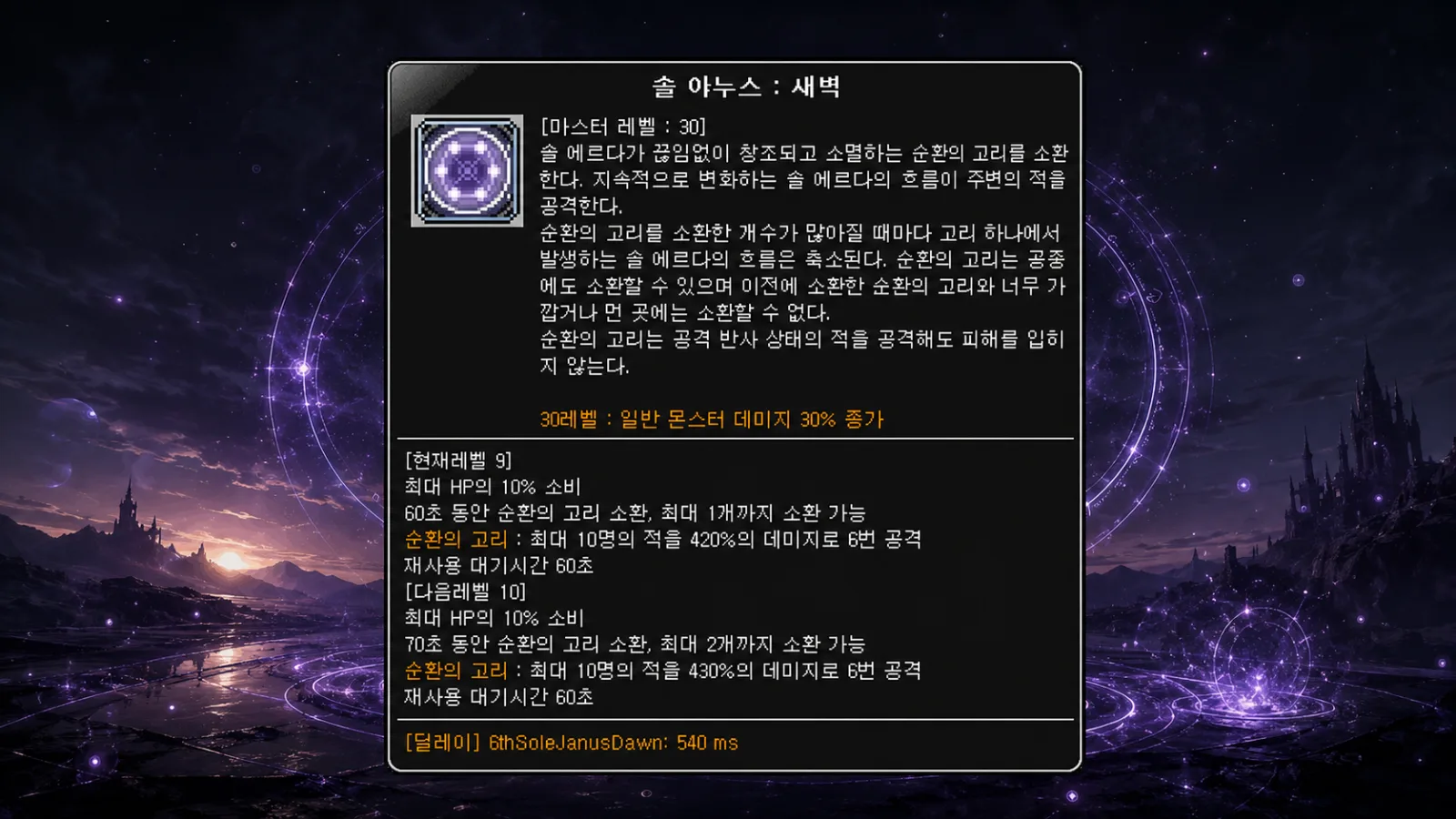
Challenger and Super Challenger rewarded a Sol Janus skill enhancement ticket labeled level 20. It could develop the actual skill in an eligible regular world, unlike the temporary seasonal skill support.
The resulting skill level depended on the level before using the ticket:
- Sol Janus level 0–3 → level 20
- Level 4–7 → level 21
- Level 8–9 → level 22
- Level 10–11 → level 23
- Level 12–13 → level 24
- Level 14–15 → level 25
- Level 16 → level 26
- Level 17–18 → level 27
- Level 19 → level 28
- Level 20–21 → level 29
- Level 22–29 → level 30
For a low-level skill, this was a substantial jump. Sol Janus: Dawn supports up to three summons from level 20, which can simplify coverage in a large training map.
The seasonal level-30 support ended on World Leap. The earned ticket instead upgraded the real skill, subject to its eligible-world and use-deadline rules; it is no longer a currently claimable season reward.
Two requirements: 90,000 points and Hard Meirin
Reaching 90,000 Challenger Points
Points came from missions such as levels, Combat Power, HEXA investment, Genesis liberation, and boss clears.
With a short deadline, relying on just training or just gear upgrades could leave gaps. The plan was to review the mission list and complete attainable milestones in parallel.
These milestones fitted naturally into progression:
- Character level milestones
- Combat Power milestones from 10 million to 100 million
- Spending Sol Erda Fragments on HEXA skills
- Designated solo boss clears
- First and second Genesis liberation stages
- Weekly growth missions
- Item Burning PLUS development
Soloing Hard Meirin
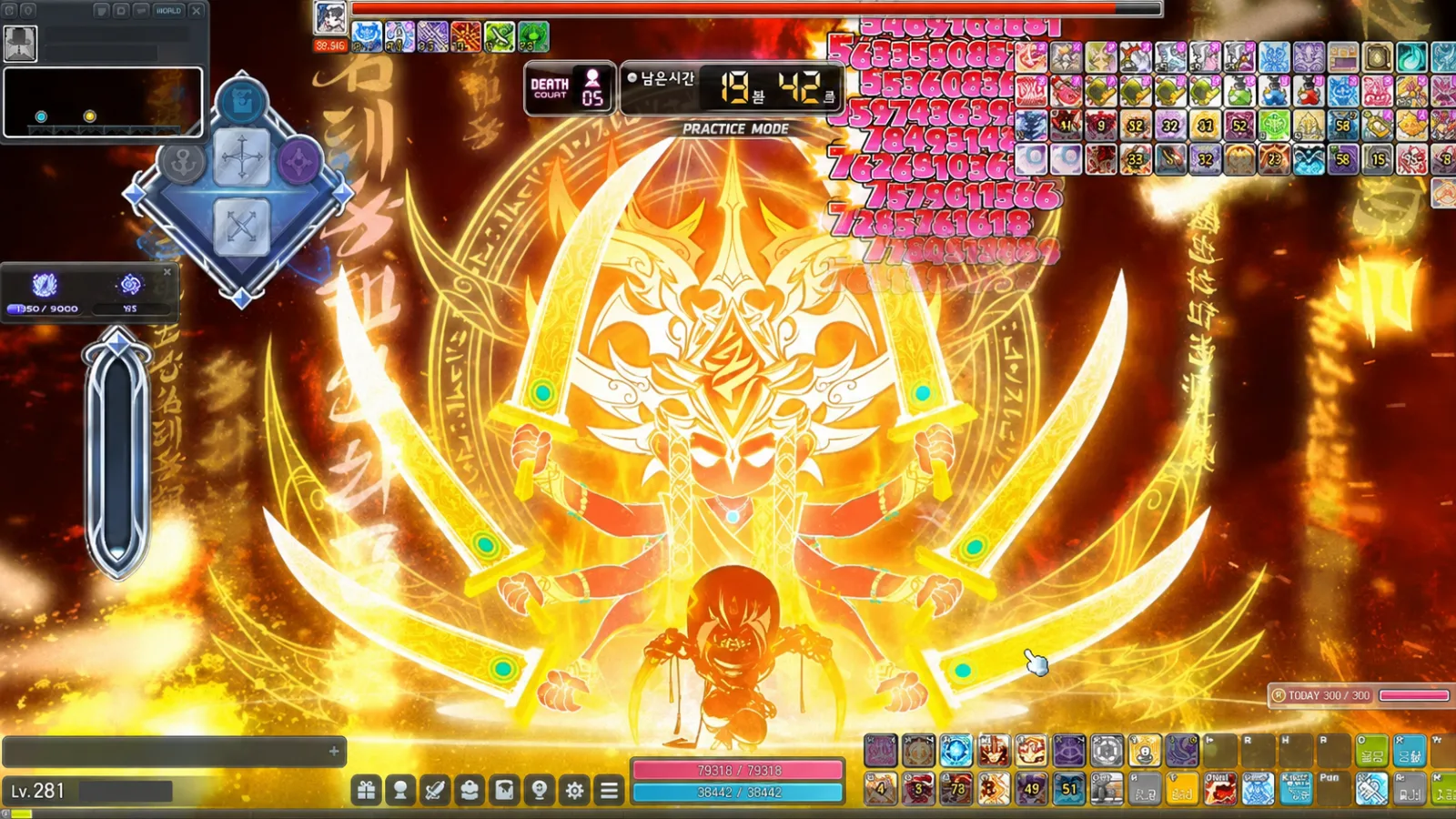
Hard Meirin's entry level was 280. Level 285 was a suggested preparation target, not an entry requirement.
Further levels and Sacred Symbol development could improve the actual fight. The source favored growing levels and gear together rather than spending everything immediately at 280.
The 100-million Combat Power milestone was useful for points and planning, not a clear guarantee. Class, HEXA levels, IED, Boss Damage, burst timing, buffs, and execution all mattered.
Full-phase practice was a better readiness check than the displayed Combat Power alone.
Developing 22-star Challenger armor
Item Burning PLUS provided temporary Challenger equipment: hat, top, bottom, gloves, shoes, cape, shoulder, and weapon.
The set developed through level and solo-boss missions plus required Challenge Emblem holdings. Stage 11 required level 280, a Normal Meirin solo clear, and 6,500 emblems, and raised the armor to 22 stars.
The hunting source awarded 100 emblems per 2,000 level-range monsters, up to 500 per week. Designated first solo boss clears supplied additional emblems, so missing weekly progress could delay the set.
The issued equipment's expiry was November 18, 2026 at 11:59 p.m. KST. That item lifetime was separate from the ended mission period; permanent replacements still needed a plan.
Genesis liberation as a progression milestone
Liberation supplied both points and a stronger weapon. The source planned around points for the first and second liberation stages before the season deadline.
The KMS Genesis Pass tripled eligible Traces of Darkness earned from boss clears. Its eligible users could also form liberation-quest parties of up to six for the Lotus-through-Verus Hilla missions.
Multi-person liberation quests applied a Final Damage penalty through the Black Mage's binding effect. More party members did not automatically mean an easier clear; pass eligibility and party composition still mattered.
The source's liberation planning order was:
- Clear the Black Mage and start the Genesis liberation quests
- Prioritize weekly bosses that award the required traces
- Decide whether the optional Genesis Pass fit the plan
- Arrange an eligible liberation party if needed
- Set the liberated weapon's Potential and Bonus Potential
- Choose secondary and emblem options around the resulting weapon
Weapon, secondary, and emblem priorities
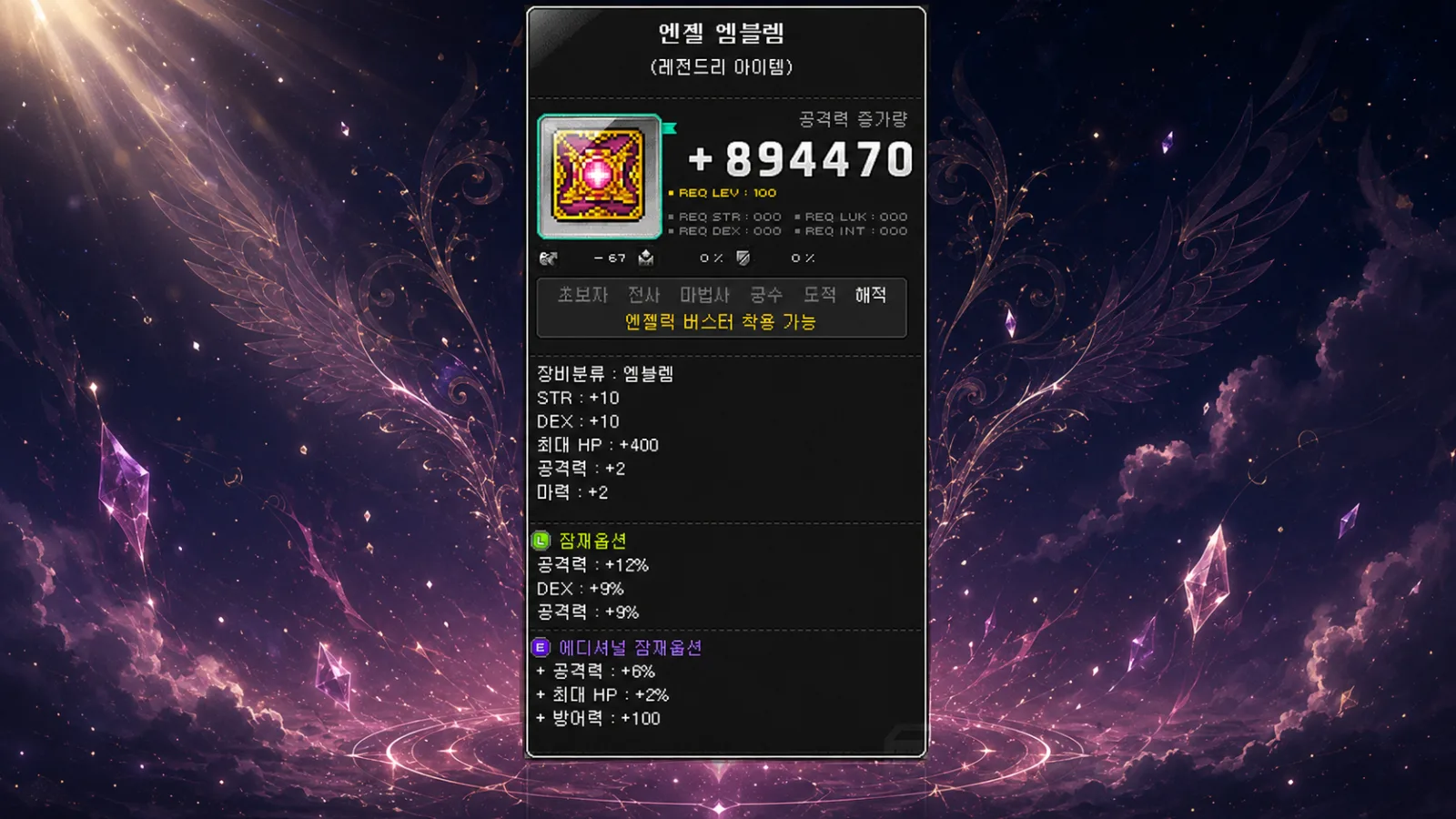
Before buying expensive accessories, inspect the useful lines on weapon, secondary, and emblem. Attack/Magic Attack, Boss Damage, and effective IED must work together.
Emblem decisions
A basic emblem has trading restrictions. Set a reroll budget first, then compare it with a finished Mitra's Rage if one is eligible for your class and available in that world's market.
Mitra's Rage was an option, not a universal requirement. The remaining season time and actual budget determined whether replacing the existing emblem made sense.
Secondary decisions
Check the liberated weapon's final lines before choosing a secondary. If IED is sufficient, other useful lines may offer more value.
If IED is short, the secondary or emblem can help. Use the combined effective IED rather than counting an arbitrary number of IED lines.
Accessory decisions
Twilight Mark is a face accessory; Papulatus Mark is an eye accessory. Contrary to the Korean source's slot description, they can be equipped together. Compare each against alternatives for its own slot, including set effects.
Where trading is permitted, finished gear can save enhancement time and may later be resold, subject to its actual trade and Scissors restrictions. Compare the complete cost first.
Progressing from 280 toward 285
Burning BEYOND supported the 260-to-280 range by adding a bonus level at eligible level-ups. Apply the event's cap rather than assuming every level-up doubles indefinitely.
Above 280, the source combined training with seasonal Mechaberry/Blueberry Farm tickets, VIP Sauna tickets, and advanced EXP vouchers. These were time-limited Korean event resources.
Momentum Pass supported level-280-plus characters with growth resources. Its paid upgrades were optional; their availability and benefit period have ended for this season.
A final Hard Meirin checklist
The plan checked character systems and buffs as well as equipment:
- At least 90,000 Challenger Points
- Level 280 or higher for entry
- Item Burning PLUS progress
- Genesis liberation progress
- HEXA skills and HEXA Stats
- Sacred Symbol development
- Effective IED and Boss Damage
- Weapon, secondary, and emblem potentials
- Available Noblesse guild skills
- Applicable Legion and guild bossing buffs
- Compatible advanced boss-damage and penetration potions
- Seasonal Mysterious Barrier stats
- Repeated full-phase practice
- Meirin's card mechanic and major patterns
Plasma Heart was another possible upgrade if obtainable, but enhancement risk and recovery access belonged in a separate budget.
The historical 50-day roadmap
Week 1: establish the foundation
- Designate Burning BEYOND and work toward level 280
- Join Item Burning PLUS
- Activate Sol Janus support
- Develop the Mysterious Barrier
- Complete weekly growth missions and collect emblems
- Start Genesis liberation
Weeks 2–3: bosses and equipment
- Advance the Item Burning PLUS boss missions
- Prepare a Normal Meirin solo clear
- Invest fragments in useful HEXA upgrades
- Secure useful weapon, secondary, and emblem lines
- Develop Sacred Symbols and accessories
Weeks 4–5: close the points gap
- Review unfinished point missions
- Complete reachable Combat Power milestones
- Progress through higher solo-boss missions
- Finish the liberation stages available to the character
- Practice all phases of Hard Meirin
Final stretch: execute the clear
- Refine the class's burst sequence
- Practice card tracking and survival patterns
- Prepare compatible bossing buffs
- Recheck IED and Boss Damage
- Solo Hard Meirin
- Confirm 90,000 points and the recorded tier
- Claim the tier reward before its deadline
What the late-start plan illustrates
The historical plan centered on three objectives: the required level, 90,000 points, and the Hard Meirin solo clear. It was a mission plan, not simply a grinding schedule.
Temporary equipment, leveling support, Sol Janus support, the barrier, and available growth resources could reduce the amount of permanent gear needed during the season. Paid passes were optional choices.
A Combat Power number alone could not replace HEXA development, IED, Boss Damage, Sacred Power, guild support, and pattern execution.
Season 4 and its reward deadlines have passed. Use this roadmap to understand how its progression systems interacted, then build any future-season plan from that season's actual notice instead of reusing the old countdown.