

The first thing to understand about the L-STAR EMG is how ammunition returns. Less need to find ammo doesn't mean you can fire continuously. Its stockpile and heat are separate limits, and managing both is how you get value from the weapon.
If you remember the powerful Care Package version, reset your expectations. The L-STAR returned to floor loot with Cipher on November 3, with changes to damage, overheat capacity, and reserve ammunition. Work with the gun you have now instead of its old reputation.
Care Package and floor-loot L-STAR have different limits
The L-STAR is an energy LMG built around heat rather than routine magazine changes. Energy weapons' ammo-recharge system adds another layer to how you sustain a fight.
The Cipher patch's before-and-after base values show the changes.
| Property | Previous configuration | Cipher floor-loot configuration |
|---|---|---|
| Availability | Care Package | Floor loot |
| Base damage | 21 | 19 |
| Shots until overheat | 28 | 22 |
| Base stockpile | 168 rounds | 88 rounds |
| One magazine-equivalent recharge | 22 seconds | 18 seconds |
| Redline Hop-Up | Equipped | Removed |
The previous values are those listed in the official Cipher patch notes. This isn't a final-stat table covering every attachment or mode.
A shorter recharge time alone doesn't make the change a buff. The immediately available stockpile and the number of shots before overheat also fell. Replenishment speed and available firing capacity answer different questions.
Think about how much room you have for mistakes in one standoff. Prolonged misses may make heat and ammo more urgent than the damage you've dealt. Handle the floor-loot version according to its current limits.
Recharging ammo doesn't allow unlimited fire
Marked's energy-weapon overhaul removed ground energy-ammo stacks. Weapons now carry their own stockpile and replenish it over time, changing both looting routes and ammunition inventory decisions.
Recharge pauses during firing or reloading. Adding one or two shots whenever an enemy peeks can prevent a sufficiently long break. Trusting automatic regeneration while endlessly poking can leave you short when the decisive fight arrives.
The listed 18 seconds restores one magazine-equivalent, not the entire depleted 88-round stockpile. Being able to replenish between fights isn't the same as having enough ammunition to fight several enemies immediately.
After one squad fight and a rotation, recharge can be valuable before the next contact. Under uninterrupted pushes, spending can outpace recovery. What matters is how much you regain before the next enemy, not theoretical ammunition across the whole match.
Overheat and an empty stockpile are different stoppages
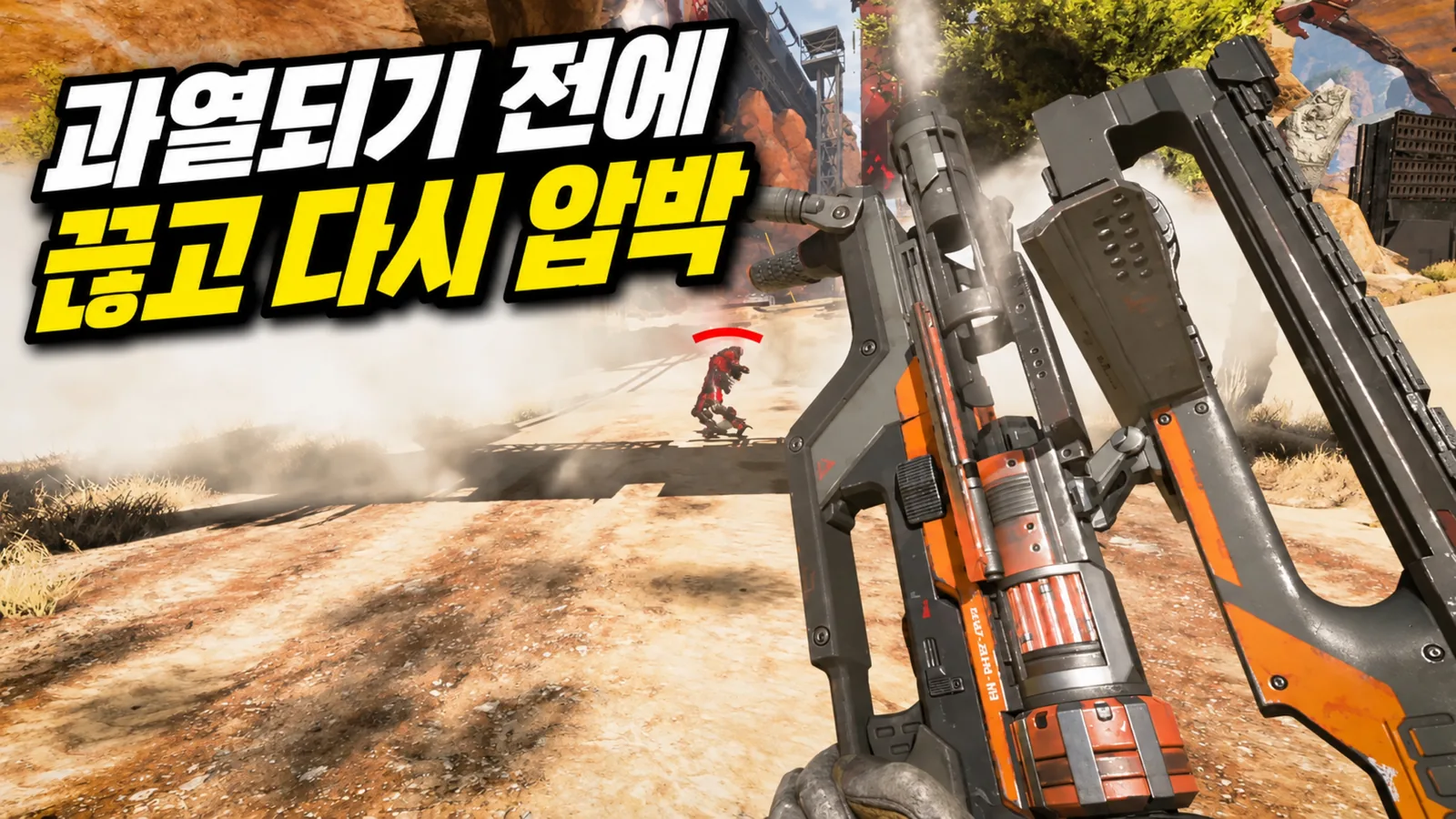
Your stockpile is future firing resource; heat limits how long you can shoot right now. You can overheat with ammo left, or cool down without enough ammo for the next fight.
Ask two questions: can you keep shooting this exposure, considering heat and the target; and can you handle the next enemy, considering stockpile? Good heat control doesn't automatically solve ammunition management.
An enemy disappearing behind cover is a useful checkpoint. Continuing to fire at the corner may suppress a peek, but without a teammate moving or throwing a grenade, it can just spend resources. Stopping also lets you conceal yourself and prepare for the next exit.
This doesn't require tiny bursts every time. If the opponent is nearly down and your heat and health allow it, continuing can be worthwhile. But overheating to finish one enemy can leave you helpless against another. The criterion is whether continuing serves a purpose.
Damage at mid-range isn't an automatic push signal
A good place to deal damage isn't necessarily a good place to win up close. After a long spray has drained your stockpile, assess your own readiness even when you crack a shield.
Suppose an opponent hides behind a box while a teammate works around the side. Briefly cooling down and watching the repeek supports that movement. Charging alone can break the combined angles and leave you short of ammo at close range.
Judge pressure by more than damage: forcing healing, redirecting attention, and buying a teammate's next cover are useful results. Pausing to restore firing readiness can protect those gains better than constant fire.
Being able to hit a distant target doesn't make the L-STAR a dedicated long-range weapon. Repeated exposed trades can be costly. If hits aren't consistent, move to closer cover or watch another route while a teammate with a suitable weapon trades.
Choose a secondary for the moments the L-STAR must rest
Identify your recurring problem first. Getting rushed when the L-STAR stops firing and being unable to contest distant enemies require different solutions.
| Recurring situation | Secondary's job | Related consideration |
|---|---|---|
| Continue damage against a nearby enemy | A quick finishing swap | Comfort landing shots immediately after switching |
| Brief peeks around cover | Damage within one exposure | Cover to return to after a miss |
| Frequent distant targets | Dedicated long-range fire | An answer to a close push |
| Stockpile repeatedly running empty | Another immediately available firing resource | The secondary's ammo and reload state |
A shotgun can concentrate damage into brief peeks; a familiar SMG can track and finish nearby opponents. Marksman weapons or snipers cover distance. No pairing solves everything: what matters is whether the other gun is ready when you put the L-STAR away.
If both weapons use energy, monitor both stockpiles. Two rechargeable weapons don't guarantee ammo available now. Avoid an emergency swap to a second gun that's equally unprepared.
Practice the next burst, not just the longest spray
In the Firing Range, practice stopping briefly and reacquiring the target rather than only firing up to overheat. If every cooling break makes you lose the target for too long, the practical benefit shrinks.
Shoot one target, add a move into cover, then come out and re-engage. Next, switch targets. Watch whether overspending on the first delays your response to the second. This isn't a test of memorizing one exact shot count.
Review why shooting stopped: heat, stockpile, or lost tracking. Work on pause timing for heat, recovery windows and secondary use for ammo, and range or aim for tracking. Calling every problem weak weapon performance hides the action you need to change.
The L-STAR's strength isn't simply holding the trigger. Recharge and heat management let you resume useful pressure when needed. Before firing again, look at both the resources left in your gun and when the enemy is likely to reappear.
