

If you loot well but die while rotating in solos, review the route next game. Good equipment still struggles when you fight beyond your effective range or expose several directions.
Start with transport, lower-contact routes, and smokes that create access to the next position. Practice those alongside aim to reduce situations that demand winning a raw duel with no preparation.
Three Solo Rotation Principles
Nobody watches while you heal or move in solos. Avoiding a bad situation matters alongside defeating the enemy already in front of you.
| Principle | Concrete Action |
|---|---|
| Plan transport early | Check vehicles and landing competitors together |
| Reduce exposed directions | Use terrain and cover to limit side shots |
| Prepare the next position | Ping destination cover and smoke the needed crossing first |
You need not enter every visible fight. Ask why this fight is necessary and where you can survive after it.
Choose the Drop for Transport and the Following Route
Loot-rich buildings are tempting, but finishing far from the circle without a vehicle limits options. A long open-field run can undo a strong loadout.
For vehicle-based practice, consider securing transport, then collecting nearby essentials. Do not turn that into a reckless parachute contest for one car.
If another player lands much earlier, use a nearby alternative building or route. Betting an unarmed opening on one vehicle can end the lesson immediately.
During descent, inspect enemies, vehicle distance, and the fallback if the car is unavailable as well as building count.
Loot Completeness Before Loot Speed
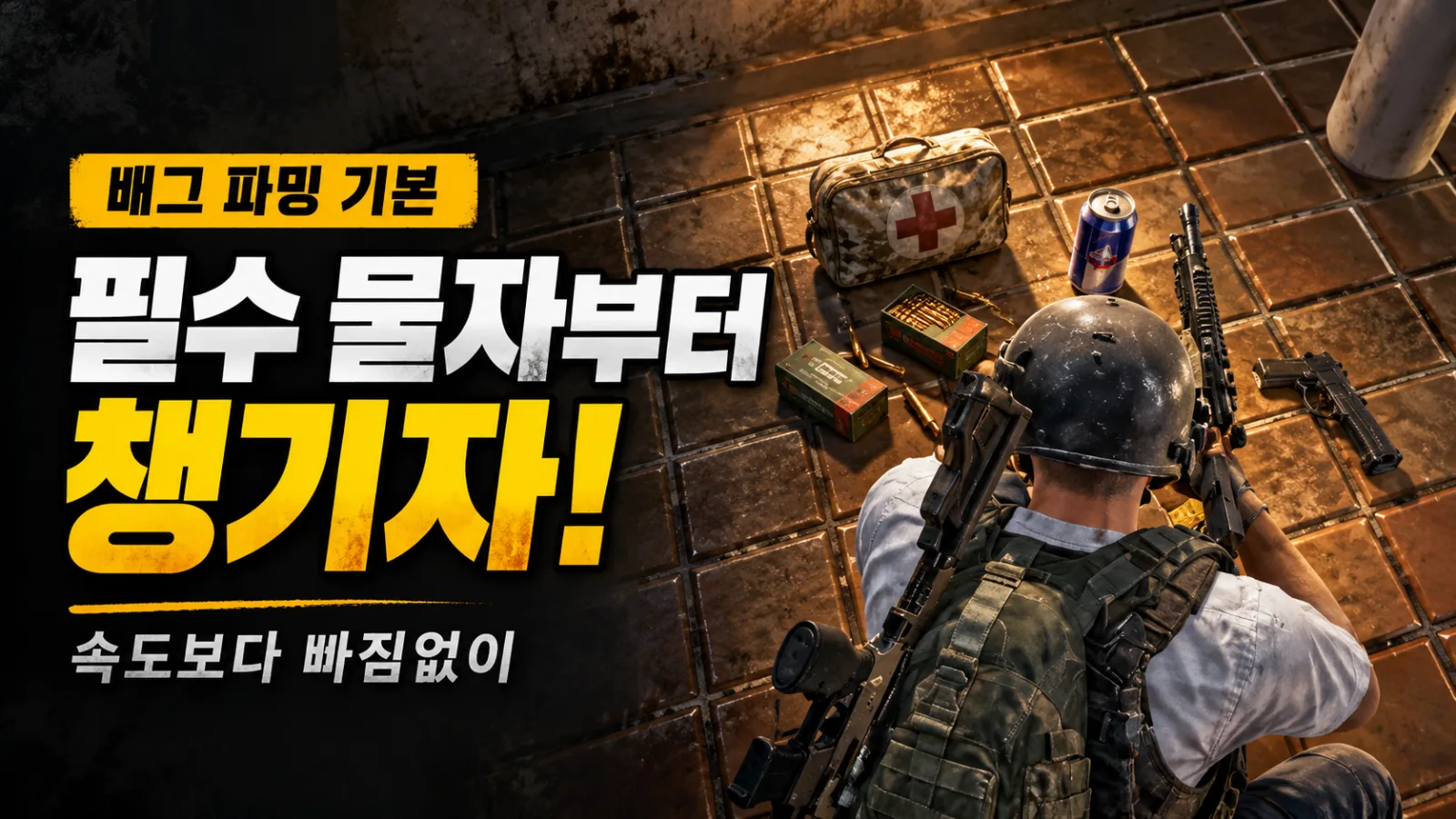
Do not force a veteran’s inventory speed immediately. Separate useful equipment from survival supplies instead of missing essentials or filling space with clutter.
After guns, ammo, armor, and recovery, check throwables. Smokes matter in solos too, buying concealment for recovery or an exposed crossing.
Do not discard every smoke just to keep ammo and attachments, or discard all healing instead. Balance the tools around the next movement.
In a mode that allows perspective switching, briefly using first person can help see floor loot your third-person character obscures. This is a situational looting tip, not a rule for FPP-only queues.
Use a compatible vehicle trunk for reserves, but carry the healing and throwables you need immediately. You may have to leave the vehicle behind.
Reduce Early Contact Away from the Flight Path
For a lower-contact survival run, consider routes away from popular drops and the flight path rather than chaining through several busy landing areas.
A longer detour is not proof of an empty area. Others may choose the same quiet edge. Scout before parking at an apparently remote building.
Closed doors, uncollected items, and no gunfire do not guarantee an empty building. Someone may wait inside without shooting.
Choose the destination before departure and scan nearby ridges, buildings, and intermediate cover, not only straight ahead. That makes unexpected fire easier to answer.
Circle Edges Need a Timely Entry Plan
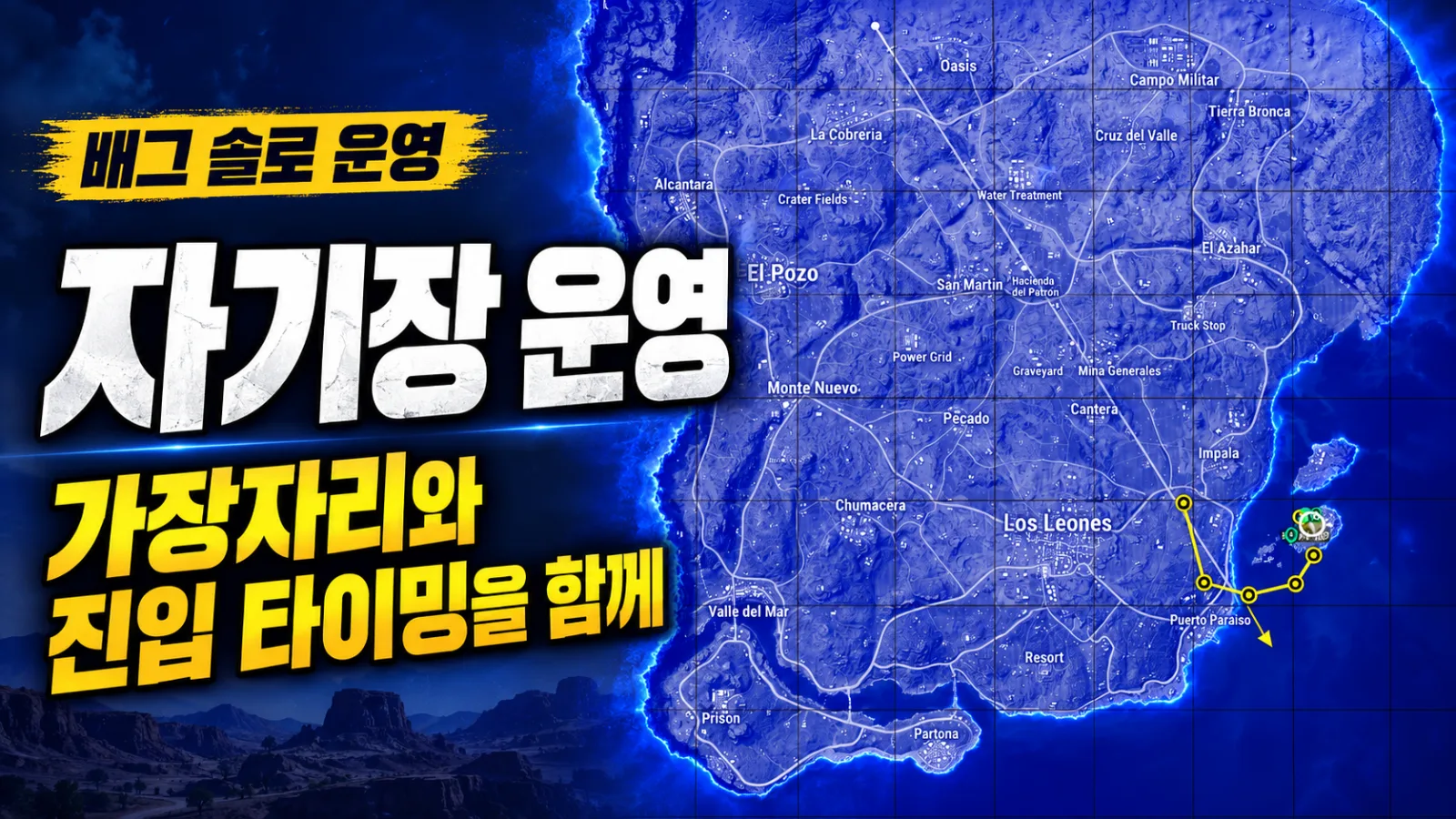
Edge play can reduce directions needing attention, but late players can still arrive from the Blue Zone behind you.
Check those entry routes and recalculate travel when the next circle appears. Edge play is about finding a less exposed entry route rather than simply arriving late.
Check the Destination and What Can See It
Do not ping an arbitrary spot inside the circle. Choose terrain or cover that limits incoming angles on arrival.
A direct route may cross building windows while a slight detour follows low ground. Compare time visible to enemies alongside distance.
A long detour adds Blue Zone damage and delayed entry. A large healing supply does not support endless circling.
Blue Zone Detours Are Conditional
Briefly going outside can avoid a held angle, but it is risky as a beginner’s automatic rule. Check HP, recovery, distance, and movement speed.
Update 42.1 changes increased Blue Zone damage from a distance-based to a time-spent basis, alongside mode-specific timing and damage changes. Read the current match timer and HP loss instead of memorizing one supposedly safe phase. See the official Blue Zone update
. If travel estimates are still difficult, practice early entry and selecting cover before extended Blue Zone routes.
Before Shooting, Check Range and Cover
A distant shot may reveal you without finishing the target. If they are approaching, waiting for a manageable range can be an option.
Ask:
-
Can I land repeated hits at this range?
-
Can I immediately hide from return fire?
-
Could firing expose me to an opponent beside or behind me?
At reduced HP, do not stay exposed indefinitely to finish a target. Recover safely when possible and prepare the next fight.
Some shots defend space: short pressure can discourage an approach to your cover. The purpose is preserving position, not chasing someone far enough to abandon it.
Smoke Before Moving to the Next Position
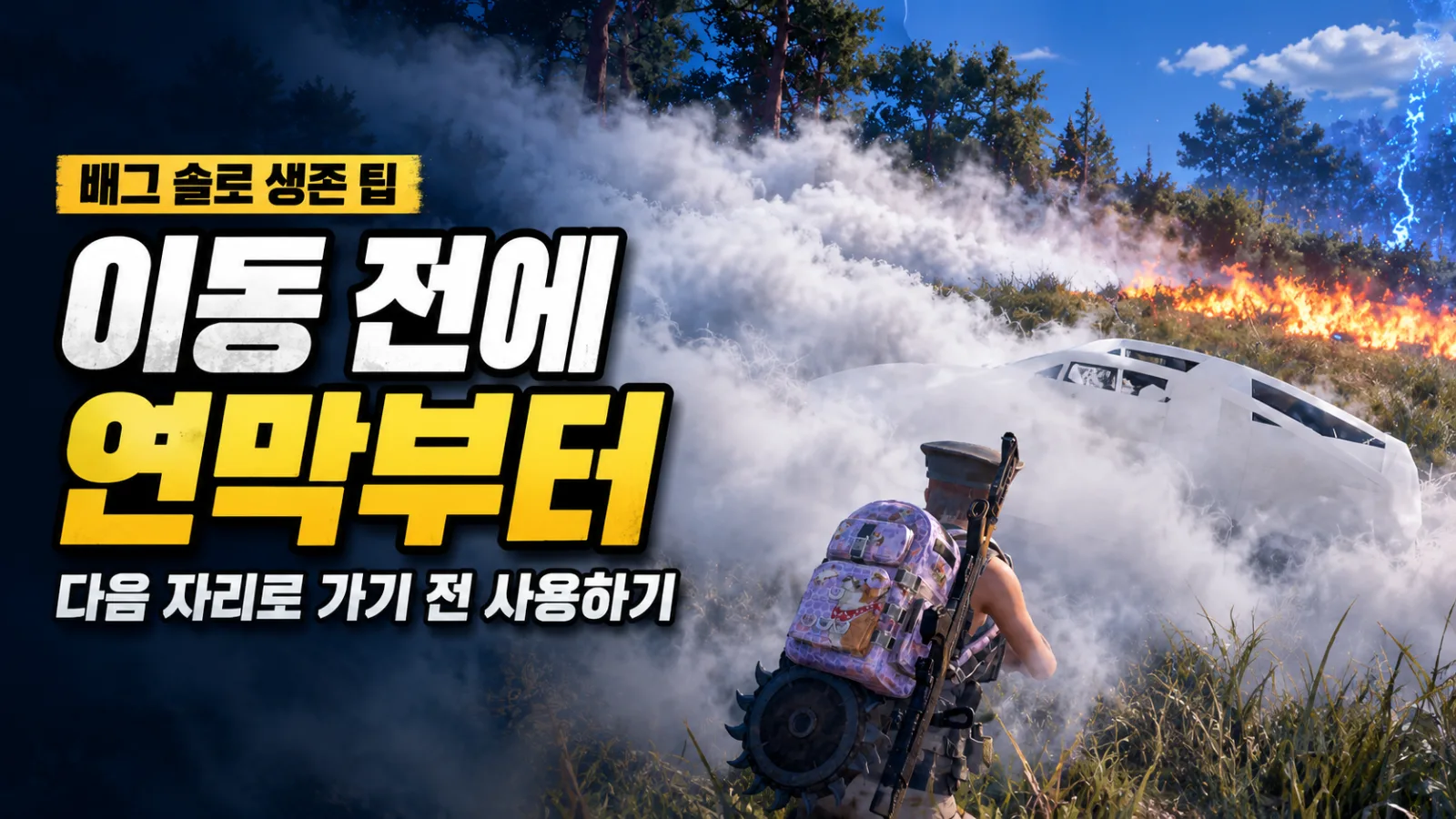
Throwing smoke only after running into the open can leave you exposed before it blooms.
Choose destination → ping it → smoke the necessary stretch → move after the smoke develops. On longer routes, use intermediate cover instead of one uninterrupted sprint.
Smoke can also hide your view of the enemy. A ping on last-seen cover helps orientation but does not prove the enemy stayed there.
Smoke and Hard Cover Do Different Jobs
Smoke obstructs sight. It is not a wall against bullets or grenades.
The 42.1 notes also describe explosions and vehicle collisions temporarily displacing or dispersing smoke. Do not assume an unchanged visual barrier throughout its duration. See the official interactive-smoke explanation
. Even when combining a car and smoke, check vehicle condition, incoming angles, and the real cover available after dismounting.
Final Three: Avoid Exposing to Both Enemies
With you and two opponents remaining, fixating on one can expose you to the other. That creates a crossfire.
Before peeking, ask whether both can see you. A small rise, depression, or rock can block one direction and make the fight more manageable.
Throwables can force movement as well as secure kills. If someone leaves cover, consider taking a better position instead of automatically chasing.
Gunfire and the kill feed update the read. A confirmed death lets you reassess one threat, but does not clear the whole surrounding area.
Keep the same sequence: protect yourself, choose the next entry, use appropriate smoke or utility, then fight. Small positional improvements become more valuable than reckless pursuit as space shrinks.
Next-Game Practice Order
Do not try to perfect every decision at once. Use these checks:
-
Scout vehicles and competitors during landing.
-
Check recovery and smoke before ending the loot phase.
-
Ping the next cover before moving.
-
Check range and your own cover before shooting.
-
In the final circle, evaluate the next position before another kill.
Afterward, review the biggest exposure rather than only placement. Was it a long vehicleless run, a chase out of cover, or a crossing without smoke? Each suggests a concrete change.
For a solo Chicken Dinner attempt, start with choosing the next hiding place before moving. More prepared rotations mean fewer moments where everything depends on an unexpected aim duel.
Regional and version notes
This guide covers PUBG: BATTLEGROUNDS on PC and console, not PUBG MOBILE. Tactical examples are practice frameworks rather than guaranteed wins. Item and queue availability vary by mode, map, region, and update. Smoke conceals movement but does not stop bullets. Distances use the game’s metric units. The 42.1 Blue Zone change increases pressure with time spent outside the safe zone; it is not a distance-from-the-circle formula. Some illustrations are retained from the Korean edition and may include Korean labels. Use the English article text for instructions.
Localization sources checked October 22, 2026 (Korea time):