

KMS build · About these guides
Paladin offers more than simply being difficult to kill.
Damage reduction and invincibility can help preserve attack uptime through mechanics that interrupt other classes. Binds, protection, and revival also make Paladin a supportive option for learning bosses.
An unfocused build can still feel slow between bursts. Weapon choice, node investment, and landing your main burst matter more than complicated input chains.
Is Paladin a good fit?

Paladin can suit players who want:
- A stable character for learning boss mechanics
- A clear burst plan rather than long combo strings
- Both solo and party play
- Several defensive options, including invincibility
- A bossing alt they can keep developing
Players seeking constant movement or uninterrupted high damage between bursts may find the pace less appealing. Paladin concentrates much of its impact into prepared windows.
Think of its strength as making a boss plan reliable, rather than assuming durability makes it the strongest class in every fight.
A two-handed blunt weapon is a practical starting point
The Korean source recommends a two-handed blunt weapon for a new Paladin.
Check the weapon-specific bonuses in your current High Paladin tooltip. A two-handed setup avoids building a separate shield; Agile Arms and Decent Speed Infusion can help with attack speed, subject to your version's speed rules.
A one-handed blunt weapon and shield can work, but the shield adds its own Potential and scrolling costs. Compare the full setup if you are deliberately building around it.
For a beginner without a specific sword setup in mind, a blunt weapon is a straightforward option. Regional attack-speed rules and existing equipment can change the comparison.
Do not spread early boost nodes too thin
The source's six boost targets are:
- Blast
- Divine Charge
- Divine Judgment and Divine Mark
- Heaven's Hammer
- Final Attack
- Smite Shield
Its completed setup uses four tri-nodes, with each target appearing twice. Early on, trying to level every target at once can slow your most frequently used attacks. Check the boost groups in your current V Matrix.
Begin with Blast, Divine Judgment/Divine Mark, and Divine Charge, then expand into Heaven's Hammer, Final Attack, and Smite Shield as nodes and slots allow.
For bossing, prioritize Blast and Divine Judgment. For training, Divine Charge and Heaven's Hammer can be more immediately useful.
Avoid spending all your Nodestones to force a perfect finished set immediately. Build around the attacks you use, then complete the four-node arrangement as your character develops.
Grand Guardian is a central fifth-job burst skill
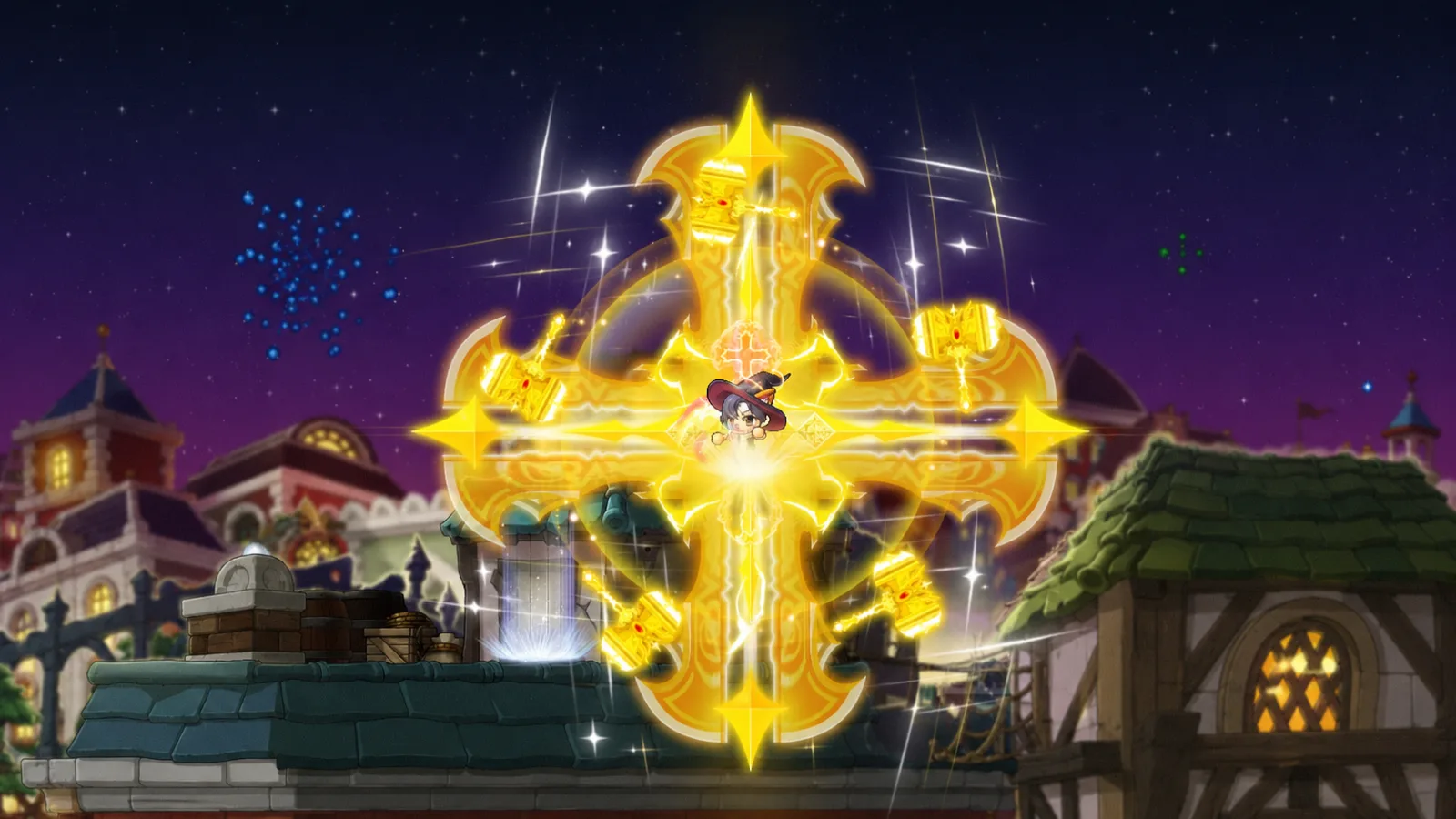
The main fifth-job skills are Grand Guardian, Hammers of the Righteous, Divine Echo, and Mighty Mjolnir.
Grand Guardian, called Grand Cross in KMS, is the source's first burst investment. Its value depends on actually keeping the boss in the attack window.
Hammers of the Righteous supports ongoing damage and training. Divine Echo links to a party member and contributes to Paladin's damage and support; read its solo and party behavior in your version.
Mighty Mjolnir is also an important attack. With limited nodes, secure the key skills before trying to finish every level at once.
Consider Weapon Aura and Maple World Goddess's Blessing for shared damage nodes. Decent Holy Symbol can take priority when training efficiency is the immediate goal.
Hyper passives and Inner Ability
The source's bossing Hyper passive example is:
- Blast - Reinforce
- Blast - Extra Strike
- Heaven's Hammer - Reinforce
- Heaven's Hammer - Cooldown Cutter
- Heaven's Hammer - Extra Strike
You can temporarily choose Divine Charge passives if training needs more help, then switch to the bossing setup when that becomes the focus.
Its Inner Ability targets are:
- Boss Damage
- Damage to enemies affected by abnormal status
- Attack Power
If Critical Rate is short, a lower line can fill the gap. A useful first Boss Damage line is a more practical early target than immediately chasing three perfect lines.
Choose HEXA upgrades by marginal value

After sixth job, unlock the relevant skills before concentrating resources. Frequently used mastery skills such as HEXA Blast and HEXA Divine Judgment are natural starting points.
The fifth-job boost cores also matter, including Grand Guardian and Hammers of the Righteous. Their best order is not identical for every character.
Existing core levels, equipment, Boss Damage, and Ignore Enemy Defense change the gain per Sol Erda and fragment. Compare the next affordable upgrade rather than blindly following one fixed list.
A practical boss burst sequence
Prepare buffs and persistent attacks, then land Grand Guardian during a controlled bossing window.
The source's basic sequence is:
- Use Divine Echo and link to a party member when applicable
- Activate Weapon Aura and Maple World Goddess's Blessing
- Activate Hammers of the Righteous
- Use Angelic Buster's Soul Contract link and your applicable special ring
- Bind with Smite Shield or Erda Nova if the boss is susceptible
- Use the relevant sixth-job burst skill, accounting for its bind and timing
- Use Grand Guardian
- Follow with Mighty Mjolnir and Blast
A common mistake is spending every buff and immediately starting Grand Guardian without checking the boss. Movement or an invulnerability phase can waste the main window.
Confirm the bind took effect and the boss is in range. Account for bind resistance and Origin timing instead of assuming binds can always be chained.
Use defensive skills to preserve a planned attack window
Sacrosanctity is more than a last-second emergency button.
Where its protection applies, it can let you keep attacking through a dangerous pattern. A planned use that preserves an important burst can be more useful than saving it indefinitely.
Grand Guardian also provides defensive benefits, but these are not permission to ignore every mechanic. Some forced failures or special attacks bypass ordinary protection; learn which ones do.
Making the build feel reliable
Develop the skills that do the work in your actual fights: Blast, Divine Judgment, and Grand Guardian, rather than leveling everything simultaneously.
Start with a practical weapon setup, verify that the bind and burst connect, and assign Sacrosanctity to a specific safe damage window when possible.
Paladin is not built around the fastest or flashiest movement. Its appeal is executing a prepared plan through boss pressure, with useful party support and room to learn.