

KMS skill history · About these guides
Arch Mage (Ice, Lightning) builds often center on Frozen Orb and Chain Lightning, with Jupiter Thunder and Bolt Barrage fitted into the larger burst plan.
The Korean source examined the newly added HEXA skill Subzero Permeation and its original hit-based cooldown system. That July 2026 behavior is historical: the September 17 KMS update changed it to a 30-second cooldown and removed cooldown reduction from attack hits. The Korean skill name is rendered in English here; do not assume an identical GMS release or tooltip.
The distinction matters when using the advice below: attack uptime remains valuable, but it no longer triggers the old reduction in the revised KMS version.
The original Subzero Permeation mechanic
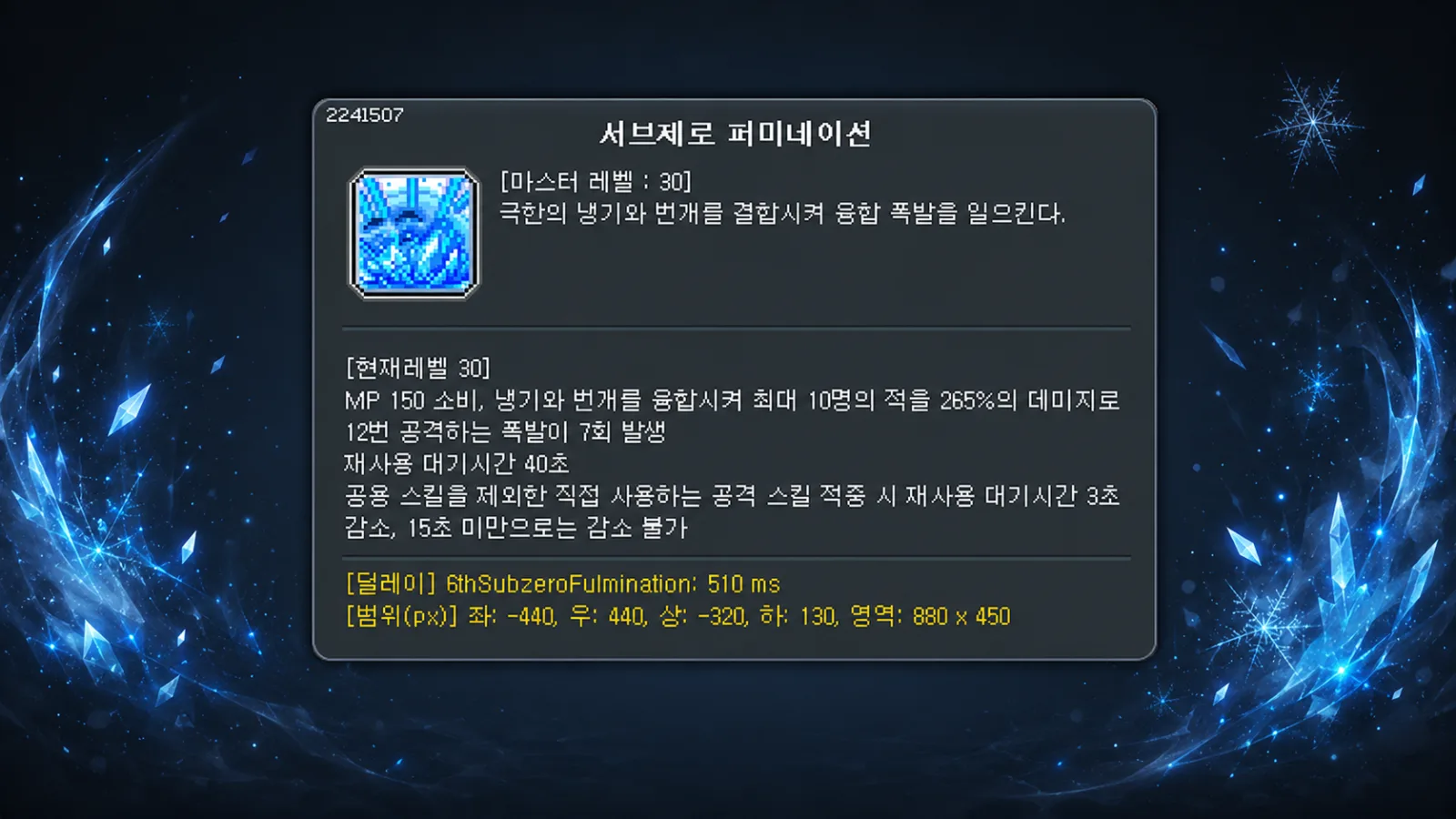
The skill combines extreme cold and lightning into a fusion explosion. This section describes the launch-version mechanic discussed by the source.
Originally, its base cooldown was 40 seconds. Eligible directly used attack skills, excluding common skills, reduced the remaining cooldown by 3 seconds on a hit, but this reduction could not take the remaining timer below 15 seconds. That was a floor on the reduction effect, not a permanent 15-second lockout after every hit.
The original loop was:
- Cast Subzero Permeation
- Continue attacking with the appropriate skills, including Chain Lightning and Frozen Orb
- Use eligible hits to shorten the remaining cooldown
- When ready, check the boss and cast again
- Repeat between major burst windows
This made its original effective cycle shorter than the 40-second base timer when eligible hits connected. It is not how the revised 30-second KMS version recharges.
Original change 1: a frequent attack between major bursts
At launch, attack uptime helped determine when the skill became available again.
Under that old rule, stopping attacks meant losing reduction opportunities. Eligible direct hits brought the next cast forward, so maintaining damage also helped start another skill cycle sooner.
A boss with long targetable windows suited that original loop. Reliable Chain Lightning and Frozen Orb uptime supported more opportunities between major bursts.
Frequent teleports and invulnerability interrupted the loop. Time without eligible hits meant fewer reductions under the old mechanic.
The source evaluated the original skill through three factors:
- Frequency of eligible direct attack hits
- Total Subzero Permeation casts
- Time the boss remained targetable
In the original version, active play influenced recharge as well as damage. In the revised KMS version, judge cooldown management by the current 30-second rule instead.
Original change 2: an additional cooldown to track
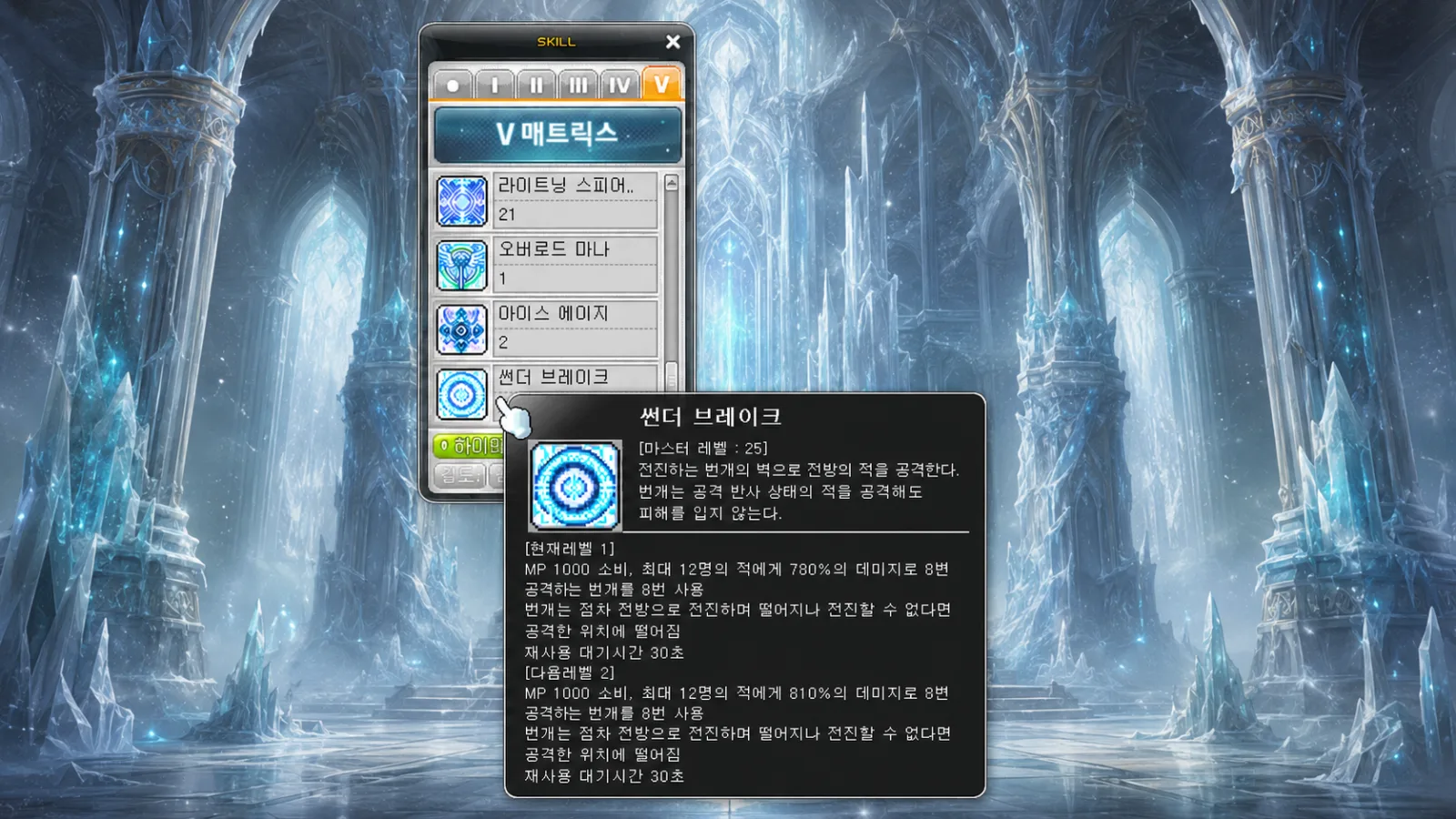
The earlier basic loop was relatively clear: maintain Frozen Orb and Chain Lightning, then prepare the main skills for burst.
The new skill added another timer to monitor between bursts:
- Subzero Permeation's remaining cooldown
- Jupiter Thunder availability
- Positioning for Bolt Barrage
- A safe channeling window for Lightning Orb
- Frozen Orb and Chain Lightning uptime
- The boss's next teleport or invulnerability pattern
Leaving a ready attack unused can still reduce total casts. Under the original mechanic it also delayed the next hit-reduction cycle; that second part no longer applies after the KMS rework.
Immediate use is not always best either. If the boss is about to disappear, a short delay can prevent a complete miss.
The useful balance is:
- Avoid holding a ready skill without a reason
- Choose a window in which the attack can actually connect
Good cooldown tracking and boss knowledge both affect delivered damage. They remain useful even when the recharge mechanic changes.
Original change 3: check casts as well as damage share
Battle Analysis damage share alone does not explain how well a recurring skill was used.
The number of successful uses within the actual fight matters too. Identical gear and HEXA levels can produce different totals when casts are missed or delayed.
A delayed use can also move later uses beyond a phase or clear deadline. The original hit-based version added a further recharge interaction that the revised skill no longer has.
Review these measures together:
- Total fight duration
- Number of Subzero Permeation casts
- Attacks that actually connected with the boss
- Time spent holding the skill after it was ready
- Downtime forced by boss mechanics
- Delays caused by overlapping major skills
Long targetable phases support consistent use. Phase changes and teleports can make immediate use inappropriate even when the icon is ready.
Use your own fight recordings and Battle Analysis, rather than treating one Culvert score or one boss clear as a complete skill evaluation. Match the comparison to the same patch version.
Practical habits that still help

Make the cooldown easy to see
Put the skill on a visible quick slot or use the available skill notification feature. This reduces accidental missed uses.
When several timers compete for attention during dodging, keep the recurring attack in a position you can read quickly.
Reduce avoidable attack downtime
Continue useful attacks during safe windows. In the original version this also accelerated recharge; in revised KMS it contributes damage without that removed effect.
Maintain Frozen Orb and Chain Lightning while moving back into a workable position after a mechanic. Survival still comes first.
Fit the cast to the boss
Do not spend it into an imminent disappearance. Equally, waiting indefinitely for a perfect window can lose an entire use.
The end of a movement pattern or the start of a long stationary attack can offer a reliable opportunity.
Track it alongside the rest of the kit
Focusing on this one timer while missing Jupiter Thunder or Bolt Barrage can lower total damage.
Prepare the full kit for major burst and use the recurring attack intelligently between those windows, following the current cooldown rather than the retired launch loop.
What the launch version gained and demanded
Advantages discussed by the original guide
- More damage opportunities between major bursts
- More recharge opportunities from eligible hits under the old rule
- A closer link between execution and delivered damage
- An attack that fits the class's ice-and-lightning theme
- Strong use opportunities in long targetable phases
Costs and limitations of the original design
- Another cooldown to watch
- A variable effective cycle under the old hit-based rule
- Missed ready casts could shift later uses
- Attack downtime reduced the old recharge benefit
- Managing the additional skill alongside the rest of the kit added input and attention demands; the September rework removed the hit-based recharge portion of that workload.