

Subjective Korean build comparison · About these guides
Players who enjoy heavy hits and identity-driven bursts may find themselves comparing Punisher Slayer’s Rage Explosion build with Brawl King Storm Breaker. Rage Explosion is an Ark Grid core/build reference, not a separate Slayer class engraving.
Both build resources and concentrate important attacks into a limited window. Their practical demands differ in positioning, survival decisions, and the cost of missing key skills.
The Korean source favored Brawl King Storm for a clearer repeated cycle and less positional pressure, while finding Rage Explosion Punisher appealing for players who enjoy pursuing back attacks. These are source-based playstyle judgments, not controlled current-patch DPS results or a universal best-class recommendation.
The basic comparison

| Category | Rage Explosion Punisher | Brawl King Storm |
|---|---|---|
| Class | Slayer | Breaker |
| Attack positioning | Back-attack focused | Comparatively less positional pressure with the appropriate setup |
| Core loop | Build Fury, then concentrate attacks in Burst Mode | Build Tenacious Power, then concentrate attacks in Brawl King Stance |
| Source-highlighted appeal | Weighty hits and rewarding execution | A clear cycle with fewer facing restrictions |
| Main consideration | Back-attack access and landing key skills | Specialization, key-skill setup, and completing the cycle |
| Execution style | Actively respond to boss movement to create angles | Recognize openings and execute the prepared sequence consistently |
| Potential fit | Players who enjoy Slayer’s greatsword and positional burst | Players who prefer less positional pressure and a structured loop |
The useful comparison is how consistently you can use real raid openings, rather than an isolated training-room damage number.
Rage Explosion Punisher Slayer
Resource building followed by a focused burst
The source describes building identity resources in normal play, entering Burst Mode, and concentrating major skills into that period. Exact execution depends on the current Rage Explosion core, Ark Passive setup, and patch.
The separation gives the cycle a clear purpose. If the boss moves or transitions immediately after activation, some prepared damage can be lost, so anticipating the encounter matters.
Missing resource-building attacks can also delay the next burst. Landing them in a reliable opening matters more than simply pressing them quickly.
Back-attack access affects practical output
This positional setup benefits from reaching the boss’s back for its relevant major attacks. Frequent facing changes can reduce opportunities even when the same sequence performs well against a stationary target.
That creates decisions such as these.
- Should you wait for a back-attack position before committing?
- Is it better to attack from the current angle before the boss moves?
- Can the remaining major attacks fit within Burst Mode?
- Should a movement option be spent on positioning or reserved for survival?
Encounter knowledge can help create better openings. During early learning, chasing the back may instead consume the burst window or prevent a key attack from being used at all.
The greatsword and burst feel are part of the appeal
The source valued Slayer’s heavy greatsword animations, the faster feeling of Burst Mode, and the impact of its major attacks. Those preferences are not fully described by a damage total.
A player who enjoys delivering concentrated damage in short openings may appreciate that style. Appearance, animation, and weapon feel can also be valid reasons to choose it.
Brawl King Storm Breaker

Concentrating key skills in Brawl King Stance
Brawl King Storm builds Tenacious Power, enters Brawl King Stance, and uses its important Shock and identity attacks within that window.
The source highlights skills such as Eye of the Storm and Brawl King Twelve Forms: Falling Blossoms. Stance-entry timing and whether those attacks land can strongly affect the result; no fixed damage-share percentages are established here.
A clear repeated sequence can make encounter decisions easier once the build is familiar.
Comparatively less positional pressure
The source’s positive practical assessment emphasized the non-positional setup’s flexibility.
It does not need to continually chase the boss’s back in the same way as the Slayer build being compared. A facing change may therefore leave more room to continue the sequence from the current angle.
That is a potential encounter advantage, not proof that every part of the class is easy or that every build uses identical Tripods.
Manage survival alongside attack commitment
The source viewed Breaker’s basic durability favorably. That does not make lethal mechanics safe or give Brawl King Storm every defensive feature associated with Asura’s Path.
It also found a stable practical flow between resource building and the main attack window. This remains a subjective comparison, dependent on the setup and encounter.
A large share of the payoff still relies on landing important attacks. Less positional pressure does not justify ignoring boss movement or mechanics.
The practical difference between these setups
Compare raid conditions as well as training-room results
A stationary target does not reproduce all the costs of an encounter.
Punisher’s result can change with back-attack access and major-skill accuracy during Burst Mode. Boss movement and facing changes introduce losses absent from an ideal training sequence.
The source expected Brawl King Storm’s positional flexibility to make it easier to complete a prepared sequence. It did not provide standardized measurements proving a fixed gap between training-room and raid performance.
“Slayer has the ceiling, Breaker has the floor” is too simple
A practiced Slayer can improve back-attack access and burst use, which offers satisfaction from creating openings.
Breaker also rewards basic-attack usage, skill order, stance-entry timing, and accurate execution. It is inaccurate to label only Slayer as a class for practiced players.
Both depend on proficiency. This comparison emphasizes positioning for Slayer, and cycle execution plus key-skill accuracy for Brawl King Storm.
Why the source liked Breaker in pickup groups
It considered positional flexibility useful when party behavior and boss movement are less predictable.
Fewer facing restrictions can make a given opening easier to use. Whether that feels more comfortable still depends on the player, current build, and encounter.
A coordinated static group can also help Slayer use planned patterns and burst timings effectively.
Players who may enjoy Rage Explosion Punisher
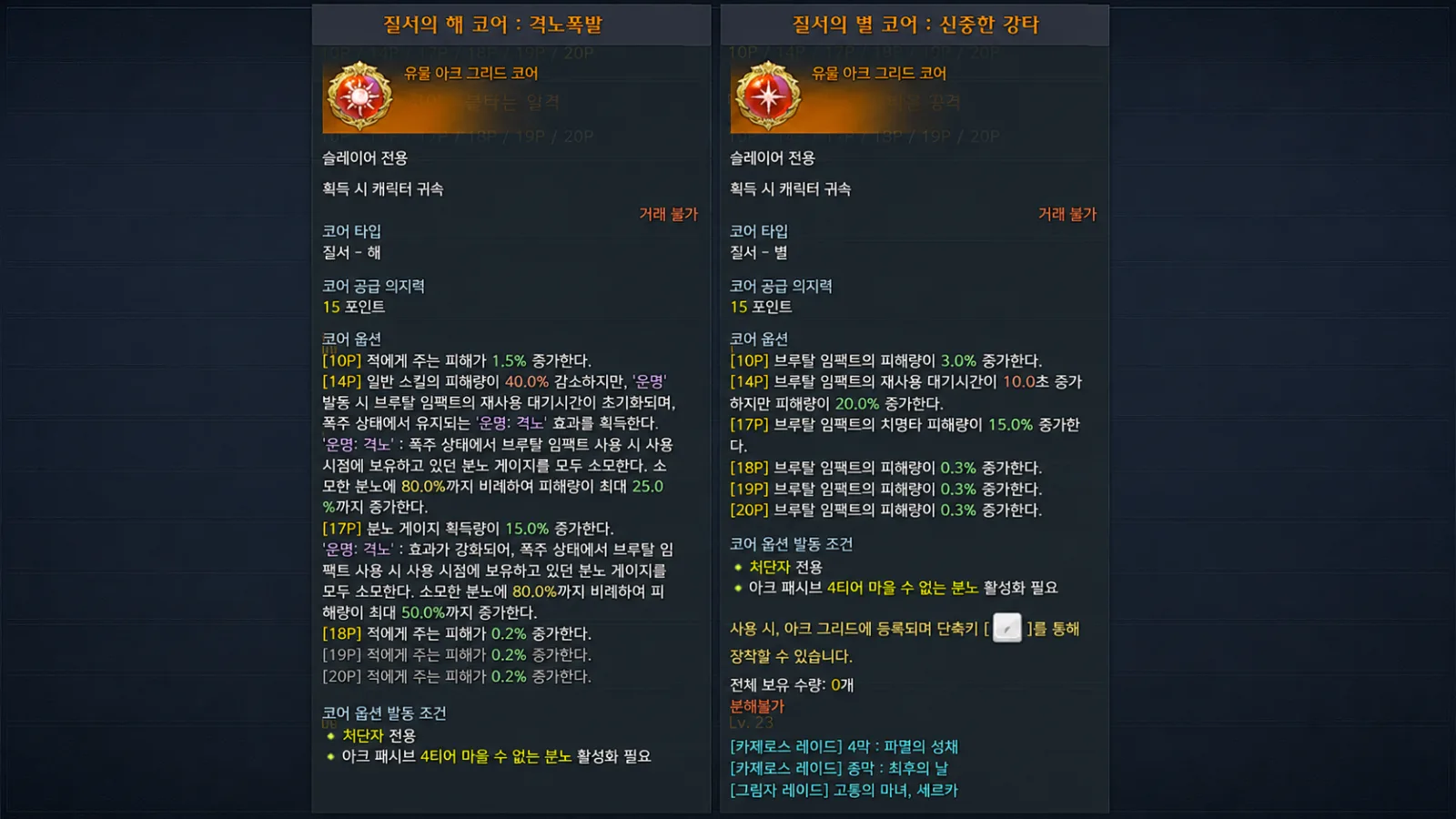
Consider the setup if these preferences fit.
- You like Slayer’s greatsword and Burst Mode presentation
- Pursuing the boss’s back is enjoyable
- Learning an encounter to improve execution is rewarding
- You prefer heavy skills and concentrated burst
- Appearance and hit feel matter alongside performance
The appeal is actively creating attack angles and executing the payoff, rather than assuming damage will remain effortless in every situation.
Players who may enjoy Brawl King Storm
Consider the setup if these preferences fit.
- You want less back-attack pressure
- You like a clearly structured identity loop
- You value positional flexibility in pickup groups
- You care about both survival decisions and attack execution
- You enjoy completing a prepared sequence in one opening
It combines heavy attacks with flexible positioning in the setup discussed. That can make it a main or alt candidate, without guaranteeing that every beginner will find it comfortable.
What to check before choosing
Look at demands you can realistically manage, not only an ideal peak damage figure.
Where your client permits, practice the main loop in Trixion, then compare how resource misses, whiffed main skills, and repositioning affect your own Guardian or raid attempts.
Check setup costs too. Specialization and important skill gems can affect the experience, and a character at a different progression stage may not feel like a showcase build.
Engravings, Ark Passives, Ark Grid choices, skill trees, and gem priorities can change with patches. Compare the actual current setup in your region, while also deciding whether the underlying style appeals to you.
Which style fits you better?
The Slayer setup offers greatsword impact and the satisfaction of creating positional burst windows, with corresponding demands on resource building and back-attack access.
Brawl King Storm offers comparatively flexible positioning and a structured payoff, while still requiring accurate, well-timed key attacks.
The source preferred Breaker for positional convenience and Slayer for its greatsword and back-attack feel. The better personal choice is the combat loop you will keep enjoying, rather than an assumed universal winner or permanent patch ranking.