

The changes worth watching in Diablo IV Season 16 are broader choices in War Plans and the introduction of Horadric Items. The aim is to make preferred activities and rewards appear more often while expanding combinations through links between equipment and Talisman sets. That alone may not be enough to justify a return, though. Getting more items and getting closer to the build you want are different things.
Luck belongs in a loot game, but today's farming should also help prepare the next attempt. If you progress only on lucky days and stand still the rest of the time, another reward system will not remove the fatigue. When judging Season 16, look at how progression connects together rather than just the volume of rewards.
First, keep the scope clear. The 3.3.0 PTR was a test for Season 16, running from October 28 at 2 a.m. to November 4 at 3 a.m. KST. The changes discussed here are the published PTR proposals, not a final list of launch features. Separating meaningful improvements from work still needed gives you a clearer basis for deciding whether to return and how to develop a character.
Can War Plans Tactics make farming more targeted?
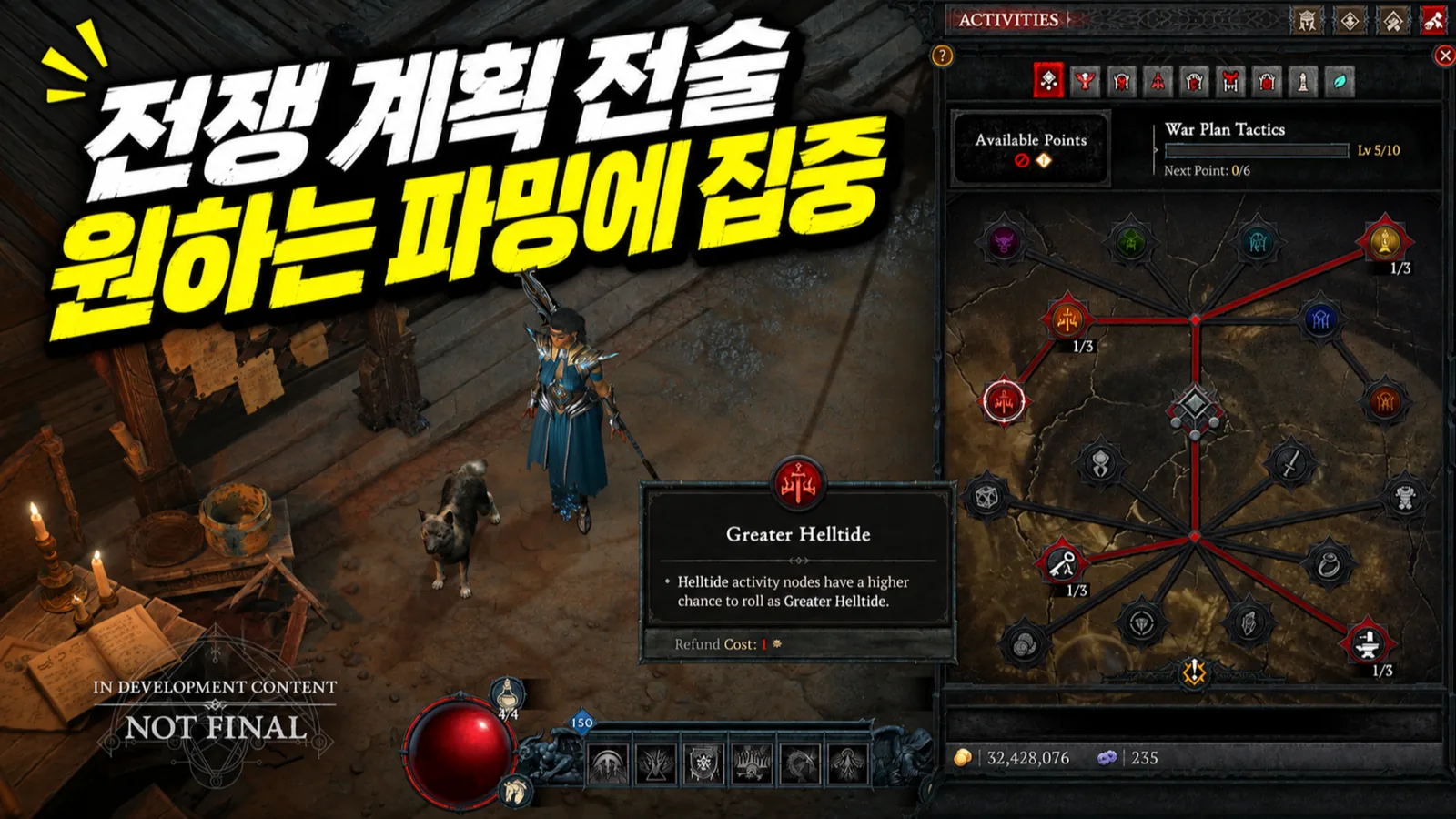
War Plans Tactics lets you spend points earned by completing activities to raise the chance of preferred activities or rewards appearing. You can lean toward equipment when you need gear, or materials when upgrades are the bottleneck. The system is intended for both Seasonal and Eternal Realms.
The important word is chance. It does not lock the system to one activity or guarantee the equipment you want. Think of it as weighting the available choices toward what you currently need.
That direction is encouraging because your bottlenecks change as you progress. A character looking for usable gear needs different rewards from one upgrading equipment already acquired. Receiving plenty of the wrong reward can still leave you stuck. Being able to shift the emphasis of your farming could help close that gap.
Its value must show up in results, however, rather than simply in the act of allocating points. Do you encounter useful rewards noticeably more often? Can you choose activities you enjoy and still progress? If everyone converges on one efficient route, more options may add little meaningful choice.
Horadric Items expand combinations—and the conditions a good drop must meet
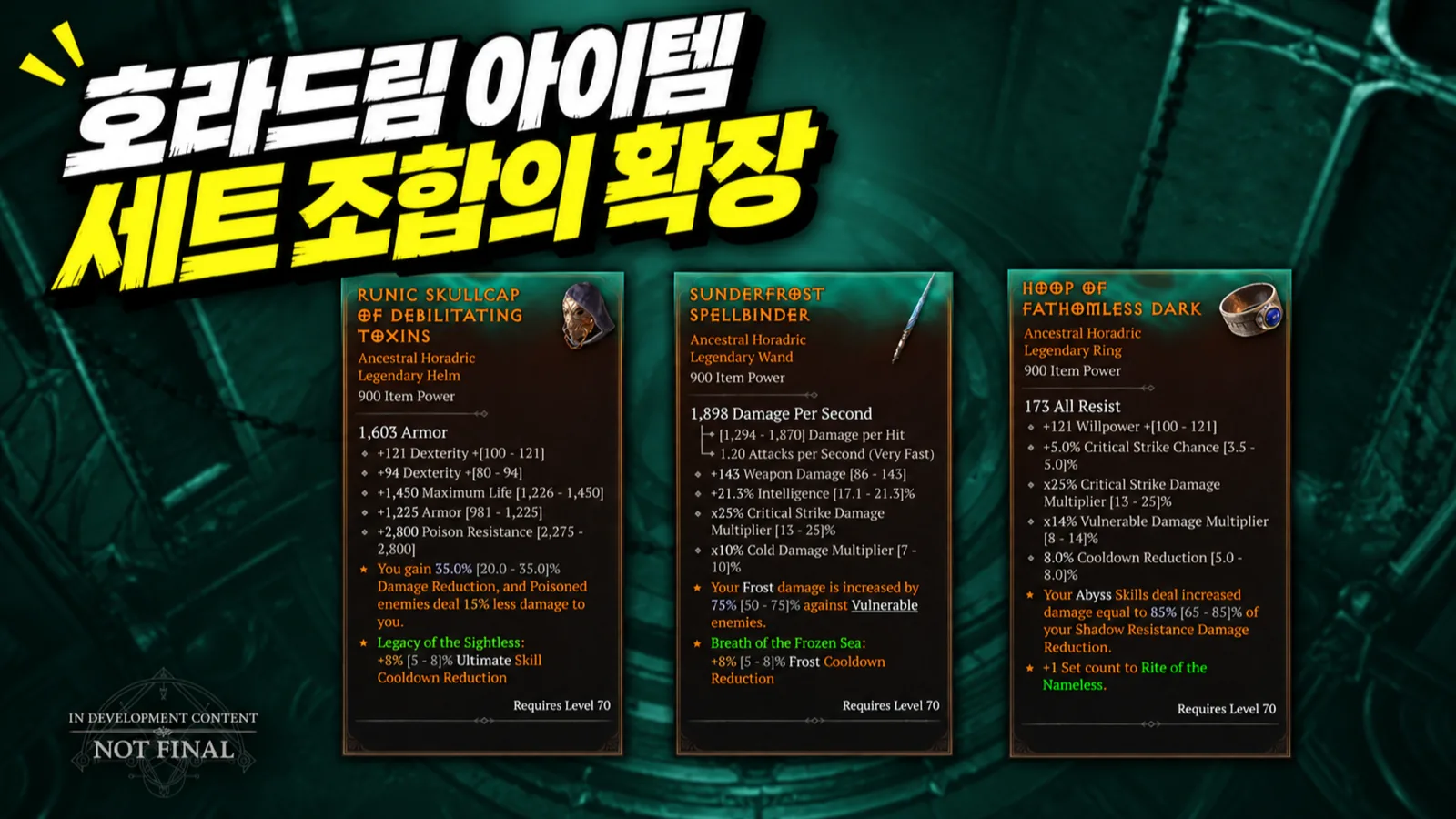
Horadric Items are Legendary items that add a connection between equipped gear and Talisman sets. Jewelry adds 1 to the count for a specified set bonus, while weapons and armor provide additional effects when the relevant set requirements are met.
Helping with set counts is more than adding another damage stat. If fewer charms activate the same set effect, you can use the freed slots for another combination. Replacing one piece of gear can therefore give you a reason to redesign the whole setup. That kind of interaction can make a new drop exciting.
The problem is that more possibilities can also make a finished setup harder to assemble. An item with good basic affixes may not fit your intended build if its linked set is wrong. If the set matches but the other affixes disappoint, replacing your existing gear becomes a difficult call. Add high rolls to the wish list and the requirements for a satisfying drop grow stricter still.
More drops alone do not necessarily solve this. When several conditions must line up at once, extra loot can also mean more time inspecting and salvaging. The pleasure of farming comes partly from waiting for a rare perfect item, but also from finding a use for one that falls a little short.
One possible improvement would be a limited way to adjust a Horadric affix or carry an acquired item into the next stage of progression. This is a suggestion for the progression system, not an announced feature. It does not mean letting players freely choose every affix. The aim would be to keep one mismatched synergy affix from immediately spoiling the excitement of finding a strong base item.
Tyrael's Boons and Greater Temper could provide intermediate goals
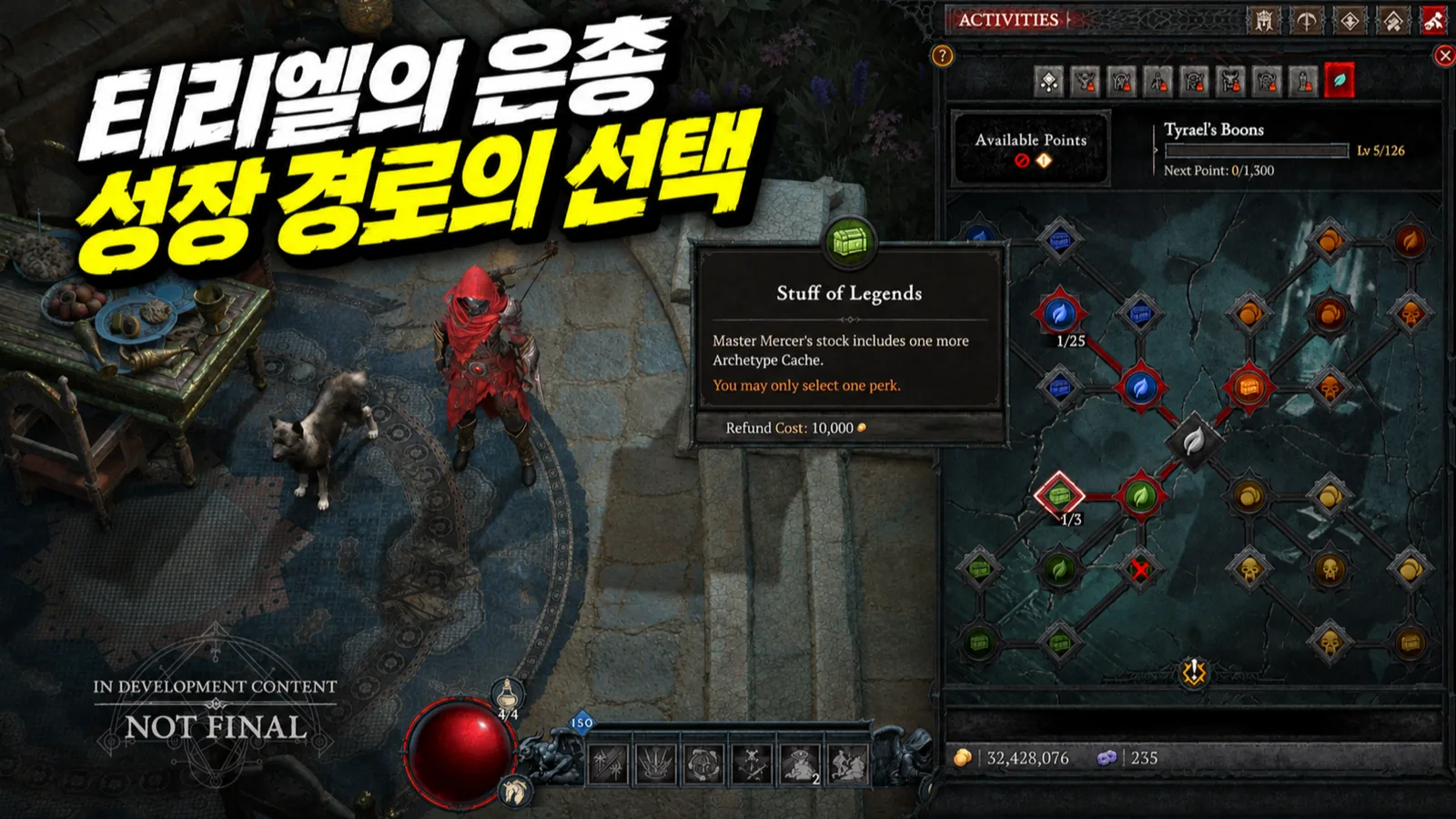
Tyrael's Boons is the season-themed War Plans tree. It was announced as available to Seasonal players even without the Lord of Hatred expansion. Think of it as another progression track for choosing the direction of rewards and material income.
Greater Temper, available through the Trash for Treasure path, stands out. In the published proposal, 30 Scrolls of Restoration and 1,000 Obducite can upgrade an item's Tempered Affix to a Greater Affix. It does not turn every affix on the item into a Greater Affix at once.
The strength of that approach is a goal you can measure. Waiting for better gear and collecting materials for a definite improvement are different experiences. Even on a day without the desired item, accumulated materials can bring the next upgrade closer.
The material counts alone do not tell us whether the cost is reasonable. Acquisition speed and demand from other crafting matter too. The same 30 scrolls feel different if they accumulate naturally or require you to suspend every other upgrade. Alongside the existence of a guaranteed improvement, ask whether an ordinary progression path can realistically reach it.
Respec costs also affect experimentation. Marks of Wisdom are used to reallocate War Plans Tactics and individual activity trees. The published Tyrael's Boons proposal instead charges 5,000,000 gold per point refunded. Similar-looking progression systems do not necessarily share the same costs.
Resource sinks have a place. But if changing a choice is too expensive, players may learn about a new combination and still never try it. A season with more options needs room to revise a decision, rather than simply making the first one feel weightier.
Build diversity needs changes in damage and in how a build plays
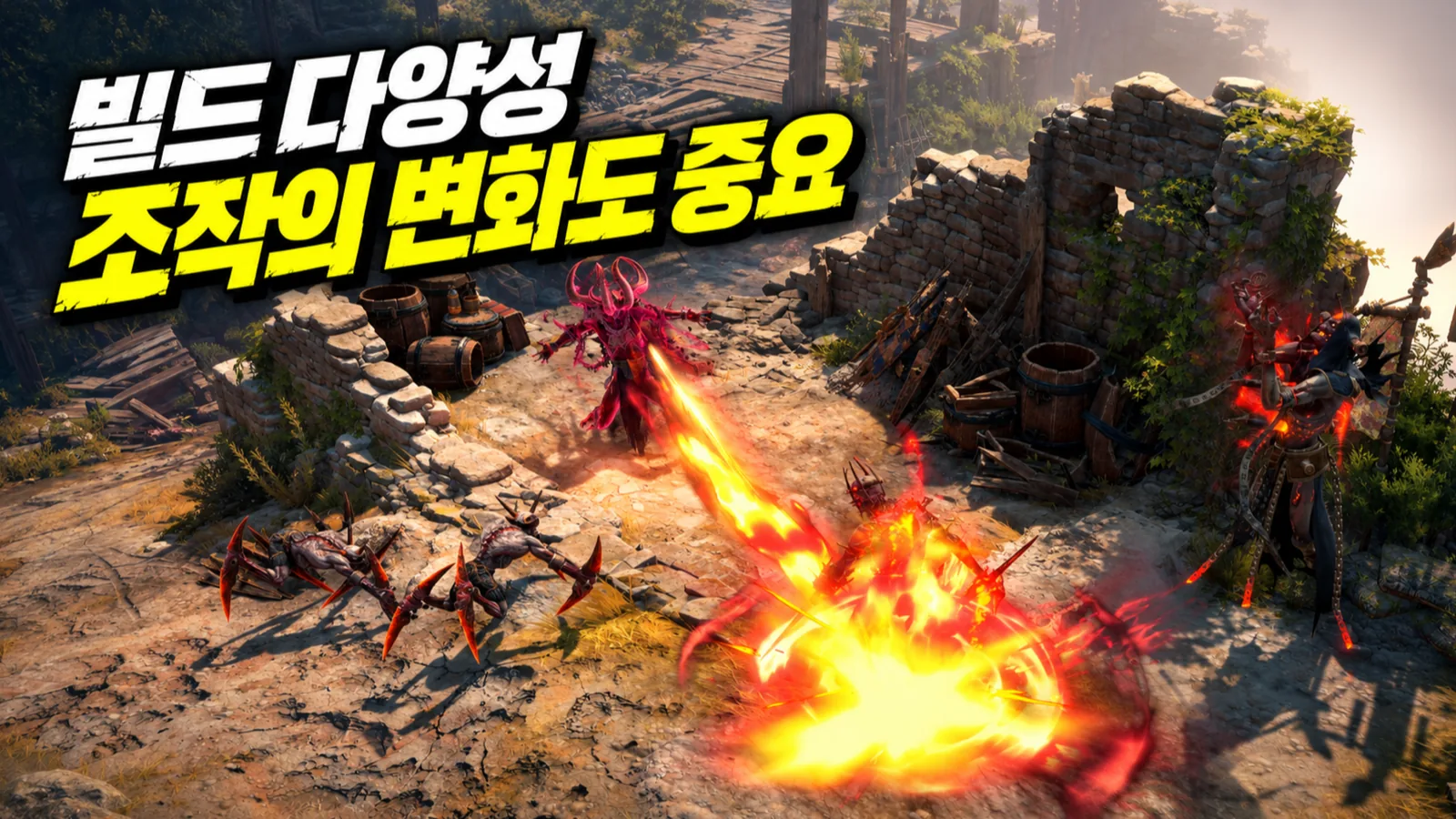
Damage buffs should not be dismissed as mere number changes. If a favorite skill lacks the damage to clear your target content, a numerical improvement can make it a viable option again. Not every improvement needs to introduce a completely new skill.
At the same time, higher damage alone does not create a fresh season. If you stand in the same place and press the same buttons in the same order, only clearing a higher difficulty, you may have a reason to revisit an old build without much reason to try a new one. Those are separate benefits.
The proposed Druid rework is a useful example. The developers outlined a plan to reduce reliance on stacking skill tags and let a wider range of builds benefit from Paragon effects. When rewards concentrate on skills able to carry many tags, actual choice can be narrower than the visible skill list suggests.
One top build's record cannot tell us whether that direction succeeds. Consider whether skills flow naturally before the gear is complete, whether you can resume attacking smoothly after moving to survive, and whether the gap between bossing and regular farming is excessive. A high ceiling does little good if the setup phase feels so awkward that players abandon the build on the way there.
That is why the most useful build guides distinguish the effects required to make a build function from improvements that can wait. As Season 16 opens more combinations, explaining which items actually change the way a build plays becomes more important than listing a finished loadout.
Endgame needs fresh reasons to use a developed character
War Plans reward changes make existing activities more flexible to play. New combat goals expand what you can do with a developed character. Quality-of-life improvements and new challenges complement each other, but they serve different purposes.
The Season 16 proposal also includes a Pandemonium encounter combining the abilities of the Fractured Reaper and the Corrupted Reaper. Describing every change as merely adding rewards to existing farming would miss that new challenge. Whether adding a boss solves the broader problems of repeat play is still a separate question.
What matters is the judgment a fight demands. If positioning, defense, and reading attack opportunities matter alongside raw damage, upgrading your gear gains a more specific purpose. When the same character has a reason to change setups for different situations, farming and combat reinforce each other.
Simply slowing progression to keep people playing longer is a difficult approach to support. Spending more time gathering required materials is not the same as discovering a new objective. Endgame depth should come from meaningful choices that remain after progression, rather than just the hours it takes.
Clear death information would make defensive gearing more meaningful
Another improvement worth hoping for is information explaining why a character died. This should not be presented as an announced feature, but it belongs in the discussion of the season's new fights and builds.
If you die without knowing what made the difference, you have less basis for changing your equipment. Was more defense needed, or should you have avoided a particular attack? A brief account of major recent damage and its types, beyond just the final hit, would offer something useful for the next attempt.
It does not need to start as a complex combat analyzer. Even narrowing the cause of failure makes the value of a defensive affix easier to understand. Helping players see why they were vulnerable is part of progression, just as making their characters stronger is.
Thinking of returning? Look at the journey before the finished build
If you enjoy steering your farming toward preferred activities and rewards, then planning interactions between equipment and Talismans, the published Season 16 direction is worth a look. If you want a fundamentally different control rhythm or major endgame changes, judge separately whether expanding reward trees meets those expectations.
The most important moment comes before every best-in-slot item is equipped: a build working with imperfect gear, materials gathered today improving one part tomorrow, and a new combination being affordable to test. For Season 16 to work well, it needs to show developing characters their next meaningful choice, as well as rewarding players who have already farmed a finished build.
