

When choosing a support in Chaos Zero Nightmare, look at what actually triggers your main damage. Hugo follows up when you use an Attack Card that targets an enemy while he has Commence the Hunt stacks. Khalipe’s Vulture Ejection can trigger from hand when you play another card costing 2 or more, while Renoa’s Dirge Bullet triggers when it moves to the discard pile. Use one slot to enable the main effect, then fill your last slot with the draw, Action Points, or damage you actually lacked in combat.
Count attack cards played and hits dealt separately
Four hits in a turn can come from one card that hits four times or four cards that hit once. Ally effects can respond differently. These categories help distinguish repeated card plays, multi-hit cards, and single big hits. The same combatant can play multiple ways depending on the Epiphanies you keep and which cards deal the damage that turn.
| How you deal your main damage | What to count in combat | What to look for in an ally’s effects |
|---|---|---|
| Playing several Attack Cards | Number of cards played that meet the condition | When an Attack Card is used, or when it targets an enemy |
| Multiple hits from one card | Number of hits per card | Applies to each hit, or to the first hit |
| Damage concentrated in one hit | Order in which you play your strongest hit | First hit of the next attack card |
| Extra attacks from card effects | Trigger and frequency of the extra attacks | When the card moves to the discard pile, or Extra Attack damage |
Hugo spends a Commence the Hunt stack on each eligible targeted Attack Card
Suppose Hugo has two Commence the Hunt stacks. Play one targeted Attack Card that hits the same enemy twice, and Hugo follows up once, leaving one stack. Play two targeted Attack Cards that hit once each, and he follows up twice. Your damage dealer lands two hits in both cases, but Hugo gets one trigger in the first case and two in the second. That compares trigger counts only. Card costs and damage scaling with Commence the Hunt stacks are separate.
If Commence the Hunt stacks remain after you empty your hand, consider adding more targeted attacks. A card that hits all enemies does not meet a targeting condition just because only one enemy remains. If you have enough targeted attacks but Hugo stops following up partway through, check which cards give him Commence the Hunt.
Changing Hunting Instinct’s Epiphany changes how you get stacks. With Hunting Instinct I deployed, another combatant’s Upgrade or Skill Card builds Commence the Hunt. IV counts Skill Cards still in hand when you play Hunting Instinct. With the same three Skill Cards, I rewards allies for playing them, while IV cares about when they are still in hand.
Khalipe’s Celestial triggers with Vulture Ejection in hand

Hold a Vulture Ejection with Celestial and play a different card costing 2 or more to trigger it automatically. The base Vulture Ejection damages all enemies based on Khalipe’s Defense. Check both whether your damage dealer has a 2-cost card and whether Vulture Ejection will be in hand at the moment you use it.
Say you have 3 Action Points (AP) left with Vulture Ejection in hand. Three 1-cost cards will not trigger Celestial. A 1-cost support card and a 2-cost main card spend the same AP while triggering Vulture Ejection. If you play the 2-cost card and only draw Vulture Ejection afterward, it cannot trigger retroactively.
Draw helps differently depending on which card arrives late. If the main card is ready but Vulture Ejection is missing, Rally II can draw a Celestial card. If you already have Vulture Ejection but lack a trigger, Rally V lets you choose a card costing 2 or more from the draw options. Reserve AP for both the search and the card you find.
Pick buffs that apply where your damage happens
Damage buffs differ in which hits they affect. A bonus such as Morale adds to an eligible damage multiplier, so you get the benefit on each hit if several hits qualify. A percentage increase to the first hit of the next Attack Card is best when that first hit carries most of your damage. A small attack played first spends the buff.
For example, compare one hit at a 240% multiplier with four hits at 60% each. Both start at 240% total. Hold every other modifier constant.
| Buff condition | 240% × 1 hit | 60% × 4 hits |
|---|---|---|
| Add 20 percentage points to each eligible hit | 260% | 320% |
| Increase only the first hit by 25% | 300% | 255% |
These hypothetical multipliers isolate where the buff applies. When choosing a buff, read the card for duration, target, and trigger count. “For 1 turn” tells you how long it lasts. The targeting text tells you which combatant or attack gets the bonus.
Renoa needs a discard outlet and the right card order
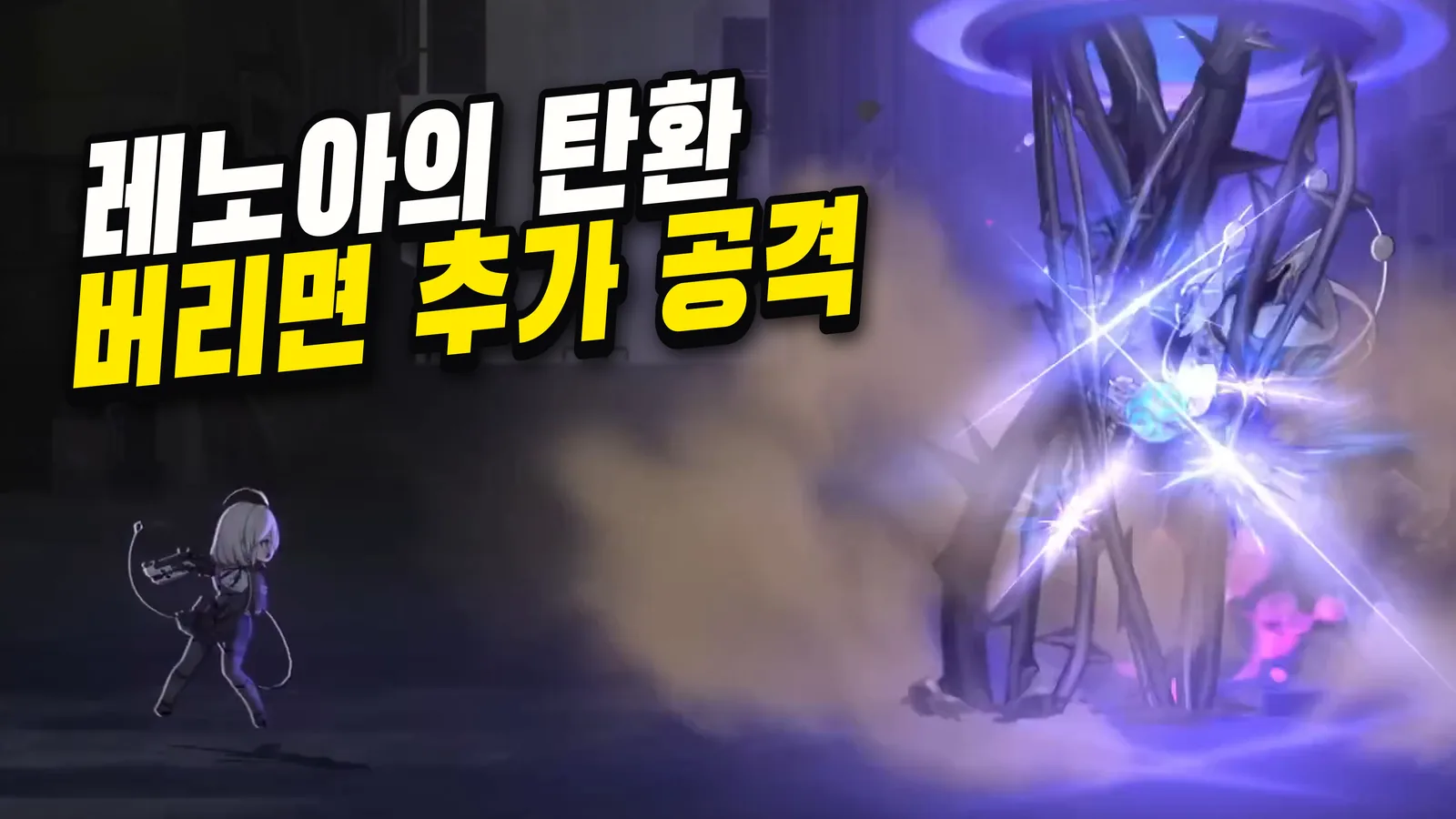
Playing Renoa’s Dirge Bullet directly deals damage as an Attack Card. Moving it to the discard pile triggers an Extra Attack against a random enemy. That Extra Attack is what Black Ode IV boosts for the turn. With the Ode, Bullet, and a discard option ready, play the Ode first and discard the Bullet afterward.
Nia’s Adagio helps set up this turn by letting you choose which card to discard. If several enemies remain, you cannot choose which one the discarded Bullet hits. If a particular enemy must fall this turn, compare that with playing the Bullet and targeting it directly. With only one enemy left, the random targeting matters less.
If Bullets keep piling up, see whether a discard card arrives on time. Generating more Bullets fills your hand, but the same discard card may only clear the same number. If you draw the discard card first, adjust the deck to see a Bullet generator earlier. Even with the same Renoa and Nia, the order you need depends on where the hand stalls.
Choose the final team slot based on the turn that stalled
Once you have a main card and an ally who helps trigger it, remember a recent turn when your sequence broke. Write down what was in hand and how much AP remained. That usually narrows down what your third slot needs.
- The card you needed arrived late. Prioritize draw or search. With Khalipe, look for a way to find whichever arrives late: Vulture Ejection or the card that triggers it.
- You drew the cards but ran out of AP. Look for extra AP or cheaper cards. If Renoa makes Bullets but cannot play the Ode or the discard card, count where the AP ran short.
- The effect triggered, but enemies survived. Look for a buff or Extra Attack that affects your main source of damage. If you add Hugo, first check whether your hand can supply more targeted attacks.
- Defending against an attack broke the sequence. Estimate how many cards and AP you will spend on shields or healing. Use a team that can still play its main card after budgeting for defense.
After the fight, note one effect you failed to trigger. The next ally to change depends on whether Hugo had unused stacks, Khalipe’s two cards never shared a hand, or Renoa ended the turn holding Bullets.
