

If you have been waiting for the F-15EX, the main question is how the American and Israeli aircraft differ. The official development explanation says the US receives the F-15EX and Israel the F-15IA, with identical air-to-air performance. Germany and Sweden are also due to receive Leopard 2A8 variants, centered on Trophy active protection.
Eagle's Shadow is interesting for how a single sortie's possibilities and the ways of surviving attacks change, beyond the prestige of modern equipment. More weapons and missile interception are appealing, but understanding their actual advantages matters for both research and counterplay. Loadout-based BR choices for some aircraft may also change how vehicles are evaluated.
Which nations receive the F-15EX and F-15IA, and how do they differ?
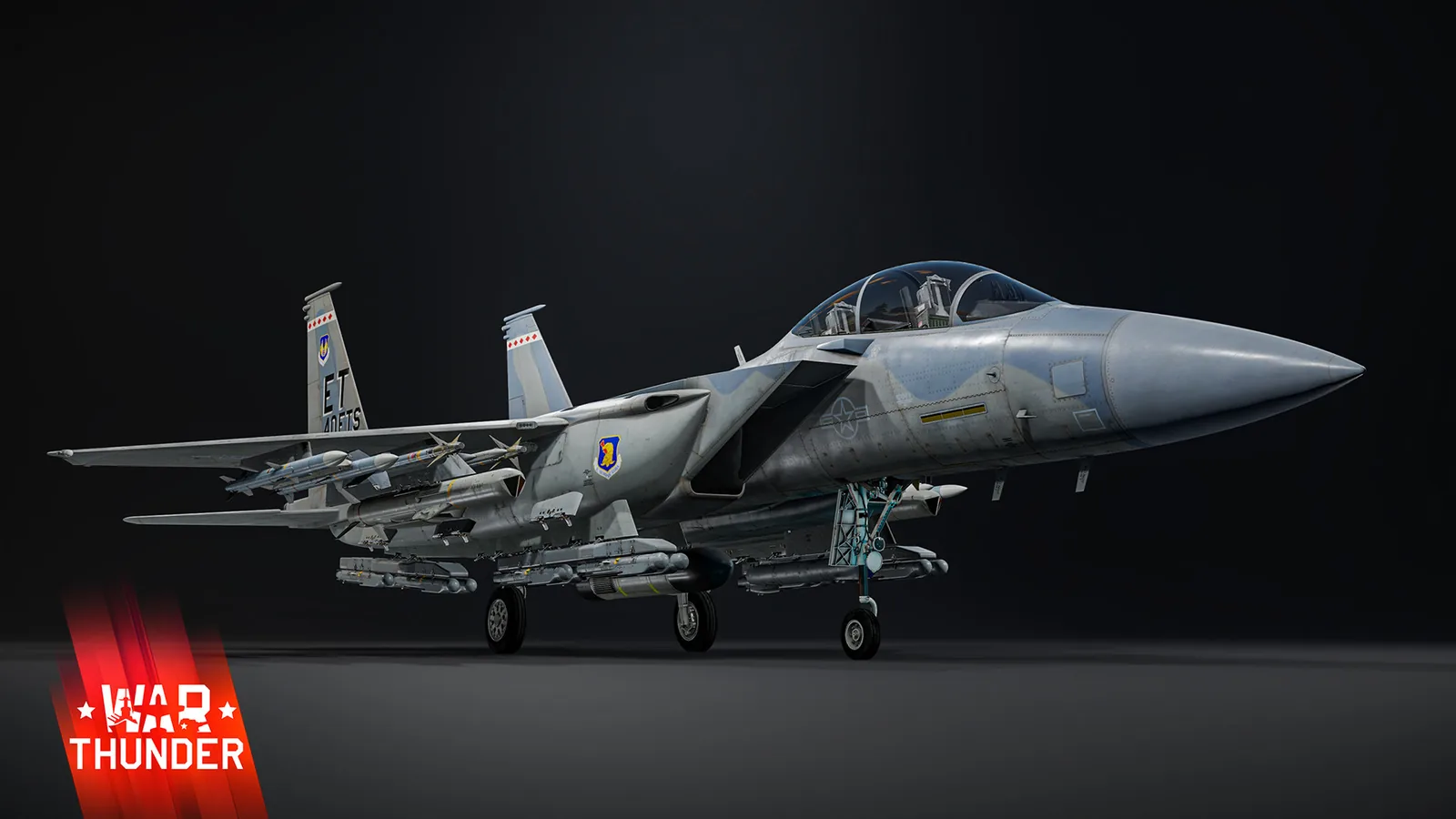
The F-15EX and F-15IA were introduced as Rank IX aircraft for the US and Israeli trees respectively. Receiving related Eagles together may reduce a sense of American exclusivity, but the American aircraft has not been moved to Israel or omitted.
Armament is the more important distinction. Official descriptions mention AIM-120D, SLAM-ER, anti-radiation and anti-ship weapons, with SPICE precision weapons and Derby missiles also mentioned for Israel. Developers describe identical air-to-air performance and some differences in air-to-ground loadouts. This does not necessarily mean every listed weapon is identical.
Air-combat players and ground-support players should compare different things. For air battles, start with shared flight performance and primary missiles. For ground attacks, consider guided-weapon operation and the supporting ground lineup. Dismissing research because another nation has a related aircraft overlooks those differences.
The preview includes AESA radar, an HMD helmet targeting system, and an RWR radar warning receiver. The point is how target acquisition, weapon cueing, and threat awareness work together, not the number of acronyms. Equipment names alone cannot establish real battle detection reliability or survival rates.
Why 12 missiles do not mean 12 kills
Notable F-15EX maximums are 12 active radar-guided air-to-air missiles or 22 guided bombs. These are separate maximums, not a claim that both can be carried together. Check actual combinations in the loadout interface.
More missiles can help engage several targets and continue after an opening attack, but missile count is not a kill count. Evasion, terrain, launch distance, altitude, and both aircraft's speed affect results. Without favorable launch opportunities, plentiful remaining missiles do not guarantee control.
Beyond capacity, ask whether you can prepare the next attack with weapons still available. Longer combat endurance also means longer exposure to enemy responses. Assess handling and defensive maneuvers with heavy loads separately; new engines do not automatically erase payload penalties.
Ground attack is similar. MITL weapons such as SLAM-ER require operator involvement in guidance beyond pressing fire. Separately previewed guidance improvements include adjusting impact points for compatible weapons. Evaluate target identification and precision as well as bomb quantity.
How Trophy APS changes Leopard 2A8 survivability
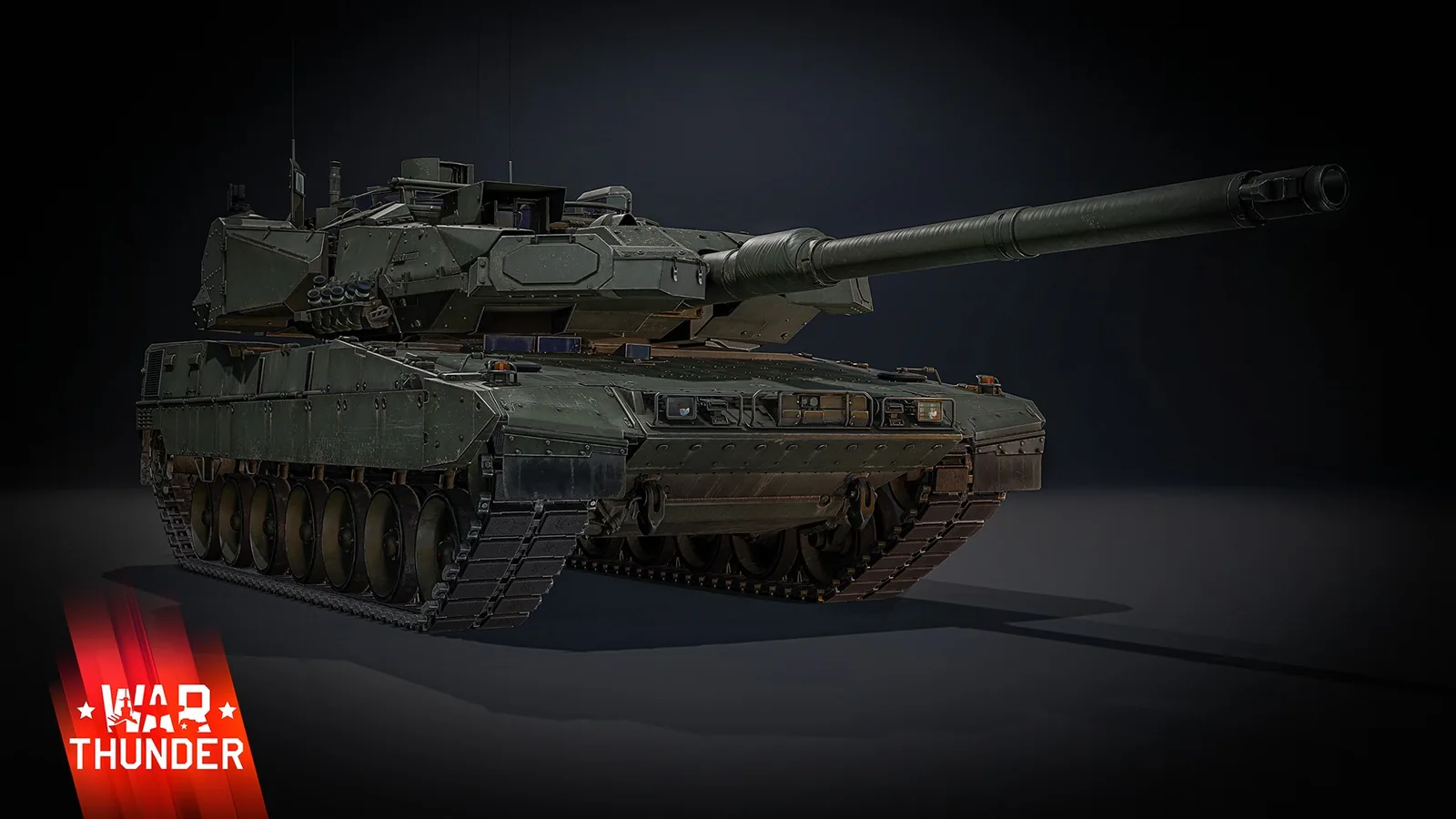
Germany receives the Rank VIII Leopard 2A8, while Sweden receives the Norwegian Leopard 2A8NO. Highlights include Trophy APS, DM53 APFSDS, third-generation thermal sights, internal spall liners, and additional protection.
APS most directly changes the defensive interaction. Trophy detects incoming missiles and intercepts them with countermeasures; the preview specifies six countermeasures and all-round ATGM protection. Interrupting a threat before impact differs from surviving it through armor, especially against helicopters and missile vehicles.
Missile interception is not immunity to all attacks. The highlighted threat is anti-tank guided missiles. That does not establish protection against enemy tank penetrators or endless attacks from every direction. Countermeasures are finite, so an interception does not justify remaining exposed.
The useful question is what you can do after successfully defending. Protection must create time to reach cover or return fire to become a tactical advantage. Remaining in the middle of a road under sustained attack can quickly consume that advantage.
Consider firepower and mobility together. Despite DM53 and stronger protection, the official description notes lower mobility than more agile models such as the 2A4 and 2A5. Judge its intended role rather than expecting every attribute to improve. Differences from the existing 2A7 family need a direct comparison of final specifications.
Loadout-based BR choices may have wider consequences
Custom BR for selected aircraft and helicopters is as significant as new vehicles. BR determines matchmaking. Under the previewed system, researching certain modifications unlocks different BR configurations instead of permanently forcing a higher BR after researching stronger weapons.
Official examples split the MiG-21 Bison between a setup without active radar missiles and one using RVV-AE. Tiger UHT configurations similarly depend on PARS 3 LR availability. Preview BR values are development examples; understand the principle rather than memorizing them as final ratings.
The same aircraft can then serve different preferred battle environments. You may choose stronger guided weapons and higher-rated opposition, or give those weapons up for another configuration. This can also affect aircraft choices in ground lineups.
A lower-BR configuration is not guaranteed easy matchmaking because it removes some weapons. The benefit is more choice rather than an unconditional power increase. The system does not initially cover every aircraft, so do not assume it automatically applies to the F-15EX.
Check whether other additions fill gaps in your nation's lineup
The dev list also includes the Soviet BTR-90 and Su-15TM, an Indonesian BMP-3F for Japan, China's ZBD04, and Italy's AW249 Fenice. Naval additions include Germany's H-39 and Japan's IJN Takao. Focus on relevant options for your nation and branch rather than memorizing the entire list.
A vehicle means different things to someone with an equivalent already and someone missing that role. In ground battles, does it add a useful backup after your first vehicle is destroyed? In air battles, does it offer a new weapon capability? One modern vehicle cannot define the value of an entire nation.
Separate premium additions. The dev list marks the F/A-18D, Q-5D, and Stingray II as packs. The F/A-18D is a legacy Hornet, not the E/F Super Hornet. Similar names do not imply the same aircraft characteristics.
Not everything on the dev server is coming in this update
The Eagle's Shadow dev server tests pre-release content; BR, armor, and armament can change. The announced window was October 30 at 16:00 through November 7 at 07:00 GMT, or October 31 at 01:00 through November 7 at 16:00 in Korea, and the notice now marks it closed. Release was previewed for mid-November, with an exact date requiring a separate announcement.
Research points, Silver Lions, and vehicles unlocked in testing do not transfer to the live server. In-game currency spent on the dev account is not deducted from the live account. Real purchases through the dev environment are covered separately, so distinguish testing with game currency from actual payment.
Pay particular attention to tank steering. Double-differential and double-transmission steering systems are being tested but explicitly excluded from this major update. Different test handling does not mean every live tank will receive it. Engine-characteristic changes and APUs on selected vehicles are separate items to check.
After release, prioritize research around functions that matter in your main mode: F-15EX weapons and sustained engagements for air combat, or Leopard 2A8 missile defense and lineup fit for ground combat. Value will depend on creating attack opportunities or surviving to take the next action. That connects excitement about new vehicles to a practical research plan.
