

Artist’s Paint: Sun Well appears, and a DPS player steps into it 2 seconds later. How many seconds of the Attack Power buff remain? After the November 18 balance update on the Korean servers, if exactly 2 seconds have passed at the first tick, the answer is 4 seconds. If you assume the player gets a fresh 6 seconds when they first step into the area, the buff will expire sooner than expected—around the time they use their final major skill.
The changes affect how long party members need to stay in ground-targeted areas, how much leeway there is before reapplying a Brand, and the interval before some Attack Power buffs come back around. Keeping your existing Swiftness setup lets you make full use of that leeway, while shifting some points to Specialization is now an option for stronger offensive support. Which is better becomes clearer when the party scatters and regroups than when the boss stays still.
What people mean by “a month on the test server”
The class balance update went live on the Korean live servers after the November 18 scheduled maintenance. The phrase “a month on the test server” criticizes how players have to figure out new setups in live raids after major combat rules change.
The developers adjusted Brand and Attack Power buff mechanics to reduce the burden of support gameplay, and said they would refine them by reviewing combat data after release. One point that may divide opinion is this: even if Brands are easier to maintain with your current setup, the intervals between your shields and damage reduction skills will change if you respond by investing less in Swiftness. That’s why some players see the patch as making support gameplay more comfortable, while others worry that protecting the party could become more demanding. The changes in this update alone do not determine which classes will be adjusted, or by how much, in December.
Bard’s and Artist’s ground-targeted buffs start counting down when they appear
Bard’s Sonic Vibration and Artist’s Paint: Sun Well are skills that apply their effects at a targeted location. Previously, the Attack Power buff granted by these areas lasted 2 seconds. Now, the first tick after the area appears grants 6 seconds, and each subsequent tick reduces the remaining duration by 0.5 seconds. The key point is that even if several party members step into the same area, the buff expires for all of them at the same time.
| The tick when the effect is first applied | Attack Power buff granted at that point | Expiration time measured from the first tick |
|---|---|---|
| First tick | 6 seconds | 6 seconds later |
| Tick 1 second later | 5 seconds | 6 seconds later |
| Tick 2 seconds later | 4 seconds | 6 seconds later |
Picture a DPS player who gets the effect as soon as Paint: Sun Well appears beneath the boss. Even if a floor attack is telegraphed right away and they dodge to the side, the buff lasts for its remaining duration. The biggest benefit for this player is having less reason to stay in a dangerous spot just to keep the Attack Power buff. By contrast, a DPS player who finishes a mechanic far away and then rejoins the party only gets whatever time is left on the ground-targeted buff. Just because they stepped into the area while it was visible doesn’t tell you whether the buff will last through their next attack.
Positioning matters for supports, too. If you place an AoE just before the boss disappears, its 6-second duration keeps ticking while the party chases it. Place it where players will attack after the boss finishes moving, and more party members can benefit from the first hit. This matters especially in parties where melee and ranged DPS stand in different directions: who can get into position, and when, can make or break the skill’s effectiveness.
A 14-second Brand and a 30-second cooldown are two different changes
A Brand marks an enemy and increases the damage your party deals to it. With the Sacred Shock tripod on the Bard’s Sound Shock, Note Brand’s duration increased from 7 to 14 seconds. The damage increase the party gets against a branded enemy remains 10%, as before. Don’t read this as a chance to “hit harder”; instead, it gives the existing Brand more time to remain active if an attack misses or the boss moves.
For example, say you apply Brand with Sound Shock, then the boss returns to an attackable position 9 seconds later. If the Brand remains on the same enemy and you haven’t refreshed it with another skill, the old 7-second Brand has already expired, while the new 14-second Brand has 5 seconds left. Your DPS benefit from the first attack, and the Bard can use one skill to protect the party or reposition. By contrast, in a window where you were already refreshing Brand without any gaps, the damage increase does not double.
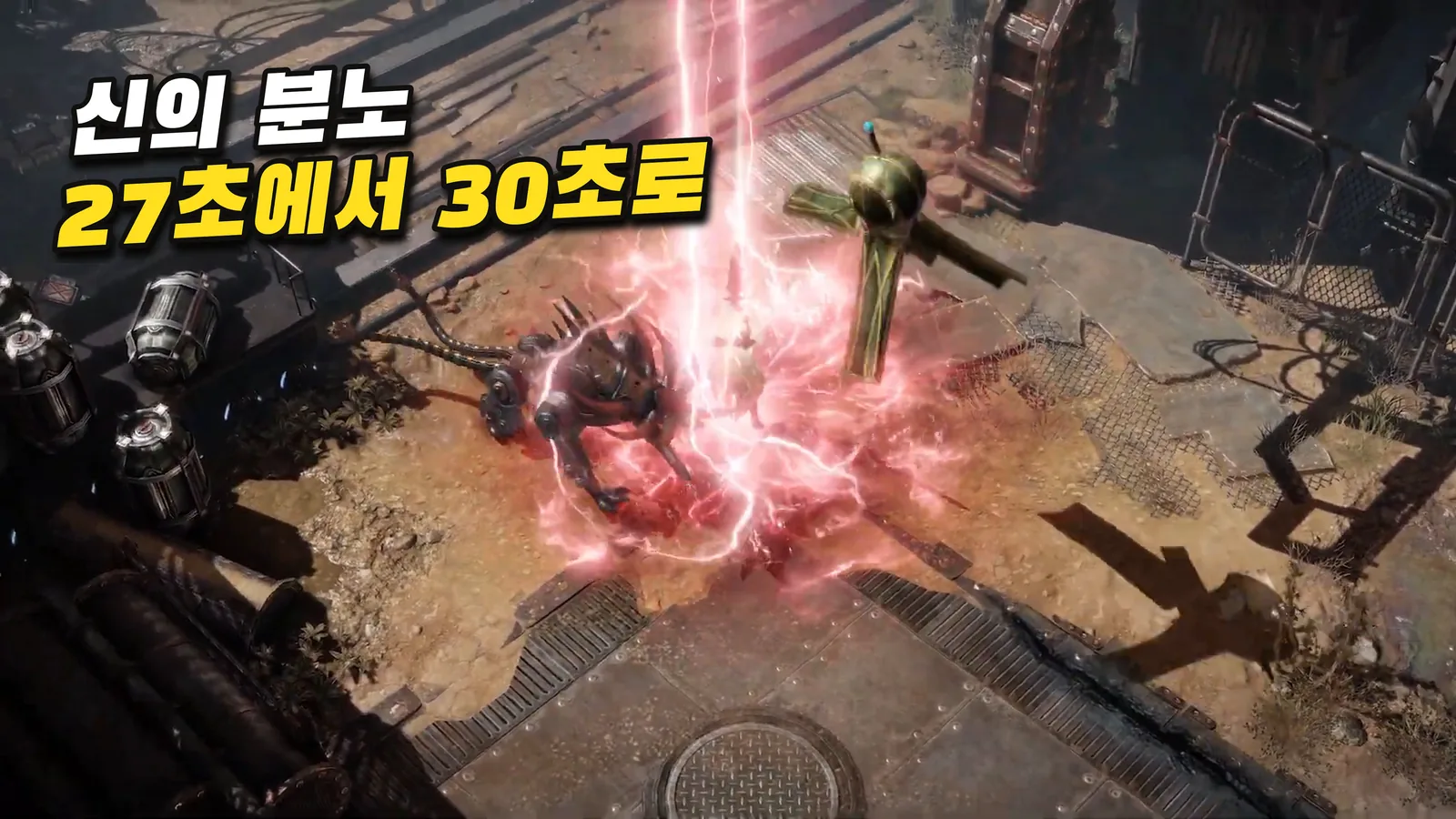
The base cooldowns of the Paladin’s two Attack Power buff skills have changed. In PvE, the Paladin’s Heavenly Blessings and the Valkyrie’s Noble Leap have been shortened from 36 to 30 seconds. Their counterparts, Wrath of God and Noble Oath, have been lengthened from 27 to 30 seconds. This makes it easier to predict which skill comes next when alternating between the two, but there may be a wait at moments when the 27-second skill used to come back first. Here, 30 seconds is the base value shown in the skill description. Check your character’s actual cooldown separately, accounting for Swiftness and Cooldown Reduction gems.
What runs out first when you shift Swiftness into Specialization?
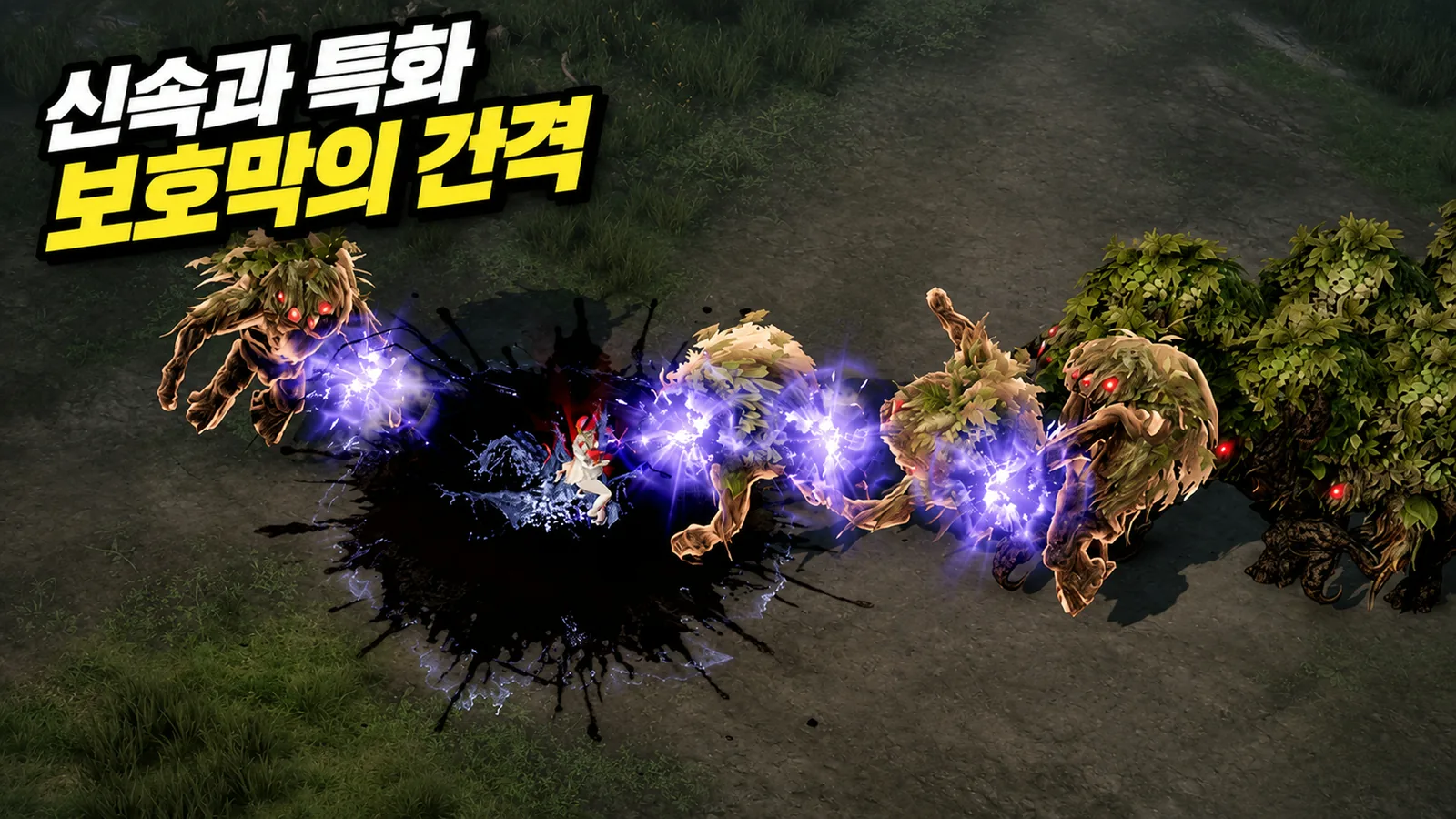
For supports, Swiftness lets you use several skills more often. Specialization affects each class’s Identity effects. If your party times its burst window, investing more in Specialization to strengthen your support during that window can make sense. But being able to cycle your Attack Power buffs on time doesn’t guarantee that your shields will also be ready whenever you want them in the same build.
Let’s split the two scenarios and compare them. In the first, the boss stays still for a while, giving the DPS time to line up their main skills. It’s easy to land the first hit of a ground-targeted skill, and the burst window is clear, so you can check which attacks your support buffs reached. In the second, the party uses shields for the first attack, spreads out, then takes another hit just after regrouping. What matters is whether your defensive skill is ready before that second attack. Even with the same party, it’s hard to explain how you’ll handle the second scenario based only on practicing the first.
If you’re thinking of lowering your Swiftness a little, pick one defensive skill you use often in your current setup. Choose a pattern where you usually respond twice in a row during one raid gate, then check how much time you had between the first use and the next incoming hit. If you consistently had a few seconds to spare before the next use, shifting some points into another stat may make sense. But if you were barely getting your second shield out in time, your current Swiftness is already doing its job. If you change your gems and skill setup at the same time, it’s hard to tell what caused the timing to change, so keep the other conditions the same when comparing.
DPS players should read multi-crit rate and damage share separately
For DPS, Crit Rate above 100% now has a use. Take an attack with 250% Crit Damage and 120% Crit Rate: an attack with 100 base damage normally deals 250 on a critical hit. If a Multi-Crit occurs at a 20% chance, the extra 150 damage from the critical hit is added once more, bringing the total to 400. For attacks like this, an effect that activates “on critical hit” is treated as triggering once.
The combat analyzer now shows two figures calculated differently. “Multi-Crit Rate” shows how many attacks were Multi-Crits out of all attacks, while “Multi-Crit Damage Share” shows how much of total damage came from those attacks. Using the example above, suppose two out of ten identical attacks were Multi-Crits. The rate is 20%, but the damage share is 800 ÷ 2,800, or about 28.6%. That total includes the damage those two attacks would have dealt anyway. Treating the 28.6% share as damage gained from the patch would overstate the increase.
If you chose Blunt Thorn, the calculation works differently. With this node, the actual chance of a critical hit is capped at 80%, and the excess is converted into Evolution Damage, so Multi-Crits cannot occur. What was removed this time is the node’s maximum cap on applied Evolution Damage. At Level 2, the node’s base Evolution Damage increases from 15% to 19%, while the conversion coefficient for excess Crit Rate decreases from 150% to 140%. Multi-Crits also do not occur in Paradise content because of its own adjustments. Before comparing red damage numbers, make sure you’re looking at records from the same content and using the same node.
Why the first day of the patch can be especially confusing

The November 19 temporary maintenance notice listed fixes for some Bard skills generating more Hyper Awakening and Serenade Meter than intended, and for the Gunslinger’s “Evolution’s End” Core 17P effect not applying the multi-hit critical change. If you estimated Specialization’s impact based only on records showing Bard’s meter filling quickly on day one, those results may also have been affected by the skill bug. The timing of the records also matters if you compared different Gunslinger Core setups.
For support builds, the most useful comparison is to think through a specific gate you know well: Could DPS players step onto the ground effect early and get out in time? Was the Brand still active when the boss returned? Could you use your shield again for the follow-up attack? If the first two became easier but the last one started feeling tight, you already have part of the answer to how much Swiftness you can give up in that party.
