

If you’re looking for Blackcliff Forge, start with a sword. The description of Prototype Rancour tells you where it was kept, and its lore names the mountain where its maker first tested it. Khaenri’ah presents the opposite puzzle: you can stand in front of a gate in the Sumeru desert and still have no way to explore the land beyond.
Four places often turn up together in discussions of Teyvat’s unexplored regions: Blackcliff Forge in Liyue, the west side of Mont Esus in Fontaine, Khaenri’ah beyond the underground gate in Sumeru, and the sea of flowers the Traveler’s sibling remembers. They sound like a roadmap when you list them that way. In the game, the evidence is different for each one. You can already walk the east slopes of Mont Esus and reach the Sumeru side of the gate.
What a sword tells us about Blackcliff Forge
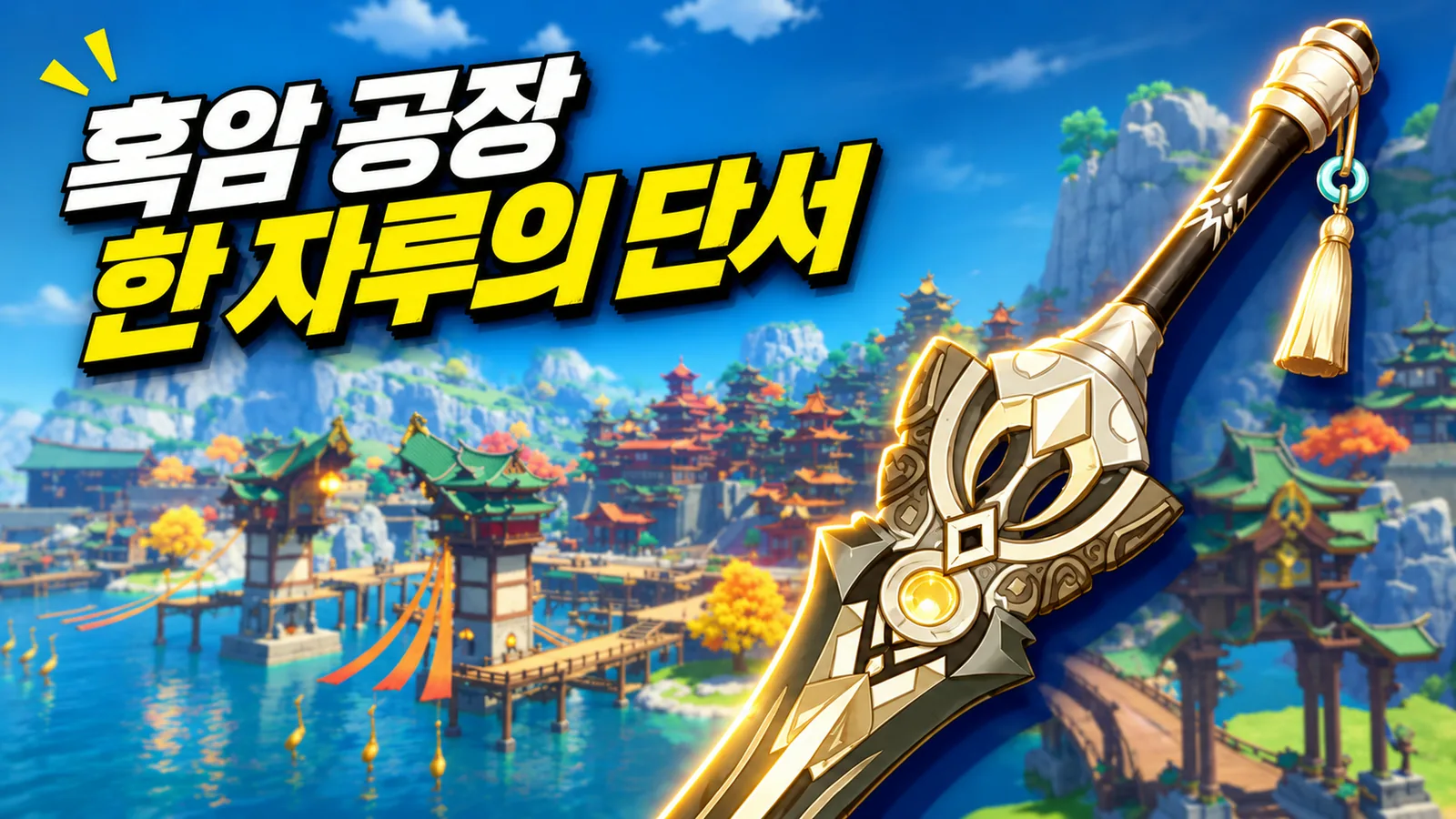
Zhongli remembers the Blackcliff Forge as a place where Liyue's miners once worked. His voice-over “More About Zhongli: II” begins with an account of how the forge came to be. As people mined ore veins in Mt. Tianheng, they began building facilities inside the mountain. As mining continued, tunnels branched out in every direction, and some are said to reach ancient ruins deep underground. Rather than picturing a single factory building with a mine shaft attached, it makes more sense to imagine a workplace that grew within the excavated mountain.
Keep this story in mind as you read the weapon lore for Prototype Rancour, and Liyue's craftsmen come into view. Yun Hui of the Yun family and the master craftsman Han Wu gathered the skills of many artisans into a manual called “The Beginning,” then used its methods to forge the first one-handed sword. One tale says that when Han Wu tested the sword on Mt. Tianheng, he dropped it, leaving a deep mark in the rock—and giving the sword its name, “Rancour.” The weapon's short description also says that the finished sword was kept in the Blackcliff Forge. The mountain, the craftsman, and the sword all come together in a single object.
Continue reading the story of the Blackcliff Longsword, and another location appears. Han Wu traveled to the Chasm to choose materials for making better weapons. A mine tunnel collapsed, trapping his group, and the sword he carried broke as they tried to escape. Here, the Chasm is the mine he visited to find materials, while Mt. Tianheng is the mountain Zhongli identifies when explaining the forge's origins. Keeping the two locations distinct also clears up the question of whether you missed an entrance while exploring the Chasm's underground area.
The most intriguing detail about Blackcliff Forge is that even Zhongli wonders whether anyone knows every passage there. The sword’s location can be stated clearly in a single sentence, but the mountain paths where it was kept were complicated even for the people who lived there. Speculating about who the ruins belonged to, or whether those paths could lead all the way to Khaenri’ah, takes things a step further. Liyue’s history preserved in the weapon archive is fascinating enough without assuming that connection.
The direction marked on the map at Mont Esus is its eastern foothills.
Open the Fontaine map and you’ll find the name “Mont Esus East” in the Liffey Region. Version 4.1 opened the Liffey Region and the Fontaine Research Institute of Kinetic Energy Engineering Region, and Mont Esus East has a Teleport Waypoint. Head down to the water and you can also collect Lumitoile, a Fontaine Local Specialty. If you came across the name while looking for Ascension Materials, you’ve already explored one side of the mountain.
But “east” has a way of making you picture the opposite side, doesn’t it? If a mountain has an eastern slope, it’s easy to imagine a western one too. Here, “west of Mont Esus” is a convenient way to refer to a direction you haven’t explored yet. It would be jumping the gun to read it as an official area name, “Mont Esus West,” or as confirmation that the boundaries of a future expansion area bearing that name have been decided.
When a new area actually opens, the details are much more specific. For example, Genshin Impact Version 7.2 named Kitesh City and Winged Terrace in Snezhnaya as areas set to open. The announcement also explained which areas would get new hubs and which Teleport Waypoints players could use. By contrast, the name Mont Esus East only tells you which side you’re on right now. Travelers looking for Lumitoile from the eastern waypoint and those wondering what lies beyond the mountain get different answers from the same place name.
How close is Khaenri’ah to the Gate of Everlasting Mourning?
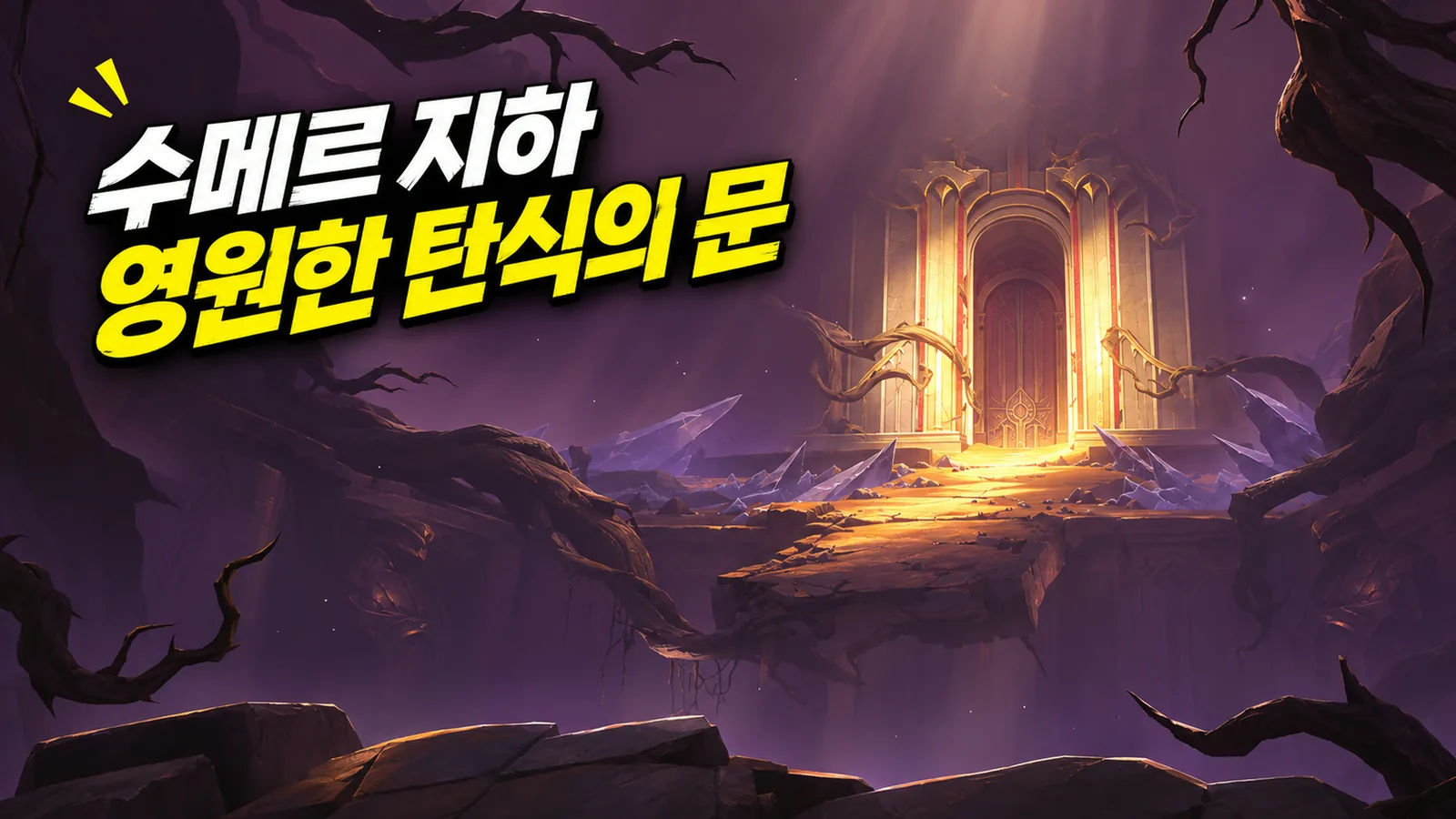
The most vivid image of Khaenri’ah can be found underground in the Sumeru desert. The viewpoint in Hangeh Afrasiyab is called “Gate of Everlasting Mourning.” Light shines across a deep chasm, where a massive gate stands between two cliffs. From the view right in front of it, the gate feels like the main entrance to a nation, but the Geography Archive surprisingly describes this structure as a “side gate.” It’s a word that makes you wonder just how vast the nation beyond it must have been, given how huge the gate itself is.
The Archive says the gate is sealed and that the ancient nation that once prospered beyond it has fallen into ruins. There’s also a clue that lets us take this a step further. In Mona’s quest “A Dry Well Doth Not Reflect the Stars,” one of the objectives is to go to the gate of Khaenri’ah. This is the very gate Mona visits to carry out her assignment. That’s a much more direct clue than the suspicious appearance that led players to link it to Khaenri’ah.
A key word in the quest objective is “ahead.” The place you reach with Mona, where you carry out the astrologer’s assignment, is on this side of the door. It doesn’t refer to operating the door to cross over or to unlocking Khaenri’ah on the world map. So the answer to “Can you see the entrance to Khaenri’ah?” is yes—it’s underground in Sumeru. But that doesn’t mean you can follow the same directions to answer, “Does going through that door let you start exploring Khaenri’ah?”
Khaenri’ah’s place in the story ahead has been foreshadowed separately. The Teyvat Chapter teaser, “Travail,” places Khaenri’ah after Snezhnaya and features Dainsleif. The nation the story will take us to and the scene where we first set foot there are two different things to wonder about. If the Traveler ever returns to this side door, it’ll be exciting to see how far we can go—but even more so to see how the view we once shared with Mona looks then.
Who reached the flower field at the end first?
The flower field at the end is a place to think about through a character’s words before looking for it on the map. In Chapter IV, Act VI of the Archon Quest, “Bedtime Story,” the Traveler speaks again with their long-lost sibling. The twin who traveled through Teyvat first says they reached the flower field near the end of their journey. Here, “end” means the end of a path someone has already traveled. It doesn’t tell us what form the final quest will take for the Traveler we’re playing now.
The twins had traveled together to other stars before coming to Teyvat. Back then, the Traveler’s wish was to see a place filled with “those flowers.” But it was the sibling who set out first who eventually saw that view. Of the two who shared the same wish, only one saw it fulfilled. Knowing this, look again at the scene in “Travail” where the Traveler appears alongside a field of flowers, and your attention shifts from the flowers’ colors to the distance between the twins.
There’s also reason to read the scene alongside Inteyvat, Khaenri’ah’s national flower. In “Requiem of the Echoing Depths,” which takes place in The Chasm, Dainsleif explains that the flower normally lasts about two weeks. Its brief lifespan changes the moment it leaves its homeland. Inteyvat picked in Khaenri’ah and carried elsewhere stops growing and hardens. When it returns to its homeland, it softens again before turning to soil. The idea that even after a long time away, a flower’s petals retain their connection to home fits the memories of the twins, who traveled different paths.
The clue that lets you recognize the flower in this scene is Lumine’s hair ornament. If you chose Aether as the Traveler, think of the flower his younger sister wears in her hair. For the twins, it’s an object they remember; for Dainsleif, who remembers a nation that’s already gone, it’s a symbol of a wanderer far from home. They recognize the same flower for different reasons.
However, in the dialogue about the Sea of Flowers at the End, the sibling says “that one flower.” There are gaps in the evidence between Inteyvat’s properties and the Sea of Flowers’ location, so they can’t be linked as though one definitively explains the other. When the two stories are read together, the question that lingers most is a little different: If the Traveler ever stands in that flower field, what will come first—the joy of seeing the long-dreamed-of view, or the feelings of the sibling who saw it alone long ago?
